Which Camino route is best for you
Which Camino route is best for you depends on four things: how long you have, how much climbing you want, how alone you want to be, and what you are hoping the walk will do. Here is how the routes actually differ.

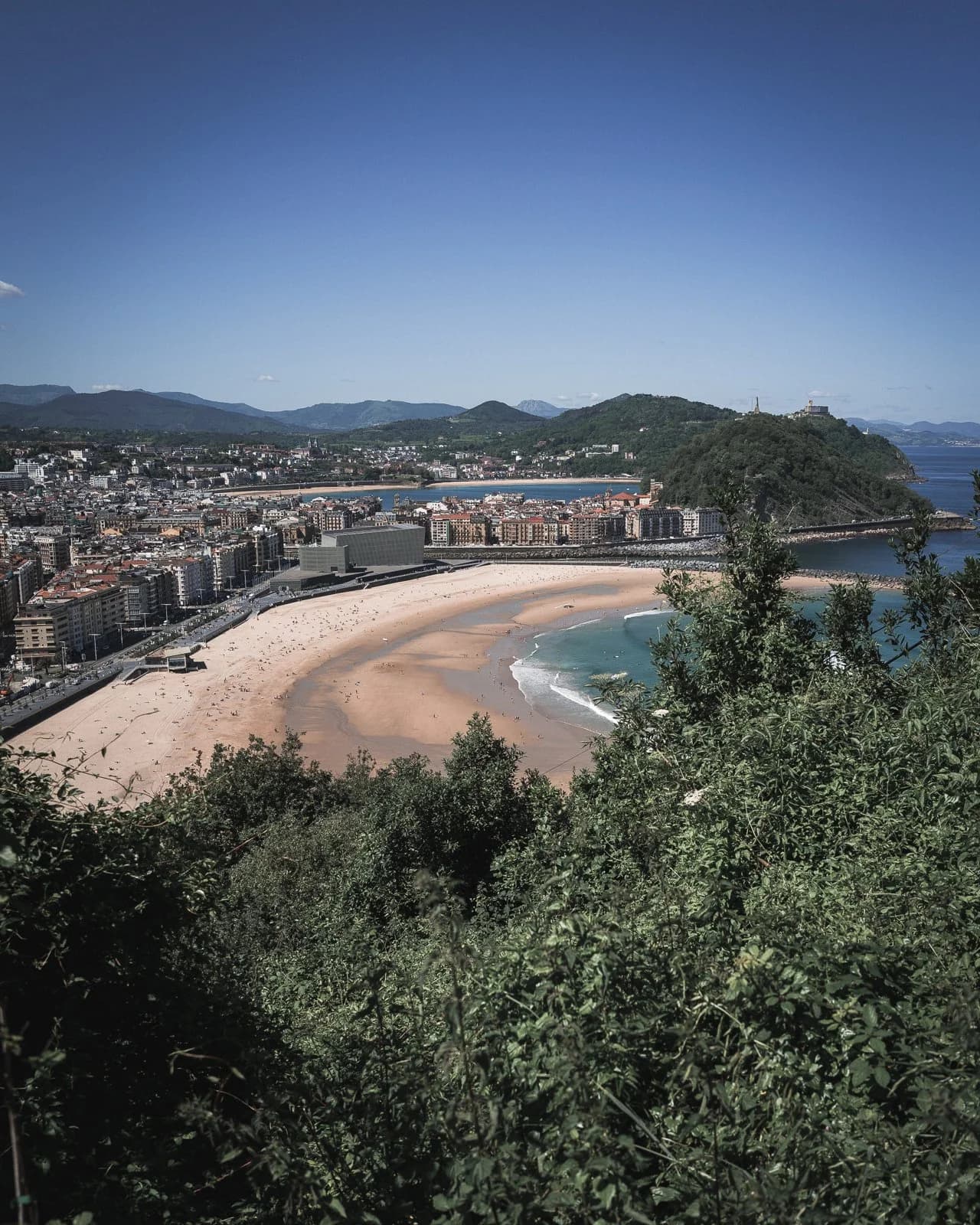
Quinton Wall has walked over a dozen Caminos, including the Camino Frances six times, the Via Podiensis from Le Puy twice, the Camino del Norte, both the coastal and inland Camino Portugues from Lisbon, and the walk out to Finisterre five times.
Which Camino route is best for you starts with time
Almost every route question resolves itself once you are honest about the number of days. People arrive at this decision wanting to be told which Camino is best, and the useful version of the question is which Camino fits the time you can actually take.
| Route | Distance | Stages | Suits you if |
|---|---|---|---|
| Camino Frances | 865 km | 37 | It is your first Camino and you want company and easy logistics |
| Camino Portugues | 608 km | 25 | You have two weeks, want flatter walking, or want the coast |
| Camino del Norte | 1040 km | 46 | You want scenery and solitude and do not mind rain |
| Camino Primitivo | 282 km | 12 | You want mountains and have walked long distances before |
| Camino Ingles | 144 km | 7 | You have about a week and want to finish a whole route |
| Via de la Plata | 1118 km | 49 | You want the quietest long route and can handle heat |
| Camino de Le Puy | 786 km | 32 | You want France, good food, and far fewer pilgrims |
| Camino del Salvador | 119 km | 7 | You are already walking the Frances and want a mountain detour |
Camino Frances, the default for good reasons
I have walked the Frances six times and I am still not bored of it, which is either a recommendation or a character flaw. It is the route people mean when they say the Camino.
The case for it is infrastructure and company. You will not get lost. There is a bed at almost any distance you choose to stop. And because everyone is walking the same stages, you keep meeting the same faces, which is how the walk turns social. For a lot of pilgrims that turns out to be the whole point.
The case against is that in July and August it is genuinely crowded, and the Meseta in the middle divides people sharply. Around 200 kilometres of high plateau with big skies and very little shade. I love it and I know that puts me in a minority.
Camino Portugues, the best short option
If you have two weeks, this is usually my answer. From Porto it is comfortably walkable in a fortnight, it is flatter than the Frances, and the weather is kinder for longer in the year.
You choose between two characters. The coastal route gives you the Atlantic, boardwalks and sea air. The inland route gives you Roman cobble, vineyards and quieter villages. I have walked both from Lisbon and would send a first-timer up the coast, mostly because the sea does a lot of the emotional work for you.
The one warning is the surface. Long stretches of the inland route are cobble, which is beautiful and completely unforgiving underfoot. That is a footwear decision more than a route decision.
Camino del Norte, for scenery and solitude
The Norte follows the north coast and it is harder than the Frances in a way that does not show up in the total distance. It is not one enormous climb, it is a hundred small ones, day after day.
What you get is Basque and Asturian food, genuinely spectacular coastline, and far fewer people. What you accept is more planning, since accommodation is thinner and stages are less evenly spaced, and rain that arrives whenever it likes.
The quieter routes
Camino Primitivo
The oldest route and reputedly the most mountainous of the main ones. It joins the Frances near Melide for the final few days. I have not walked it yet: I am walking it in August 2026 along with the San Salvador, so this section will be rewritten from experience shortly after. What I can tell you second-hand is consistent, that the climbing is sustained and the scenery repays it.
Via de la Plata
The longest of the routes in the data behind this site, running north from Andalusia. Remote, hot in summer, and with long gaps between towns. Pilgrims who have walked it describe it as the closest thing left to walking alone for weeks. I have not walked it either.
Camino Ingles
Short enough to walk in full in about a week, from the northern coast down to Santiago. Its appeal is completeness. Finishing a whole route feels different from walking the last stretch of a longer one, even when the distance is similar.
Camino de Le Puy
The French approach, and the one I would pick if I wanted to walk somewhere quieter without giving up comfort. The demi-pension tradition at gites means you are fed extremely well, and there are days you will see almost nobody. Some French helps more than it does in Spain.
What people get wrong when choosing
Most bad route choices come from optimising for the wrong variable. Here are the four I see most often, in roughly the order they cause trouble.
Choosing on total distance
Distance is the least useful number in this decision. A 280 kilometre mountain route can be harder work than an 800 kilometre one across gentler ground, and the routes that look manageable on paper are sometimes the ones with the longest gaps between beds. What determines whether a route suits you is daily climb, how evenly the stages are spaced, and how much accommodation sits between them.
Choosing on scenery
Everyone looks at photographs, and the photographs always favour the coastal and mountain routes. What the photographs cannot show is that you will spend most of your walk looking at the ground three metres ahead, and that the moments people describe years later are almost never the views. They are a conversation, a bar in a village with no name you remember, or the particular quality of being tired in a way you have not been tired since childhood.
Choosing to avoid other pilgrims, then missing them
Plenty of people pick a quiet route specifically to be alone, and then find the solitude harder than expected. Walking six hours a day with nobody to talk to is a genuine skill, and it is not the same as enjoying your own company for an afternoon. If you have never done a long solo walk, the Frances gives you the option of company without obliging you to take it, which is a safer place to discover what you actually want.
Choosing the route before checking the calendar
Season and route interact more than people expect. The Norte in November is a different proposition from the Norte in June. The Via de la Plata in July is genuinely punishing. A route that is ideal in one month can be the wrong answer in another, so settle your dates first and then choose, rather than the reverse. There is more on this on the best time to walk.
How to actually decide
If you are still torn, work through these in order rather than trying to weigh everything at once.
- Under two weeks: Portugues from Porto, the Ingles, or the last stretch of the Frances from Sarria
- Two to three weeks: Portugues from Porto with rest days, or the Frances from Leon
- Four weeks or more and it is your first: the Frances, from as far back as your days allow
- Four weeks or more and you have walked one before: the Norte, or the Le Puy route
- You want mountains: the Primitivo
- You want to be alone: the Via de la Plata or the Norte outside summer
And if none of that settles it, the honest answer is that the choice matters less than starting. Every one of these routes ends at the same cathedral, and the thing people describe afterwards is almost never the scenery.
Full stage lists, distances and difficulty ratings for every supported route are on the routes page, and there are worked day-by-day plans on itineraries.
Common questions about choosing a Camino route
Which Camino route is best for a first timer?
The Camino Frances, if you have the time. The waymarking is unmistakable, there is accommodation at almost any distance you want to stop, and you meet the same people repeatedly, which is where most of the friendships come from. If you have less than two weeks, the Camino Portugues from Porto is the better first route.
Which Camino route is the quietest?
Of the well-supported routes, the Camino del Norte and the Via de la Plata see far fewer pilgrims than the Frances. The trade is that you will sometimes walk a full day without seeing another pilgrim, and accommodation needs more planning because there is less of it.
What is the easiest Camino route?
The Camino Portugues from Porto is the flattest of the popular routes, and the coastal variant is flatter still. Easiest does not mean easy: it is still 25 or so consecutive days of walking if you start from Lisbon, and hard surfaces cause their own problems.
Which Camino route is the hardest?
Among the main routes, the Primitivo has the most sustained climbing and the Norte is relentless in a different way, with repeated steep ascents and descents rather than a few big days. The Via de la Plata is hardest in summer because of heat and long gaps between towns.
Can I walk a Camino route in a week?
Yes. The final 100 kilometres of the Frances from Sarria takes about five walking days and qualifies for the Compostela. The Camino Ingles is short enough to walk in full in about a week, which some people prefer because you complete a whole route rather than the end of one.
Do all Camino routes end in Santiago de Compostela?
The main pilgrimage routes all converge on Santiago, yes. Many pilgrims then continue for three or four more days to Finisterre or Muxia on the Atlantic coast, which is the only stretch that is walked away from Santiago rather than towards it.
Read more on this
- Eight lesser known Camino routes
Beyond the main routes, for people who have walked one already.
- How to walk the Camino solo
Route choice matters more when you are walking alone.
- The Camino San Salvador
The mountain detour between Leon and Oviedo, now with full stage data.
- The Via de la Plata
The longest and quietest of the routes in the guide.
Still deciding something?
Ask the guide about your dates, your fitness and how long you have. It answers with real stages and real accommodation, not generic advice.
Start planning