Everything solo pilgrims need to know about safety, meeting other walkers, managing loneliness, and embracing the unique rewards of walking the Camino alone.
There's a moment I remember vividly from my first Camino Frances—standing outside the pilgrim office in Saint-Jean-Pied-de-Port, credential in hand, watching groups of friends laughing together as they set off towards Orisson. I was alone. Completely, terrifyingly alone. And I almost turned around.
That was six Caminos ago. Since then, I've walked the Frances five more times, the Via Podiensis from Le Puy twice (once continuing all the way to Santiago), the Norte, both the coastal and inland Portuguese routes from Lisbon, and the path to Finisterre so many times it feels like going home. Most of those journeys started solo. Some stayed that way. Others transformed into something I couldn't have predicted.
If you're considering walking the Camino alone, you probably have questions swirling in your head. Is it safe? Will I be lonely? What if something goes wrong? Am I crazy for wanting to do this by myself?
Let me buy you that metaphorical beer and tell you everything I've learned.
The answer varies wildly from person to person, but I've noticed some common threads amongst the solo pilgrims I've met over the years. Some are processing grief or major life transitions—divorce, job loss, death of a loved one. Others simply couldn't find anyone willing to take a month off work. Many are introverts who recharge in solitude. And honestly? Some of us are just a bit stubborn about wanting to move at our own pace.
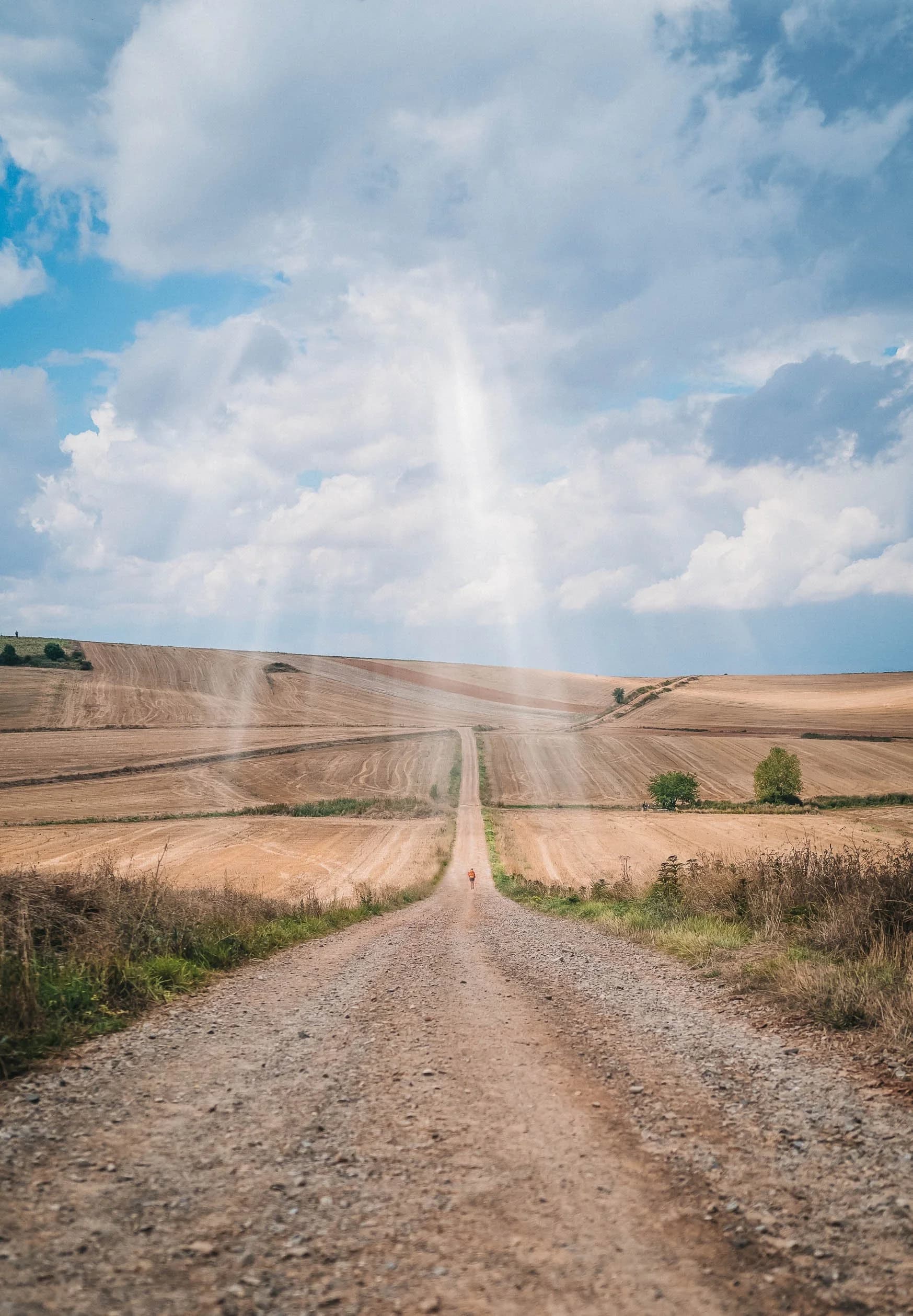
Here's what I've discovered: walking solo doesn't mean walking alone. It means walking on your own terms. You decide when to start each morning. You choose whether to push through that extra five kilometers or call it a day at noon because there's a beautiful café with cold beer and a river view. Nobody's waiting for you. Nobody's rushing you.
This freedom comes with responsibility, of course. But it also comes with something harder to describe—a clarity that emerges when the only voice in your head is your own.
The Camino de Santiago is one of the safest long-distance walks in the world. You're rarely more than a few kilometers from a village. The path is well-marked (mostly—looking at you, confusing suburbs of Burgos). Other pilgrims are almost always within earshot. And the communities along the way have been hosting walkers for over a thousand years. They know us. They look out for us.
That said, I'd suggest going in knowing a few things:
Physical safety on the trail itself is rarely an issue. The biggest risks are mundane—twisted ankles on rocky descents, blisters that get infected, heat exhaustion in the Meseta, hypothermia crossing O Cebreiro in bad weather. Common sense and proper preparation handle most of these. I always carry a basic first aid kit with blister supplies, and I've used it on fellow pilgrims more often than myself.
Solo women pilgrims (which I'm not, so I'll share what I've observed and heard) generally report feeling very safe. I've walked alongside dozens of women traveling alone, and whilst they mention occasional uncomfortable interactions, these seem no more frequent than in daily life back home. The Camino community is genuinely protective. That said, basic travel precautions apply—trust your instincts, stay in reputable accommodations, and don't feel obligated to share your exact plans with strangers who give you weird vibes.
Walking at night is where I draw a harder line. Don't do it if you can avoid it. Not because of crime—because the waymarks are almost impossible to see, vehicles don't expect pedestrians on rural roads, and a minor injury becomes a major problem when nobody knows you're there.
When you're traveling with friends, you naturally form a self-contained bubble. Conversations with strangers are pleasant but brief. You have your people. But when you're alone, every interaction matters more. You linger over coffee. You ask the person at the next table where they walked from today. You end up sharing meals, sharing stories, sharing kilometers.
I've made some of the most meaningful friendships of my life on the Camino. People I still visit in Germany, Australia, Brazil. People who came to my wedding. All of this started because I was walking solo and said yes to dinner with strangers.
The social rhythm of the Camino follows a predictable pattern. In the first few days, you'll cycle through different faces as everyone finds their natural pace. Then, around day four or five, you'll start seeing the same people repeatedly. You're walking similar distances at similar speeds. These become your "Camino family"—though you might not realize it's happening until it's already happened.
A few practical tips for meeting people:
Stay in albergues. I know, I know—the snoring, the early-morning plastic bag rustlers, the person who insists on headlamping their entire packing routine at 5 AM. But communal sleeping arrangements are where connections happen. You don't have to stay in albergues every night, but if you want community, that's where you'll find it.
Eat communal dinners. Many albergues offer them. Some private ones too. These slightly awkward, delicious, wine-fueled meals are Camino magic. You'll share bread with a Korean grandmother, a German banker questioning his life choices, a Spanish couple walking their honeymoon, and a gap-year student who's never done her own laundry before. It's bizarre and wonderful.
Learn a few phrases in multiple languages. "Buen Camino" obviously. But also "de donde eres" (where are you from), "cuantos kilometros hoy" (how many kilometers today), and the universal "cerveza, por favor." On the Via Podiensis, brush up your French—"d'où venez-vous" will serve you well.
Be the one who initiates. Waiting for others to approach you is a lonely strategy. Ask people about their journey. Compliment their ridiculous hat. Offer to take their photo at that viewpoint. The Camino rewards social initiative.
I remember a stretch on my first Via Podiensis walk, somewhere between Le Puy and Conques, where I went nearly two days without a meaningful conversation. My French was worse then, the gîtes were sparse, and the few other pilgrims I encountered were couples who smiled politely but clearly wanted their privacy. I felt invisible. I wondered what I was doing there. I called my wife from a hotel room and cried.
And then the next morning, I met a retired teacher from Toulouse who insisted I join her for breakfast. We walked together for three days. She's since passed away, but I think about her often.
Loneliness on the Camino tends to be acute but temporary. Unlike loneliness at home—which can become chronic and normalized—Camino loneliness is impossible to ignore. It demands your attention. And because the social environment changes constantly, relief usually arrives before you break.
That said, some strategies help:
Bring connection tools. I carry a small notebook and write letters to people I love, even if I never send them. I have a lightweight e-reader loaded with books that feel like old friends. I download podcasts and audiobooks for sections I know will be remote.
Schedule calls home. I used to think disconnecting completely was noble. Now I think it's unnecessary suffering. A twenty-minute call with someone who loves you can reset your entire week. Just don't spend your whole Camino on your phone—that's not the answer either.
Move accommodations if a place feels wrong. Sometimes an albergue's vibe is off. The crowd is cliquey, or it's weirdly empty, or everyone's already paired up. You're allowed to walk another five kilometers to somewhere different. You're allowed to spring for a private room when you need to recharge. There's no purity test.
Write about it. Journaling sounds cliché until you try it. Getting the loneliness out of your head and onto paper actually helps. Plus, you'll treasure those entries later.
Walking solo has given me something I can't get any other way: uninterrupted time with my own mind. Not meditation exactly, though it has meditative qualities. More like... excavation. Layer by layer, day by day, you dig through the surface noise of your life and find what's underneath.
I've made major decisions on the Camino. Career changes. Relationship reckonings. Finally dealing with grief I'd been carrying for years. None of this would have happened if I'd been chatting with friends the whole time. The processing required silence.
And then there's the complete ownership of your experience. When you summit O Cebreiro in the rain (I've done this twice, both times solo), that victory belongs entirely to you. When you make a wrong turn and add six kilometers to your day, that's your mistake and your recovery. When you push through the endless Meseta whilst your mind empties itself of everything unnecessary, that's your Meseta, your emptiness, your renewal.
Solo pilgrims also tend to be more present. Without the distraction of conversation, you notice things. The way morning light hits a wheat field. The sound of church bells echoing across a valley. The old woman who brings you water simply because she saw a pilgrim walking past her door.
These moments happen to everyone, but I genuinely believe solo walkers absorb them more fully.
Pack lighter than you think. When you're solo, there's nobody to hand your bag to whilst you tie your shoe. Nobody to help lift it onto your back at a bus station. Every gram is yours alone. I've seen solo pilgrims struggle with 12-kilogram packs, and I've seen them thrive with 6. Aim for the latter. My suggestion is to get a reliable scale and weigh everything before you leave.
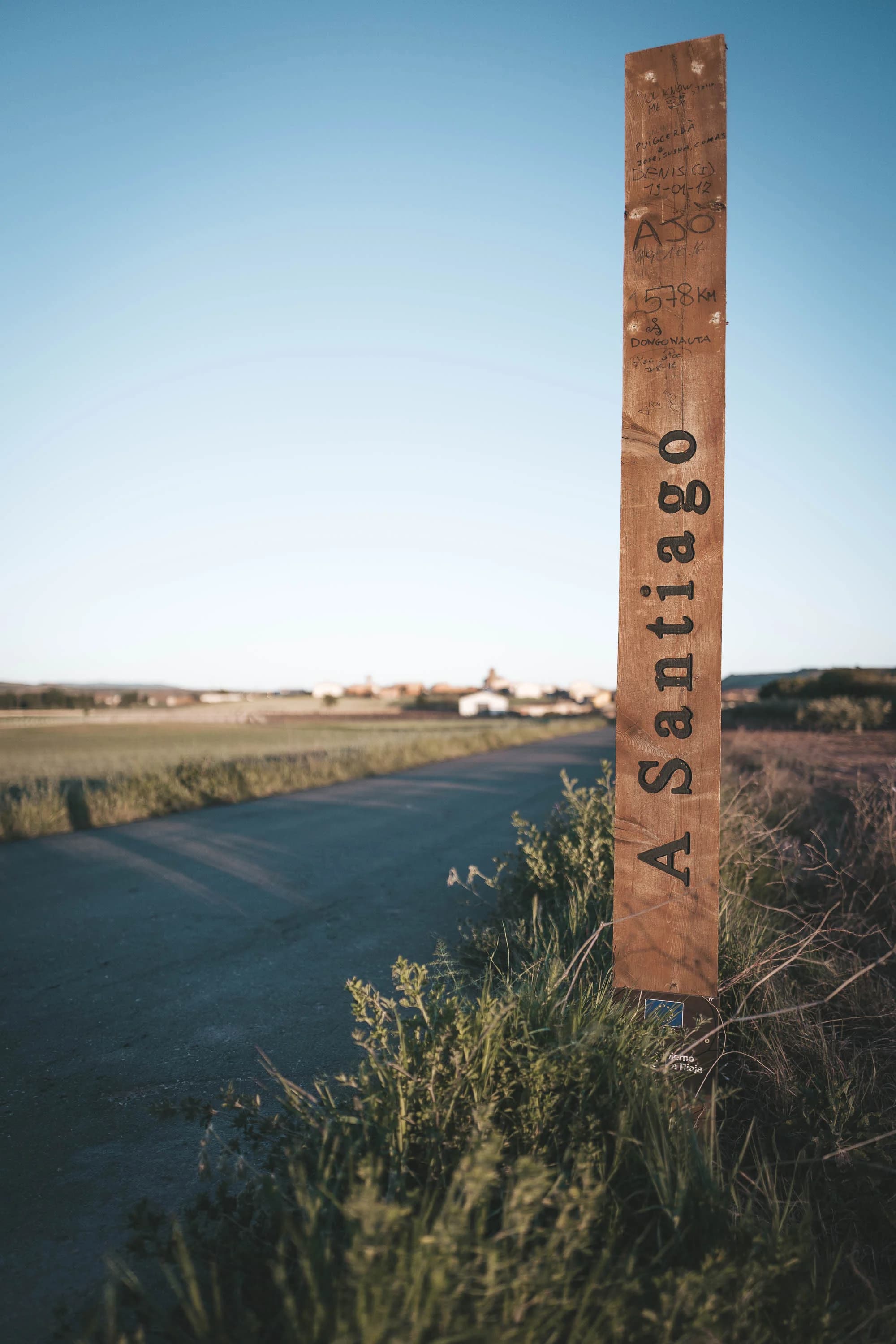
Learn basic navigation. The Camino is well-marked, but you will occasionally miss a turn. Having a GPS app like Buen Camino or Camino Ninja on your phone provides peace of mind. More importantly, understand how to read the waymarks and what to do when you haven't seen one in ten minutes (usually: turn around).
Tell someone your rough plans. This doesn't mean checking in hourly. But having a friend or family member who knows you're walking from Burgos to León over the next week means someone would eventually notice if you vanished. I email my wife my general route each morning. It takes thirty seconds.
Carry emergency information. European emergency number is 112. Write it down along with any medical conditions, allergies, and an emergency contact. In your pack, not just your phone.
Budget for flexibility. Solo travelers have nobody to split private room costs with, but also nobody preventing them from making impulsive decisions. Having a bit of financial cushion means you can take that rest day, book that hotel room, eat that expensive meal when you need it.
The Camino Frances is ideal for first-time solo pilgrims. The infrastructure is extensive, other pilgrims are always nearby (sometimes too many, honestly), and villages appear every few kilometers. If something goes wrong, help is never far. I've walked it six times, and whilst it can feel crowded in peak season, that crowd provides a safety net.
The Camino Portugués (I've done both coastal and inland routes, starting from Lisbon) is another good solo option. The Portuguese sections have fewer services than Spain, so plan stages more carefully, but it's very walkable alone. The coastal route is particularly beautiful but requires more road walking—stay visible.
The Via Podiensis from Le Puy is more challenging solo. Longer distances between towns, fewer pilgrims (especially in the French sections), and gîtes that sometimes require phoning ahead for reservations. When I walked it, my language limitations made me feel more isolated. But twice I've done it, and twice it's been profoundly rewarding. Just go in knowing it demands more self-sufficiency.
The Camino Norte is the hardest of my routes to walk solo. More rugged terrain, fewer services, and genuinely remote stretches along the coast. I loved it, but I was an experienced Camino walker by then. I'd hesitate to recommend it for a first-time solo pilgrim.
If you're unsure which route suits your situation, you can always plan your Camino with specific questions about route difficulty and solo suitability.
Some of my solo Caminos stayed solo. I walked with people during the day, shared meals, then chose to walk alone the next morning. Nothing wrong with that.
But others transformed. On my third Frances, I met a Danish woman on day six and we walked together for three weeks. On my Portuguese walk from Lisbon, I fell in with a rotating cast of Brazilians who adopted me as their "serious friend" (apparently I frown when I think). These weren't planned. They emerged.
The beauty of starting solo is that you can stay solo or become social without disappointing anyone. You've made no promises. You're not abandoning a travel companion who wanted more togetherness. You're free to let the Camino shape your experience day by day.
And honestly? Some of the deepest solo walking happens when you're technically with others. Walking in companionable silence, lost in your own thoughts whilst someone else does the same beside you—that's solo and social simultaneously.
The days I remember most clearly from my solo Caminos aren't the triumphant ones. Not arriving in Santiago (though I remember those too). Not the perfect weather crossing the Pyrenees. Not even the moments of deep insight or emotional breakthrough.
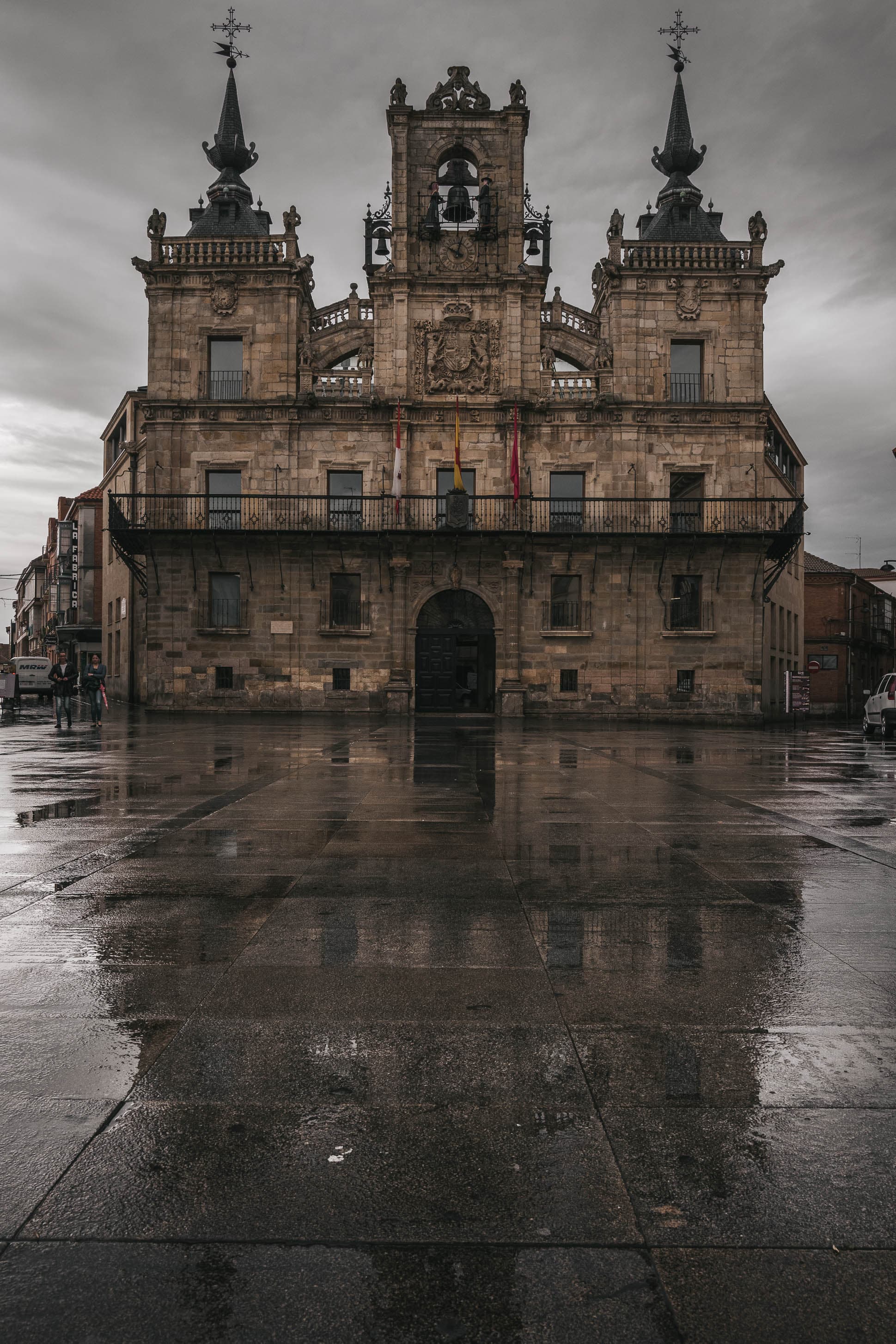
What I remember are the hard days. The day I got lost leaving Astorga and cried into my bocadillo. The day my feet hurt so badly I counted steps to the next village. The rainy afternoon on the Portuguese coastal route when I questioned every decision that brought me there.
Because those days—the ones I survived alone—taught me something no group experience could. They taught me I was capable of more than I knew. That I could be scared and continue anyway. That discomfort is temporary but the knowledge that you can handle it stays forever.
That's what solo Camino walking offers. Not ease. Not constant magic. But proof, step by step, that you are enough.
That's normal. That's the beginning.
And somewhere on the Camino, probably sooner than you expect, that feeling will transform into something else. Not confidence exactly—you'll still have hard days. But a quiet certainty that you belong there. That you can do this. That you already are doing it.
Buen Camino, future pilgrim. Walk well. Walk at your own pace. And if you see a middle-aged guy who can't stop photographing old churches and ugly crying at the Cruz de Ferro, say hello. It might be me.
---
Try asking My Camino Guide:
- What are the best albergues for meeting other pilgrims on the Camino Frances?
- How do I handle emergencies on the Camino if I'm walking solo?
- What's the best time of year to walk solo to avoid feeling too isolated?
That was six Caminos ago. Since then, I've walked the Frances five more times, the Via Podiensis from Le Puy twice (once continuing all the way to Santiago), the Norte, both the coastal and inland Portuguese routes from Lisbon, and the path to Finisterre so many times it feels like going home. Most of those journeys started solo. Some stayed that way. Others transformed into something I couldn't have predicted.
If you're considering walking the Camino alone, you probably have questions swirling in your head. Is it safe? Will I be lonely? What if something goes wrong? Am I crazy for wanting to do this by myself?
Let me buy you that metaphorical beer and tell you everything I've learned.
Why Walk Solo in the First Place?
Let's start with the obvious question: why would anyone choose to walk hundreds of kilometers alone when they could bring friends or join a group?The answer varies wildly from person to person, but I've noticed some common threads amongst the solo pilgrims I've met over the years. Some are processing grief or major life transitions—divorce, job loss, death of a loved one. Others simply couldn't find anyone willing to take a month off work. Many are introverts who recharge in solitude. And honestly? Some of us are just a bit stubborn about wanting to move at our own pace.
Here's what I've discovered: walking solo doesn't mean walking alone. It means walking on your own terms. You decide when to start each morning. You choose whether to push through that extra five kilometers or call it a day at noon because there's a beautiful café with cold beer and a river view. Nobody's waiting for you. Nobody's rushing you.
This freedom comes with responsibility, of course. But it also comes with something harder to describe—a clarity that emerges when the only voice in your head is your own.
The Safety Question (Let's Address It Honestly)
I'm not going to pretend safety concerns don't exist, because they do. But I'm also not going to pretend the Camino is some dangerous wilderness expedition, because it isn't.The Camino de Santiago is one of the safest long-distance walks in the world. You're rarely more than a few kilometers from a village. The path is well-marked (mostly—looking at you, confusing suburbs of Burgos). Other pilgrims are almost always within earshot. And the communities along the way have been hosting walkers for over a thousand years. They know us. They look out for us.
That said, I'd suggest going in knowing a few things:
Physical safety on the trail itself is rarely an issue. The biggest risks are mundane—twisted ankles on rocky descents, blisters that get infected, heat exhaustion in the Meseta, hypothermia crossing O Cebreiro in bad weather. Common sense and proper preparation handle most of these. I always carry a basic first aid kit with blister supplies, and I've used it on fellow pilgrims more often than myself.
Solo women pilgrims (which I'm not, so I'll share what I've observed and heard) generally report feeling very safe. I've walked alongside dozens of women traveling alone, and whilst they mention occasional uncomfortable interactions, these seem no more frequent than in daily life back home. The Camino community is genuinely protective. That said, basic travel precautions apply—trust your instincts, stay in reputable accommodations, and don't feel obligated to share your exact plans with strangers who give you weird vibes.
Walking at night is where I draw a harder line. Don't do it if you can avoid it. Not because of crime—because the waymarks are almost impossible to see, vehicles don't expect pedestrians on rural roads, and a minor injury becomes a major problem when nobody knows you're there.
Meeting Other Pilgrims (It Happens Whether You Want It To or Not)
Here's the paradox of solo Camino walking: you'll probably meet more people than if you came with a group.When you're traveling with friends, you naturally form a self-contained bubble. Conversations with strangers are pleasant but brief. You have your people. But when you're alone, every interaction matters more. You linger over coffee. You ask the person at the next table where they walked from today. You end up sharing meals, sharing stories, sharing kilometers.
I've made some of the most meaningful friendships of my life on the Camino. People I still visit in Germany, Australia, Brazil. People who came to my wedding. All of this started because I was walking solo and said yes to dinner with strangers.
The social rhythm of the Camino follows a predictable pattern. In the first few days, you'll cycle through different faces as everyone finds their natural pace. Then, around day four or five, you'll start seeing the same people repeatedly. You're walking similar distances at similar speeds. These become your "Camino family"—though you might not realize it's happening until it's already happened.
A few practical tips for meeting people:
Stay in albergues. I know, I know—the snoring, the early-morning plastic bag rustlers, the person who insists on headlamping their entire packing routine at 5 AM. But communal sleeping arrangements are where connections happen. You don't have to stay in albergues every night, but if you want community, that's where you'll find it.
Eat communal dinners. Many albergues offer them. Some private ones too. These slightly awkward, delicious, wine-fueled meals are Camino magic. You'll share bread with a Korean grandmother, a German banker questioning his life choices, a Spanish couple walking their honeymoon, and a gap-year student who's never done her own laundry before. It's bizarre and wonderful.
Learn a few phrases in multiple languages. "Buen Camino" obviously. But also "de donde eres" (where are you from), "cuantos kilometros hoy" (how many kilometers today), and the universal "cerveza, por favor." On the Via Podiensis, brush up your French—"d'où venez-vous" will serve you well.
Be the one who initiates. Waiting for others to approach you is a lonely strategy. Ask people about their journey. Compliment their ridiculous hat. Offer to take their photo at that viewpoint. The Camino rewards social initiative.
Managing Loneliness (Because It Will Find You)
Let me be honest: you will have lonely moments. Possibly lonely days. This isn't a failure of your solo Camino—it's part of what makes it transformative.I remember a stretch on my first Via Podiensis walk, somewhere between Le Puy and Conques, where I went nearly two days without a meaningful conversation. My French was worse then, the gîtes were sparse, and the few other pilgrims I encountered were couples who smiled politely but clearly wanted their privacy. I felt invisible. I wondered what I was doing there. I called my wife from a hotel room and cried.
And then the next morning, I met a retired teacher from Toulouse who insisted I join her for breakfast. We walked together for three days. She's since passed away, but I think about her often.
Loneliness on the Camino tends to be acute but temporary. Unlike loneliness at home—which can become chronic and normalized—Camino loneliness is impossible to ignore. It demands your attention. And because the social environment changes constantly, relief usually arrives before you break.
That said, some strategies help:
Bring connection tools. I carry a small notebook and write letters to people I love, even if I never send them. I have a lightweight e-reader loaded with books that feel like old friends. I download podcasts and audiobooks for sections I know will be remote.
Schedule calls home. I used to think disconnecting completely was noble. Now I think it's unnecessary suffering. A twenty-minute call with someone who loves you can reset your entire week. Just don't spend your whole Camino on your phone—that's not the answer either.
Move accommodations if a place feels wrong. Sometimes an albergue's vibe is off. The crowd is cliquey, or it's weirdly empty, or everyone's already paired up. You're allowed to walk another five kilometers to somewhere different. You're allowed to spring for a private room when you need to recharge. There's no purity test.
Write about it. Journaling sounds cliché until you try it. Getting the loneliness out of your head and onto paper actually helps. Plus, you'll treasure those entries later.
The Unique Rewards of Solo Walking
I've painted a realistic picture so far—the safety considerations, the social dynamics, the inevitable lonely stretches. Now let me tell you why I keep doing this.Walking solo has given me something I can't get any other way: uninterrupted time with my own mind. Not meditation exactly, though it has meditative qualities. More like... excavation. Layer by layer, day by day, you dig through the surface noise of your life and find what's underneath.
I've made major decisions on the Camino. Career changes. Relationship reckonings. Finally dealing with grief I'd been carrying for years. None of this would have happened if I'd been chatting with friends the whole time. The processing required silence.
And then there's the complete ownership of your experience. When you summit O Cebreiro in the rain (I've done this twice, both times solo), that victory belongs entirely to you. When you make a wrong turn and add six kilometers to your day, that's your mistake and your recovery. When you push through the endless Meseta whilst your mind empties itself of everything unnecessary, that's your Meseta, your emptiness, your renewal.
Solo pilgrims also tend to be more present. Without the distraction of conversation, you notice things. The way morning light hits a wheat field. The sound of church bells echoing across a valley. The old woman who brings you water simply because she saw a pilgrim walking past her door.
These moments happen to everyone, but I genuinely believe solo walkers absorb them more fully.
Practical Considerations for the Solo Pilgrim
Beyond the emotional and social aspects, some logistical realities require thought:Pack lighter than you think. When you're solo, there's nobody to hand your bag to whilst you tie your shoe. Nobody to help lift it onto your back at a bus station. Every gram is yours alone. I've seen solo pilgrims struggle with 12-kilogram packs, and I've seen them thrive with 6. Aim for the latter. My suggestion is to get a reliable scale and weigh everything before you leave.
Learn basic navigation. The Camino is well-marked, but you will occasionally miss a turn. Having a GPS app like Buen Camino or Camino Ninja on your phone provides peace of mind. More importantly, understand how to read the waymarks and what to do when you haven't seen one in ten minutes (usually: turn around).
Tell someone your rough plans. This doesn't mean checking in hourly. But having a friend or family member who knows you're walking from Burgos to León over the next week means someone would eventually notice if you vanished. I email my wife my general route each morning. It takes thirty seconds.
Carry emergency information. European emergency number is 112. Write it down along with any medical conditions, allergies, and an emergency contact. In your pack, not just your phone.
Budget for flexibility. Solo travelers have nobody to split private room costs with, but also nobody preventing them from making impulsive decisions. Having a bit of financial cushion means you can take that rest day, book that hotel room, eat that expensive meal when you need it.
Choosing Your Route as a Solo Pilgrim
Not all Camino routes are equally suited to solo walking, and I can only speak to the ones I've actually experienced.The Camino Frances is ideal for first-time solo pilgrims. The infrastructure is extensive, other pilgrims are always nearby (sometimes too many, honestly), and villages appear every few kilometers. If something goes wrong, help is never far. I've walked it six times, and whilst it can feel crowded in peak season, that crowd provides a safety net.
The Camino Portugués (I've done both coastal and inland routes, starting from Lisbon) is another good solo option. The Portuguese sections have fewer services than Spain, so plan stages more carefully, but it's very walkable alone. The coastal route is particularly beautiful but requires more road walking—stay visible.
The Via Podiensis from Le Puy is more challenging solo. Longer distances between towns, fewer pilgrims (especially in the French sections), and gîtes that sometimes require phoning ahead for reservations. When I walked it, my language limitations made me feel more isolated. But twice I've done it, and twice it's been profoundly rewarding. Just go in knowing it demands more self-sufficiency.
The Camino Norte is the hardest of my routes to walk solo. More rugged terrain, fewer services, and genuinely remote stretches along the coast. I loved it, but I was an experienced Camino walker by then. I'd hesitate to recommend it for a first-time solo pilgrim.
If you're unsure which route suits your situation, you can always plan your Camino with specific questions about route difficulty and solo suitability.
What If You Change Your Mind About Being Solo?
Here's something nobody tells first-time solo pilgrims: you might not finish alone.Some of my solo Caminos stayed solo. I walked with people during the day, shared meals, then chose to walk alone the next morning. Nothing wrong with that.
But others transformed. On my third Frances, I met a Danish woman on day six and we walked together for three weeks. On my Portuguese walk from Lisbon, I fell in with a rotating cast of Brazilians who adopted me as their "serious friend" (apparently I frown when I think). These weren't planned. They emerged.
The beauty of starting solo is that you can stay solo or become social without disappointing anyone. You've made no promises. You're not abandoning a travel companion who wanted more togetherness. You're free to let the Camino shape your experience day by day.
And honestly? Some of the deepest solo walking happens when you're technically with others. Walking in companionable silence, lost in your own thoughts whilst someone else does the same beside you—that's solo and social simultaneously.
The Days You'll Remember
I want to close with something that might seem counterintuitive.The days I remember most clearly from my solo Caminos aren't the triumphant ones. Not arriving in Santiago (though I remember those too). Not the perfect weather crossing the Pyrenees. Not even the moments of deep insight or emotional breakthrough.
What I remember are the hard days. The day I got lost leaving Astorga and cried into my bocadillo. The day my feet hurt so badly I counted steps to the next village. The rainy afternoon on the Portuguese coastal route when I questioned every decision that brought me there.
Because those days—the ones I survived alone—taught me something no group experience could. They taught me I was capable of more than I knew. That I could be scared and continue anyway. That discomfort is temporary but the knowledge that you can handle it stays forever.
That's what solo Camino walking offers. Not ease. Not constant magic. But proof, step by step, that you are enough.
Taking the First Step
If you've read this far, you're probably going to do it. Maybe you already bought your plane ticket. Maybe you're still working up the courage. Either way, I want you to know: every solo pilgrim I've met has felt exactly what you're feeling right now. The anticipation, the fear, the excitement that sits uncomfortably close to nausea.That's normal. That's the beginning.
And somewhere on the Camino, probably sooner than you expect, that feeling will transform into something else. Not confidence exactly—you'll still have hard days. But a quiet certainty that you belong there. That you can do this. That you already are doing it.
Buen Camino, future pilgrim. Walk well. Walk at your own pace. And if you see a middle-aged guy who can't stop photographing old churches and ugly crying at the Cruz de Ferro, say hello. It might be me.
---
Try asking My Camino Guide:
- What are the best albergues for meeting other pilgrims on the Camino Frances?
- How do I handle emergencies on the Camino if I'm walking solo?
- What's the best time of year to walk solo to avoid feeling too isolated?