A myth-busting prose piece addressing common fears older pilgrims have, exploring how pace expectations differ from reality, the advantages of life experience o
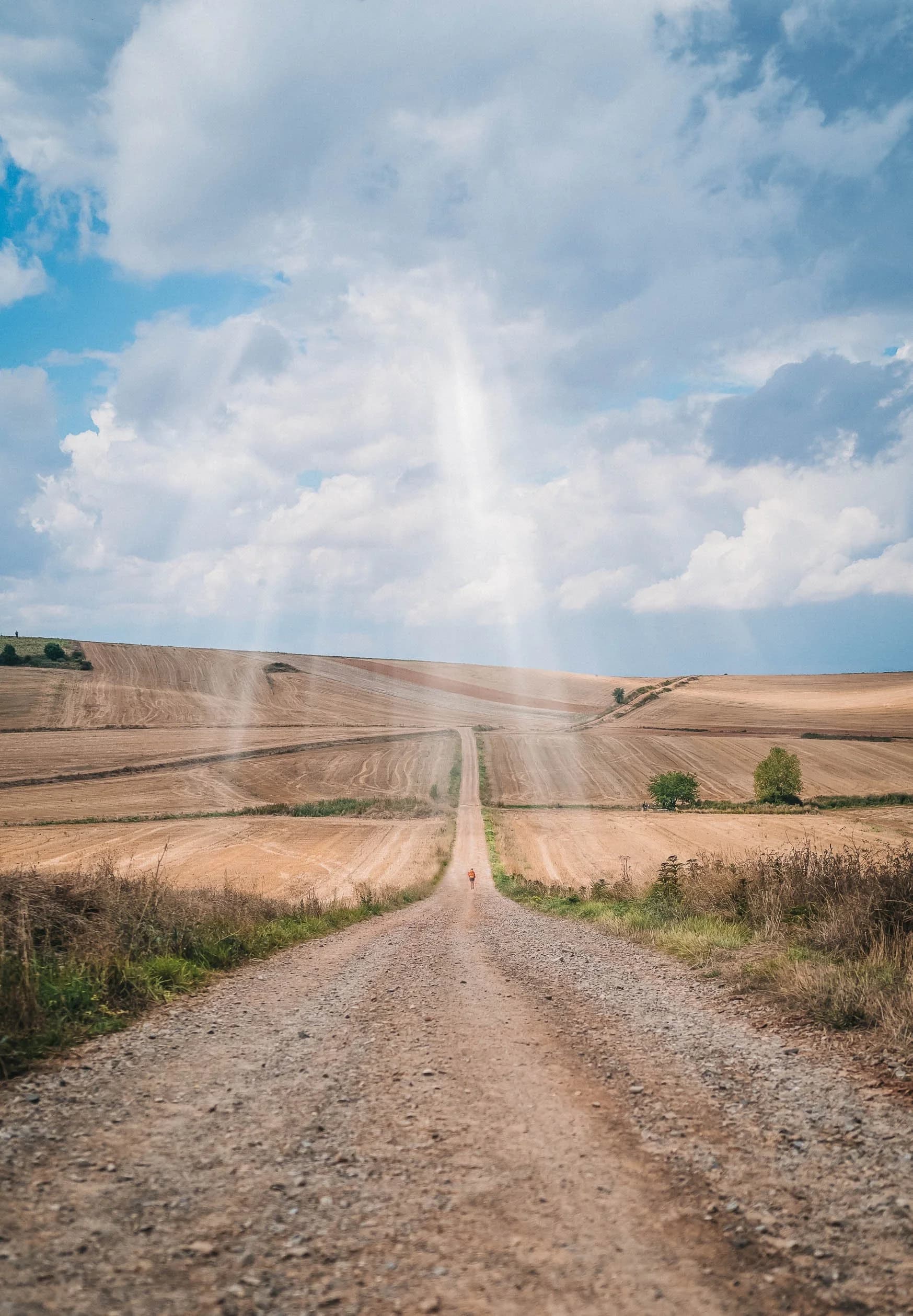
Let me tell you about Maria. I met her on the meseta, that great flat stretch of the Camino Francés that breaks so many spirits, somewhere past Burgos when the horizon seemed to mock us with its unchanging nothingness. She was sixty-three, walking her first Camino, and absolutely terrified she'd made a terrible mistake. "Everyone said I was too old for this," she told me over a glass of cheap red wine in Hontanas. "My doctor. My kids. My own brain at three in the morning."
Maria finished in Santiago six weeks later. She walked every single step. And when I saw her beneath the cathedral, she wasn't crying because she was relieved it was over—she was crying because she wished it had lasted longer.
I've walked the Camino Francés six times now, the Via Podiensis twice (once all the way through to Santiago), the Norte, both the coastal and inland Portuguese routes from Lisbon, and the walk to Finisterre five times because I apparently can't get enough of staring at the Atlantic whilst pretending I've reached the end of the world. And across all those thousands of kilometres, one truth has crystallised more clearly than any other: the Camino is not a young person's game. It never was. And the people who struggle most aren't the ones with greying hair and creaky knees—they're the ones who haven't yet learned what you've spent five or six decades figuring out.
So let's talk about what nobody actually tells you about walking the Camino in your fifties and beyond.
I watch younger walkers absolutely hammer the trail, racing from Roncesvalles like they're being chased by something, covering thirty-plus kilometres daily in some kind of unofficial competition nobody else signed up for. And I see them collapse into albergues looking shell-shocked, their feet destroyed, their spirits flagging by day four. Meanwhile, the sixty-seven-year-old retired teacher from Toulouse is strolling in two hours later, perfectly content, having stopped to photograph wildflowers and chat with a shepherd and eat a leisurely bocadillo on a stone wall with a view.
Who's doing the Camino right?
The pace you need is the pace that works for your body—not the pace imposed by guidebooks written by people who apparently don't require sleep, not the pace of the athletic twentysomethings who started the same morning, and absolutely not the pace dictated by some internal voice telling you that slower equals failure. On my first Camino Francés, I tried to keep up with younger walkers. By Logroño, my knee was screaming bloody murder and I was miserable. On my sixth, I averaged eighteen to twenty kilometres per day and it was, without question, the best walk I've ever had.
Go in knowing this: the Camino doesn't care how fast you walk. The only person tracking your pace is you. And you can choose to stop tracking it entirely.
But here's what the fearmongers don't tell you: your fifty or sixty-year-old body has been doing difficult things for decades. It knows how to adapt. It knows how to find rhythm. It knows—if you let it—how to tell you exactly what it needs.
The advantage of life experience on the Camino isn't fitness. It's wisdom. You know that the sharp pain in your Achilles on day three doesn't necessarily mean catastrophe; it might just mean you need to stretch more and start slower each morning. You know that the profound exhaustion of day five will pass if you trust the process. You know that your body will find its walking legs somewhere around day eight or nine, and suddenly those twenty-kilometre days will feel almost automatic.
Younger walkers often push through warning signs because they don't yet have the experience to recognise them. They confuse endurance with ignoring pain. You know better. You know that rest isn't weakness—it's strategy.
My suggestion is to build in rest days from the start. Not as contingency, but as part of the plan. Every five or six days, stay somewhere lovely and don't walk at all. Let your muscles recover. Let your feet dry out completely. Drink coffee in a plaza and watch other pilgrims trudge past whilst you feel absolutely no guilt whatsoever. This isn't cheating. This is smart.
I have tricky knees. Everyone who walks the Camino enough times eventually has tricky knees. The descents—particularly the brutal one from Orisson to Roncesvalles, the rocky nightmare after O'Cebreiro, and the knee-destroying drops on the coastal Camino Norte—will test whatever joint issues you're carrying.
What actually helps? First, proper trekking poles. Not the cheap ones, not the ones you borrowed from your neighbor, but a quality pair with good shock absorption that you've actually practiced using before you start. Poles transfer an enormous amount of impact away from your knees. On steep descents, I lean on mine like they're dear friends who owe me money.
Second, consider your footwear seriously. I know there's endless debate about trail runners versus boots, but for those of us with joint concerns, I'd highly suggest testing both thoroughly before committing. Personally, I walk in trail runners with good cushioning, but my feet are fairly stable. If you have weak ankles or a history of sprains, you might want more support. The point is: figure this out before the Camino, not during.
Third—and this is something nobody mentions enough—consider the terrain when choosing your route. The Francés has some brutal descents, but the Portuguese inland route from Lisbon is remarkably gentle on the legs. Almost entirely flat through Portugal, with only moderate elevation changes once you cross into Galicia. If joint preservation is a priority, that route might be worth serious consideration. The coastal Portuguese has more ups and downs but nothing savage.
At fifty-plus, recovery isn't optional—it's essential. This means actual sleep, not the performative suffering of setting an alarm for five AM to beat other pilgrims to the next town. It means eating actual food with nutritional value, not subsisting entirely on tortilla and cola. It means listening when your body says it's done for the day, even if it's only three in the afternoon and you'd planned to push further.
The Camino Francés, in particular, has developed this strange competitive culture around early starts and bed races. Pilgrims wake before dawn, speed-walk through darkness, and claim beds in the next albergue by noon. Then they sit around bored for eight hours before doing it again.
This is, to put it politely, insane.
My strategy now is to walk at a civilised hour—eight or nine in the morning—and book ahead when I can. Yes, I know booking ahead isn't "authentic." Neither is destroying your body to participate in an accommodation arms race. Private rooms, when affordable, give you space to stretch, sleep soundly, and actually recover. Municipal albergues are wonderful for the social experience, but the snoring chorus of forty exhausted pilgrims isn't exactly restorative.
If you're concerned about finding beds, ask about booking strategies along your route before you go. It varies significantly by section and season.
You know how to pace yourself in all things—not just walking, but conversation, emotion, the entire arc of a long journey. You've probably done other hard things: raised children, weathered career changes, loved and lost, survived periods when survival itself felt like an achievement. The Camino will be physically challenging, but it won't be the hardest thing you've ever done. Not even close.
You know how to be alone without being lonely. This matters. Many younger pilgrims struggle profoundly with the interior quiet of the Camino, the long hours with only their own thoughts for company. You've had practice with that. You've had decades of practice with that.
You know that discomfort is temporary and that complaining rarely helps. You know how to make friends quickly, share meals generously, ask for help when you need it. You know that the point of a journey isn't always the destination—you've lived enough story to understand that the walking itself is the thing.
On the Via Podiensis, I walked for several days with a man named Jean-Pierre who was seventy-one. He'd retired from forty years as a postal worker in Lyon and decided to walk from Le Puy to Santiago because, as he put it, "I've delivered enough letters. Time to deliver myself somewhere." He was the slowest walker I'd ever encountered. He was also the most content human being I'd ever met on any trail. He noticed everything. He spoke to everyone. He treated every church, every village, every sunset like it might be the most important moment of the day—which, of course, it was.
That's what life experience gives you. Not speed. Presence.
Start training earlier than you think you need to. Not brutal gym sessions, but consistent walking with your actual pack on your actual back. Three months of regular training walks—gradually increasing distance—will do more for your Camino than any amount of positive thinking. Your body needs to remember how to walk long distances. Give it time to remember.
Pack lighter than you believe possible. I cannot stress this enough. Every kilogram matters more at fifty than it did at thirty. Aim for six to eight kilograms in your pack, not including water. Lay out everything you think you need, then remove a third of it. The Camino has shops. You can buy what you forgot.
Carry a quality sleep setup. Sleep is recovery, and recovery determines whether you can walk tomorrow. I bring earplugs designed for sleeping and an eye mask regardless of where I'm staying. In albergues, I also bring a lightweight silk sleeping bag liner for that tiny bit of personal space.
Consider the shoulder seasons. September and October on the Camino Francés are significantly less crowded than summer, with milder temperatures and easier bed availability. If you can be flexible with timing, the experience is notably less stressful. April and May are lovely as well, though you might encounter more rain.
Think seriously about your route. The Francés is the most popular but not necessarily the best choice for everyone. If you're concerned about knee issues, the Portuguese inland route is gentler. If you want fewer people, the Portuguese coastal or the sections of the Via Podiensis through France might suit you better. Don't default to the Francés just because it's the famous one. Plan your route based on your specific situation.
The answer to the first two questions is yes. The answer to the third is: who cares?
You will have moments of struggle. You will have days when everything hurts and the next town seems impossibly far and you wonder what possessed you to attempt this ridiculous endeavour. You will wake up in albergues that smell like feet and regret various life choices.
But you will also have moments—I promise you this—of such unexpected beauty that they'll stop you in your tracks. Sunrise on the meseta when the whole flat world turns gold. The first glimpse of Santiago's cathedral towers after weeks of walking. The weight of your pack dropping to the floor when you finally arrive. The strange alchemy of strangers becoming family over shared meals and shared miles.
These moments don't belong exclusively to the young. They might, in fact, be appreciated more deeply by those of us who know how rare and temporary all beauty actually is.
Every day, I see pilgrims in their fifties, sixties, seventies, and occasionally their eighties, making their way toward Santiago. They're not struggling more than younger walkers. Often, they're struggling less—because they've stopped fighting the experience and started surrendering to it. They've learned, as only time can teach, that the only way forward is one step at a time.
Maria from the meseta? She told me later that walking the Camino at sixty-three was the most significant thing she'd ever done. Not despite her age, but because of it. "I finally had the wisdom to go slowly enough to see everything," she said.
You have that wisdom too. You've been accumulating it for decades. Now you just need to trust it, pack your bag, and start walking.
---
Try asking My Camino Guide:
- What's the best Camino route for someone with knee problems?
- How should I train for the Camino if I'm over 50?
- What are the easiest sections of the Camino Francés?
Maria finished in Santiago six weeks later. She walked every single step. And when I saw her beneath the cathedral, she wasn't crying because she was relieved it was over—she was crying because she wished it had lasted longer.
I've walked the Camino Francés six times now, the Via Podiensis twice (once all the way through to Santiago), the Norte, both the coastal and inland Portuguese routes from Lisbon, and the walk to Finisterre five times because I apparently can't get enough of staring at the Atlantic whilst pretending I've reached the end of the world. And across all those thousands of kilometres, one truth has crystallised more clearly than any other: the Camino is not a young person's game. It never was. And the people who struggle most aren't the ones with greying hair and creaky knees—they're the ones who haven't yet learned what you've spent five or six decades figuring out.
So let's talk about what nobody actually tells you about walking the Camino in your fifties and beyond.
The Pace Myth That Needs to Die
Here's the thing I wish someone had told me before my first Camino: walking faster doesn't make you more of a pilgrim. It just makes you more tired.I watch younger walkers absolutely hammer the trail, racing from Roncesvalles like they're being chased by something, covering thirty-plus kilometres daily in some kind of unofficial competition nobody else signed up for. And I see them collapse into albergues looking shell-shocked, their feet destroyed, their spirits flagging by day four. Meanwhile, the sixty-seven-year-old retired teacher from Toulouse is strolling in two hours later, perfectly content, having stopped to photograph wildflowers and chat with a shepherd and eat a leisurely bocadillo on a stone wall with a view.
Who's doing the Camino right?
The pace you need is the pace that works for your body—not the pace imposed by guidebooks written by people who apparently don't require sleep, not the pace of the athletic twentysomethings who started the same morning, and absolutely not the pace dictated by some internal voice telling you that slower equals failure. On my first Camino Francés, I tried to keep up with younger walkers. By Logroño, my knee was screaming bloody murder and I was miserable. On my sixth, I averaged eighteen to twenty kilometres per day and it was, without question, the best walk I've ever had.
Go in knowing this: the Camino doesn't care how fast you walk. The only person tracking your pace is you. And you can choose to stop tracking it entirely.
Your Body Knows Things You've Forgotten
Let's be honest about the physical reality. Walking five hundred to eight hundred kilometres is genuinely hard on the human body. Your feet will hurt. Your joints will complain. There will be mornings when swinging your legs out of the bunk requires an embarrassing amount of effort and possibly some creative profanity.But here's what the fearmongers don't tell you: your fifty or sixty-year-old body has been doing difficult things for decades. It knows how to adapt. It knows how to find rhythm. It knows—if you let it—how to tell you exactly what it needs.
The advantage of life experience on the Camino isn't fitness. It's wisdom. You know that the sharp pain in your Achilles on day three doesn't necessarily mean catastrophe; it might just mean you need to stretch more and start slower each morning. You know that the profound exhaustion of day five will pass if you trust the process. You know that your body will find its walking legs somewhere around day eight or nine, and suddenly those twenty-kilometre days will feel almost automatic.
Younger walkers often push through warning signs because they don't yet have the experience to recognise them. They confuse endurance with ignoring pain. You know better. You know that rest isn't weakness—it's strategy.
My suggestion is to build in rest days from the start. Not as contingency, but as part of the plan. Every five or six days, stay somewhere lovely and don't walk at all. Let your muscles recover. Let your feet dry out completely. Drink coffee in a plaza and watch other pilgrims trudge past whilst you feel absolutely no guilt whatsoever. This isn't cheating. This is smart.
The Joint Conversation
Let's address the elephant in the albergue: knees, hips, and the various other hinges that may have started making noises they didn't make in your thirties.I have tricky knees. Everyone who walks the Camino enough times eventually has tricky knees. The descents—particularly the brutal one from Orisson to Roncesvalles, the rocky nightmare after O'Cebreiro, and the knee-destroying drops on the coastal Camino Norte—will test whatever joint issues you're carrying.
What actually helps? First, proper trekking poles. Not the cheap ones, not the ones you borrowed from your neighbor, but a quality pair with good shock absorption that you've actually practiced using before you start. Poles transfer an enormous amount of impact away from your knees. On steep descents, I lean on mine like they're dear friends who owe me money.
Second, consider your footwear seriously. I know there's endless debate about trail runners versus boots, but for those of us with joint concerns, I'd highly suggest testing both thoroughly before committing. Personally, I walk in trail runners with good cushioning, but my feet are fairly stable. If you have weak ankles or a history of sprains, you might want more support. The point is: figure this out before the Camino, not during.
Third—and this is something nobody mentions enough—consider the terrain when choosing your route. The Francés has some brutal descents, but the Portuguese inland route from Lisbon is remarkably gentle on the legs. Almost entirely flat through Portugal, with only moderate elevation changes once you cross into Galicia. If joint preservation is a priority, that route might be worth serious consideration. The coastal Portuguese has more ups and downs but nothing savage.
Recovery Is Different Now (And That's Fine)
When I was thirty-five, I could walk thirty kilometres, eat a questionable pilgrim menu, sleep five hours in a creaky bunk, and feel reasonably human the next morning. That math doesn't work anymore.At fifty-plus, recovery isn't optional—it's essential. This means actual sleep, not the performative suffering of setting an alarm for five AM to beat other pilgrims to the next town. It means eating actual food with nutritional value, not subsisting entirely on tortilla and cola. It means listening when your body says it's done for the day, even if it's only three in the afternoon and you'd planned to push further.
The Camino Francés, in particular, has developed this strange competitive culture around early starts and bed races. Pilgrims wake before dawn, speed-walk through darkness, and claim beds in the next albergue by noon. Then they sit around bored for eight hours before doing it again.
This is, to put it politely, insane.
My strategy now is to walk at a civilised hour—eight or nine in the morning—and book ahead when I can. Yes, I know booking ahead isn't "authentic." Neither is destroying your body to participate in an accommodation arms race. Private rooms, when affordable, give you space to stretch, sleep soundly, and actually recover. Municipal albergues are wonderful for the social experience, but the snoring chorus of forty exhausted pilgrims isn't exactly restorative.
If you're concerned about finding beds, ask about booking strategies along your route before you go. It varies significantly by section and season.
What Life Experience Actually Gives You
Here's the secret nobody tells nervous older pilgrims: you have tremendous advantages that have nothing to do with physical capacity.You know how to pace yourself in all things—not just walking, but conversation, emotion, the entire arc of a long journey. You've probably done other hard things: raised children, weathered career changes, loved and lost, survived periods when survival itself felt like an achievement. The Camino will be physically challenging, but it won't be the hardest thing you've ever done. Not even close.
You know how to be alone without being lonely. This matters. Many younger pilgrims struggle profoundly with the interior quiet of the Camino, the long hours with only their own thoughts for company. You've had practice with that. You've had decades of practice with that.
You know that discomfort is temporary and that complaining rarely helps. You know how to make friends quickly, share meals generously, ask for help when you need it. You know that the point of a journey isn't always the destination—you've lived enough story to understand that the walking itself is the thing.
On the Via Podiensis, I walked for several days with a man named Jean-Pierre who was seventy-one. He'd retired from forty years as a postal worker in Lyon and decided to walk from Le Puy to Santiago because, as he put it, "I've delivered enough letters. Time to deliver myself somewhere." He was the slowest walker I'd ever encountered. He was also the most content human being I'd ever met on any trail. He noticed everything. He spoke to everyone. He treated every church, every village, every sunset like it might be the most important moment of the day—which, of course, it was.
That's what life experience gives you. Not speed. Presence.
Practical Matters: The Stuff That Actually Helps
Let me give you some concrete suggestions that have worked for me and for the many fifty-plus pilgrims I've walked beside over the years.Start training earlier than you think you need to. Not brutal gym sessions, but consistent walking with your actual pack on your actual back. Three months of regular training walks—gradually increasing distance—will do more for your Camino than any amount of positive thinking. Your body needs to remember how to walk long distances. Give it time to remember.
Pack lighter than you believe possible. I cannot stress this enough. Every kilogram matters more at fifty than it did at thirty. Aim for six to eight kilograms in your pack, not including water. Lay out everything you think you need, then remove a third of it. The Camino has shops. You can buy what you forgot.
Carry a quality sleep setup. Sleep is recovery, and recovery determines whether you can walk tomorrow. I bring earplugs designed for sleeping and an eye mask regardless of where I'm staying. In albergues, I also bring a lightweight silk sleeping bag liner for that tiny bit of personal space.
Consider the shoulder seasons. September and October on the Camino Francés are significantly less crowded than summer, with milder temperatures and easier bed availability. If you can be flexible with timing, the experience is notably less stressful. April and May are lovely as well, though you might encounter more rain.
Think seriously about your route. The Francés is the most popular but not necessarily the best choice for everyone. If you're concerned about knee issues, the Portuguese inland route is gentler. If you want fewer people, the Portuguese coastal or the sections of the Via Podiensis through France might suit you better. Don't default to the Francés just because it's the famous one. Plan your route based on your specific situation.
The Fear Behind the Fear
When people say they're worried about walking the Camino "at their age," the physical concerns are usually covering something deeper. They're really asking: Am I still capable of adventure? Is it too late to do hard things? Will I embarrass myself?The answer to the first two questions is yes. The answer to the third is: who cares?
You will have moments of struggle. You will have days when everything hurts and the next town seems impossibly far and you wonder what possessed you to attempt this ridiculous endeavour. You will wake up in albergues that smell like feet and regret various life choices.
But you will also have moments—I promise you this—of such unexpected beauty that they'll stop you in your tracks. Sunrise on the meseta when the whole flat world turns gold. The first glimpse of Santiago's cathedral towers after weeks of walking. The weight of your pack dropping to the floor when you finally arrive. The strange alchemy of strangers becoming family over shared meals and shared miles.
These moments don't belong exclusively to the young. They might, in fact, be appreciated more deeply by those of us who know how rare and temporary all beauty actually is.
A Final Truth
The Camino will meet you where you are. It doesn't require youth or athletic prowess or any particular kind of body. It requires only that you show up and keep walking.Every day, I see pilgrims in their fifties, sixties, seventies, and occasionally their eighties, making their way toward Santiago. They're not struggling more than younger walkers. Often, they're struggling less—because they've stopped fighting the experience and started surrendering to it. They've learned, as only time can teach, that the only way forward is one step at a time.
Maria from the meseta? She told me later that walking the Camino at sixty-three was the most significant thing she'd ever done. Not despite her age, but because of it. "I finally had the wisdom to go slowly enough to see everything," she said.
You have that wisdom too. You've been accumulating it for decades. Now you just need to trust it, pack your bag, and start walking.
---
Try asking My Camino Guide:
- What's the best Camino route for someone with knee problems?
- How should I train for the Camino if I'm over 50?
- What are the easiest sections of the Camino Francés?