A flowing prose guide to late September through November walking, covering shifting weather patterns, reduced albergue availability, the altered social dynamic
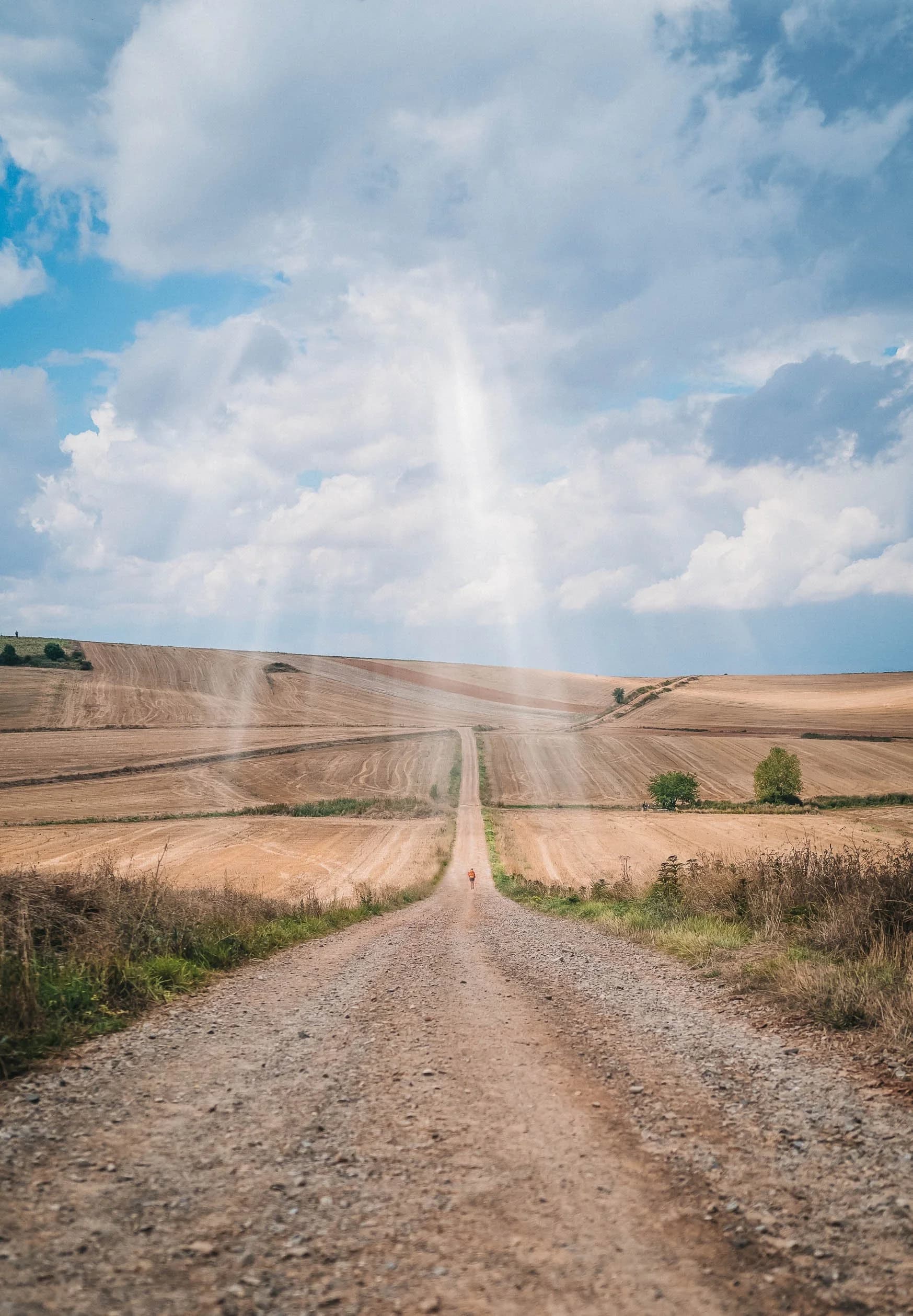
There's a moment on the Meseta in late October when the light turns golden and the wind carries the smell of wood smoke from distant villages, and you realize you haven't seen another pilgrim in three hours. Your footsteps are the only sound. The path belongs to you alone. And you think: this is what they meant.
If you've been researching the Camino, you've probably encountered plenty of summer pilgrims warning you about the crowds—the race for beds, the packed albergues, the feeling of walking in a conga line through Galicia. What you might not have heard is that many of us who keep returning, who've walked these paths multiple times, deliberately choose autumn. Not despite its challenges, but because of them.
I've walked the Camino Frances six times now, at various seasons, and my three autumn crossings remain the most memorable. Not the easiest. The most honest. That distinction matters.
Late September still carries summer's warmth, particularly on the Frances before O Cebreiro. You'll find most infrastructure operational, though the first closures begin. October is the sweet spot for many veterans—genuinely cool walking weather, dramatically reduced crowds, most services still available. November is where things get interesting. And by interesting, I mean you'll need to plan rather than simply show up.
The 2026 autumn will be no different in its basic character, though each year brings subtle shifts. What you can count on is this: the Camino you walk in October will feel fundamentally different from the Camino your July-walking friends describe.
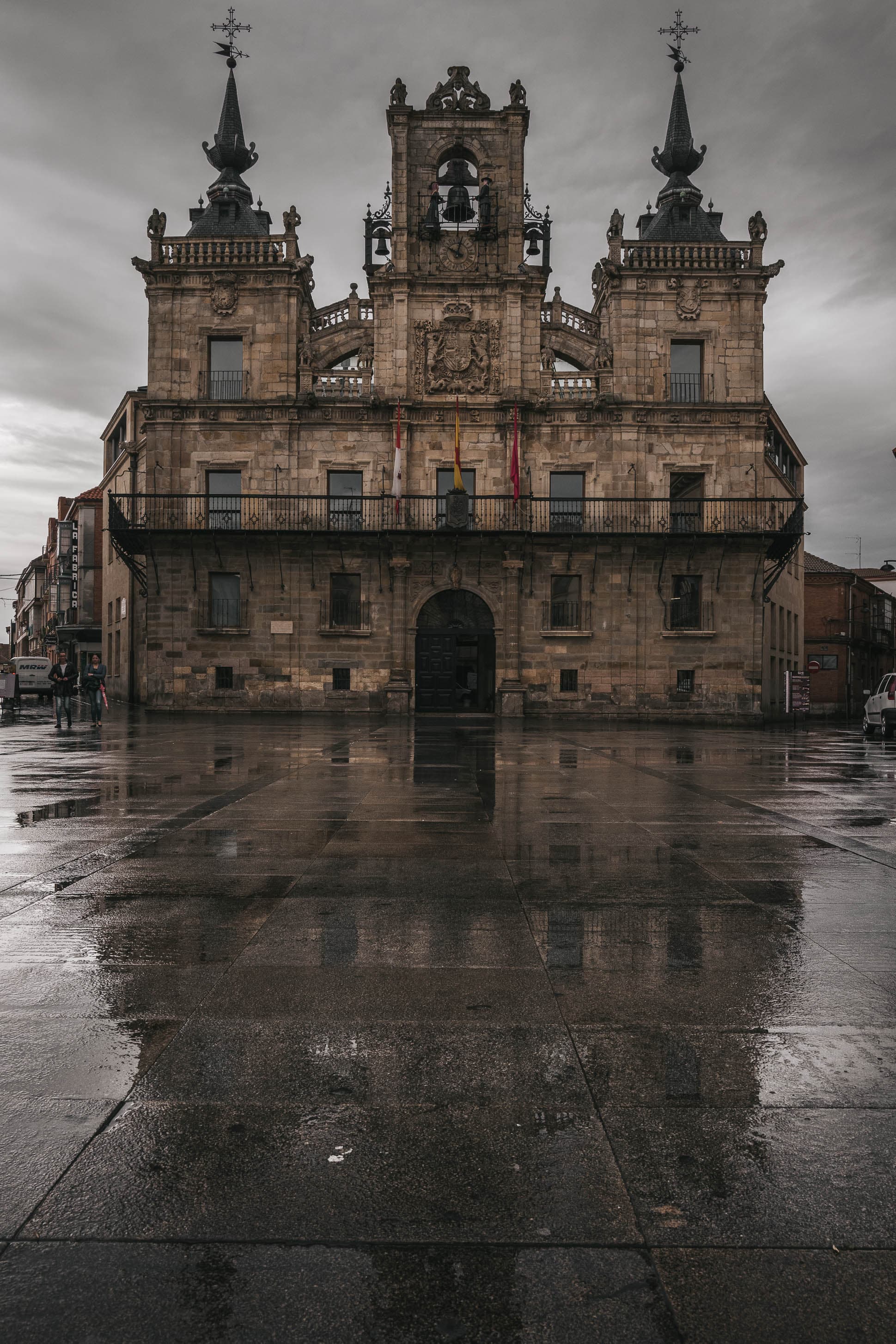
The Pyrenees in late October can be genuinely cold. I've crossed the Roncesvalles route in conditions ranging from crisp sunshine to sideways rain that found every gap in my supposedly waterproof jacket. The Meseta's famous heat becomes the Meseta's famous wind—cold, persistent, searching. And Galicia? Galicia in autumn is doing exactly what Galicia does: being wet. Often very wet.
But here's what summer pilgrims miss: walking in autumn weather is often more comfortable than walking in summer heat. Those brutal July stages across the Meseta, where pilgrims start at 5 AM to avoid heat stroke? In October, you can actually enjoy them. The afternoon light across those plains is extraordinary—all amber and rose, the kind of light that makes photographers weep.
My suggestion is to prepare for genuine variety. A typical autumn day might start with frost on your boots outside the albergue, warm to pleasant shirtsleeve walking by midday, then drop sharply as clouds roll in by afternoon. Layering becomes essential, not optional.
Go in knowing that rain is probable, cold is possible, and perfect days are a gift rather than an expectation. Your gear list matters more than it did for your summer-walking friends.
I would highly suggest investing in a genuinely waterproof jacket—not water-resistant, waterproof. The Outdoor Research Foray II has survived multiple autumn Caminos for me. Pair it with rain pants that can go on over your boots without removing them—you'll thank me when the skies open on the descent into Molinaseca.
In summer, the challenge is competition—too many pilgrims, not enough beds. You race, you stress, you arrive at 1 PM terrified the albergue will be full. In autumn, the challenge is availability. Many albergues simply close. Villages that had three options in July might have one. Or none.
The Camino Frances remains the most reliable option for autumn walking—its infrastructure is robust enough that you'll always find something. But "something" might be seven kilometers further than you planned, or in the next village, or that pensión you'd ignored because it seemed expensive compared to albergue prices.
I've learned to check ahead in autumn. Not obsessively, not weeks in advance, but the evening before or the morning of. A quick call to the next day's destination—hospitaleros appreciate the heads-up—or checking Gronze for seasonal closures saves considerable stress.
The smaller routes require more attention. I've walked the Camino Norte in early October and found it gorgeous but demanding logistically. Some of those tiny coastal villages have exactly one albergue, and when it's closed for the season, your options narrow considerably.
What I've found works: embrace private accommodation more readily than you might in summer. Those small pensións and casas rurales that seemed unnecessary when albergues were plentiful become your autumn friends. They're often warmer, quieter, and the proprietors—starved for customers by October—sometimes offer surprisingly good deals.
Summer Camino has a particular social energy—constant new faces, group dinners that fill long tables, that buzzy feeling of a shared mass experience. It's genuine and valuable in its own way. But it's a different thing.
Autumn Camino is intimate.
You'll walk with the same small group of people for days, sometimes weeks. Not because you planned it, but because there are so few pilgrims that you naturally gravitate together. The German woman you met in Saint-Jean becomes your dinner companion in Burgos, your coffee partner in León, your friend at the cathedral steps in Santiago.
The conversations go deeper. There's time. There's quiet. There's space to actually hear each other.
I remember an October evening in Carrión de los Condes—a communal dinner in an albergue that held perhaps ten of us, whilst summer would have seen fifty. We talked until the hospitalero gently reminded us that the doors lock at ten. Real talk. The kind you don't have when there's a queue for the bathroom and three more groups waiting for their pasta water.
But go in knowing that autumn can also be lonely. I've had days—particularly on the Meseta—where I walked entirely alone, ate dinner alone, went to bed alone. If you're walking for the social experience primarily, autumn might not serve you well. If you're walking for the internal experience, with social connection as a welcome addition rather than the main course, autumn delivers profoundly.
Summer Camino—and I say this having walked it twice in peak season—carries an undertone of performance. Not for everyone, not all the time, but it's there. The early starts feel competitive. The albergue arrivals have a quality of victory or defeat. The path itself becomes secondary to the logistics of managing the crowd.
Autumn Camino strips that away.
When there's no competition for beds, you walk at your own pace. When there's no dinner rush, you eat when you're hungry. When the path is yours alone, you hear things—the crunch of fallen leaves, the distant church bells, your own breathing, your own thoughts.
Many of us find that the questions we came to the Camino with finally have space to surface. The internal work that the Camino promises becomes possible in a way it sometimes isn't when you're managing constant social input.
I've heard pilgrims describe autumn Camino as "the real Camino," which isn't quite right—all Caminos are real. But I understand what they mean. It feels essential. Undecorated. The bones of the experience without the summer flesh.
Daylight shrinks noticeably. By late October, you're losing meaningful walking time at both ends. Those 30-kilometer stages that summer pilgrims knocked out with time for a leisurely lunch become genuinely challenging. Plan shorter days, or accept that you'll finish some stages in failing light. A reliable headlamp moves from nice-to-have to essential.
Services operate on winter schedules. That bar at the halfway point of a long stage? It might not open until 10 AM—or at all. The shops in small villages might close entirely on weekday afternoons. Carry more food than you think you need.
The harvest is happening. In the wine regions—Navarra, La Rioja—autumn means vendimia, the grape harvest. You'll smell fermenting grapes, see workers in the vineyards, potentially score some remarkable young wine if you're lucky. The agricultural calendar becomes visible in ways it isn't during summer.
Church schedules shrink. Those churches that were open all day in August? Many revert to mass-only hours. If visiting churches matters to your pilgrimage, check ahead or plan to attend services.
The train from Paris to Saint-Jean-Pied-de-Port continues to run, though check schedules carefully as autumn progresses. I've made that journey twice in October—watching the French countryside slide past, feeling the anticipation build—and it remains one of my favorite approaches.
If you're considering starting from Lisbon on the Portuguese route, autumn is genuinely lovely for the first week. The Alentejo heat that makes summer walking punishing becomes pleasant October warmth. I walked that central route through Alentejo in late September once, and the cork oak forests in that slanted autumn light remain vivid in my memory.
For planning your specific dates and route, think carefully about your closure tolerance. Early October offers more infrastructure but more pilgrims. Late October shifts that balance. November is for the experienced or adventurous.
Keep the technical fabrics, but add warmth layers. A merino wool base layer becomes your best friend—warm when wet, naturally odor-resistant, comfortable for sleeping if the albergue heating hasn't quite kicked on.
Swap one pair of shorts for another pair of pants. Bring gloves and a hat—I'm talking a warm hat, not a sun hat. The Meseta wind in October cuts through you, and your ears will suffer otherwise.
Consider your footwear carefully. Those trail runners that work beautifully on dry summer paths might not handle consistent mud. I'm not saying switch to boots necessarily—I've done autumn Caminos in both—but think about grip and water resistance more than you would for July.
Your sleeping bag needs to handle colder nights. Those ultralight summer quilts rated to 50°F won't serve you in an unheated Meseta albergue in October. If you want more specific gear advice, you can ask about autumn packing essentials.
If you're walking the Camino primarily for the social experience, the party-like energy of shared suffering with hundreds of others, the instant community that summer provides—autumn will disappoint you. You'll find community, but smaller, quieter, slower to form.
If you have limited flexibility and must complete specific stages on specific days regardless of conditions—autumn's weather variability will stress you. A storm system that parks over Galicia for three days requires either waiting or walking in genuinely unpleasant conditions.
If you need infrastructure reliability above all—the certainty that every bar will be open, every albergue available—autumn will frustrate you with its closures and reduced hours.
But if you want the path to yourself. If you want conversations that last beyond the next albergue. If you want the landscape without the crowds, the experience without the performance, the Camino as it was walked for centuries before it became a trending topic—autumn offers something precious.
I keep going back to that word: honest. Autumn Camino feels honest to me. It doesn't pretend to be easy or comfortable or convenient. It asks more and, in my experience, it gives more in return.
The path will be there in late September 2026. The yellow arrows won't care what season it is. The cathedral in Santiago will welcome you regardless of whether you arrive with a thousand others or a dozen.
But if you walk in autumn, you might understand why some of us keep choosing it. Why we'll take cold rain over crowds, solitude over certainty, the Camino's honest face over its summer smile.
Buen Camino. Whatever season finds you on the path.
---
Try asking My Camino Guide:
- What are the best stages for autumn walking on the Camino Frances?
- Which albergues stay open through November?
- How do I prepare for Camino weather in October?
If you've been researching the Camino, you've probably encountered plenty of summer pilgrims warning you about the crowds—the race for beds, the packed albergues, the feeling of walking in a conga line through Galicia. What you might not have heard is that many of us who keep returning, who've walked these paths multiple times, deliberately choose autumn. Not despite its challenges, but because of them.
I've walked the Camino Frances six times now, at various seasons, and my three autumn crossings remain the most memorable. Not the easiest. The most honest. That distinction matters.
What Autumn Actually Means on the Camino
Let me be specific about timing, because "autumn" means different things to different people. We're talking late September through November—roughly from the autumn equinox until the albergue municipal closures accelerate in earnest.Late September still carries summer's warmth, particularly on the Frances before O Cebreiro. You'll find most infrastructure operational, though the first closures begin. October is the sweet spot for many veterans—genuinely cool walking weather, dramatically reduced crowds, most services still available. November is where things get interesting. And by interesting, I mean you'll need to plan rather than simply show up.
The 2026 autumn will be no different in its basic character, though each year brings subtle shifts. What you can count on is this: the Camino you walk in October will feel fundamentally different from the Camino your July-walking friends describe.
The Weather Question (Because Everyone Asks)
I'm not going to sugarcoat this. Autumn weather on the Camino requires respect.The Pyrenees in late October can be genuinely cold. I've crossed the Roncesvalles route in conditions ranging from crisp sunshine to sideways rain that found every gap in my supposedly waterproof jacket. The Meseta's famous heat becomes the Meseta's famous wind—cold, persistent, searching. And Galicia? Galicia in autumn is doing exactly what Galicia does: being wet. Often very wet.
But here's what summer pilgrims miss: walking in autumn weather is often more comfortable than walking in summer heat. Those brutal July stages across the Meseta, where pilgrims start at 5 AM to avoid heat stroke? In October, you can actually enjoy them. The afternoon light across those plains is extraordinary—all amber and rose, the kind of light that makes photographers weep.
My suggestion is to prepare for genuine variety. A typical autumn day might start with frost on your boots outside the albergue, warm to pleasant shirtsleeve walking by midday, then drop sharply as clouds roll in by afternoon. Layering becomes essential, not optional.
Go in knowing that rain is probable, cold is possible, and perfect days are a gift rather than an expectation. Your gear list matters more than it did for your summer-walking friends.
I would highly suggest investing in a genuinely waterproof jacket—not water-resistant, waterproof. The Outdoor Research Foray II has survived multiple autumn Caminos for me. Pair it with rain pants that can go on over your boots without removing them—you'll thank me when the skies open on the descent into Molinaseca.
The Bed Situation: Planning vs. Spontaneity
Here's where autumn demands a mindset shift.In summer, the challenge is competition—too many pilgrims, not enough beds. You race, you stress, you arrive at 1 PM terrified the albergue will be full. In autumn, the challenge is availability. Many albergues simply close. Villages that had three options in July might have one. Or none.
The Camino Frances remains the most reliable option for autumn walking—its infrastructure is robust enough that you'll always find something. But "something" might be seven kilometers further than you planned, or in the next village, or that pensión you'd ignored because it seemed expensive compared to albergue prices.
I've learned to check ahead in autumn. Not obsessively, not weeks in advance, but the evening before or the morning of. A quick call to the next day's destination—hospitaleros appreciate the heads-up—or checking Gronze for seasonal closures saves considerable stress.
The smaller routes require more attention. I've walked the Camino Norte in early October and found it gorgeous but demanding logistically. Some of those tiny coastal villages have exactly one albergue, and when it's closed for the season, your options narrow considerably.
What I've found works: embrace private accommodation more readily than you might in summer. Those small pensións and casas rurales that seemed unnecessary when albergues were plentiful become your autumn friends. They're often warmer, quieter, and the proprietors—starved for customers by October—sometimes offer surprisingly good deals.
The People You'll Meet (And Won't)
This is where autumn's character emerges most clearly.Summer Camino has a particular social energy—constant new faces, group dinners that fill long tables, that buzzy feeling of a shared mass experience. It's genuine and valuable in its own way. But it's a different thing.
Autumn Camino is intimate.
You'll walk with the same small group of people for days, sometimes weeks. Not because you planned it, but because there are so few pilgrims that you naturally gravitate together. The German woman you met in Saint-Jean becomes your dinner companion in Burgos, your coffee partner in León, your friend at the cathedral steps in Santiago.
The conversations go deeper. There's time. There's quiet. There's space to actually hear each other.
I remember an October evening in Carrión de los Condes—a communal dinner in an albergue that held perhaps ten of us, whilst summer would have seen fifty. We talked until the hospitalero gently reminded us that the doors lock at ten. Real talk. The kind you don't have when there's a queue for the bathroom and three more groups waiting for their pasta water.
But go in knowing that autumn can also be lonely. I've had days—particularly on the Meseta—where I walked entirely alone, ate dinner alone, went to bed alone. If you're walking for the social experience primarily, autumn might not serve you well. If you're walking for the internal experience, with social connection as a welcome addition rather than the main course, autumn delivers profoundly.
Why Veterans Keep Coming Back to Autumn
Here's the thing nobody tells you until you've done it: summer Camino and autumn Camino are almost different pilgrimages.Summer Camino—and I say this having walked it twice in peak season—carries an undertone of performance. Not for everyone, not all the time, but it's there. The early starts feel competitive. The albergue arrivals have a quality of victory or defeat. The path itself becomes secondary to the logistics of managing the crowd.
Autumn Camino strips that away.
When there's no competition for beds, you walk at your own pace. When there's no dinner rush, you eat when you're hungry. When the path is yours alone, you hear things—the crunch of fallen leaves, the distant church bells, your own breathing, your own thoughts.
Many of us find that the questions we came to the Camino with finally have space to surface. The internal work that the Camino promises becomes possible in a way it sometimes isn't when you're managing constant social input.
I've heard pilgrims describe autumn Camino as "the real Camino," which isn't quite right—all Caminos are real. But I understand what they mean. It feels essential. Undecorated. The bones of the experience without the summer flesh.
Practical Shifts You'll Notice
Some concrete differences worth preparing for:Daylight shrinks noticeably. By late October, you're losing meaningful walking time at both ends. Those 30-kilometer stages that summer pilgrims knocked out with time for a leisurely lunch become genuinely challenging. Plan shorter days, or accept that you'll finish some stages in failing light. A reliable headlamp moves from nice-to-have to essential.
Services operate on winter schedules. That bar at the halfway point of a long stage? It might not open until 10 AM—or at all. The shops in small villages might close entirely on weekday afternoons. Carry more food than you think you need.
The harvest is happening. In the wine regions—Navarra, La Rioja—autumn means vendimia, the grape harvest. You'll smell fermenting grapes, see workers in the vineyards, potentially score some remarkable young wine if you're lucky. The agricultural calendar becomes visible in ways it isn't during summer.
Church schedules shrink. Those churches that were open all day in August? Many revert to mass-only hours. If visiting churches matters to your pilgrimage, check ahead or plan to attend services.
Getting There and Getting Started in 2026
For autumn 2026 specifically, start thinking about your travel arrangements early—but not obsessively. Flights to Biarritz (for the Frances), Porto, or Lisbon (for the Portuguese routes I know well) are generally cheaper in autumn than summer, but they also reduce in frequency.The train from Paris to Saint-Jean-Pied-de-Port continues to run, though check schedules carefully as autumn progresses. I've made that journey twice in October—watching the French countryside slide past, feeling the anticipation build—and it remains one of my favorite approaches.
If you're considering starting from Lisbon on the Portuguese route, autumn is genuinely lovely for the first week. The Alentejo heat that makes summer walking punishing becomes pleasant October warmth. I walked that central route through Alentejo in late September once, and the cork oak forests in that slanted autumn light remain vivid in my memory.
For planning your specific dates and route, think carefully about your closure tolerance. Early October offers more infrastructure but more pilgrims. Late October shifts that balance. November is for the experienced or adventurous.
What to Pack Differently
Your summer Camino packing list needs adjustment.Keep the technical fabrics, but add warmth layers. A merino wool base layer becomes your best friend—warm when wet, naturally odor-resistant, comfortable for sleeping if the albergue heating hasn't quite kicked on.
Swap one pair of shorts for another pair of pants. Bring gloves and a hat—I'm talking a warm hat, not a sun hat. The Meseta wind in October cuts through you, and your ears will suffer otherwise.
Consider your footwear carefully. Those trail runners that work beautifully on dry summer paths might not handle consistent mud. I'm not saying switch to boots necessarily—I've done autumn Caminos in both—but think about grip and water resistance more than you would for July.
Your sleeping bag needs to handle colder nights. Those ultralight summer quilts rated to 50°F won't serve you in an unheated Meseta albergue in October. If you want more specific gear advice, you can ask about autumn packing essentials.
The Honest Assessment
I won't pretend autumn Camino is for everyone.If you're walking the Camino primarily for the social experience, the party-like energy of shared suffering with hundreds of others, the instant community that summer provides—autumn will disappoint you. You'll find community, but smaller, quieter, slower to form.
If you have limited flexibility and must complete specific stages on specific days regardless of conditions—autumn's weather variability will stress you. A storm system that parks over Galicia for three days requires either waiting or walking in genuinely unpleasant conditions.
If you need infrastructure reliability above all—the certainty that every bar will be open, every albergue available—autumn will frustrate you with its closures and reduced hours.
But if you want the path to yourself. If you want conversations that last beyond the next albergue. If you want the landscape without the crowds, the experience without the performance, the Camino as it was walked for centuries before it became a trending topic—autumn offers something precious.
I keep going back to that word: honest. Autumn Camino feels honest to me. It doesn't pretend to be easy or comfortable or convenient. It asks more and, in my experience, it gives more in return.
Your Autumn Camino
Whatever you decide, know that the Camino will meet you where you are. It always does. Autumn simply provides a different meeting place—quieter, more demanding, more intimate.The path will be there in late September 2026. The yellow arrows won't care what season it is. The cathedral in Santiago will welcome you regardless of whether you arrive with a thousand others or a dozen.
But if you walk in autumn, you might understand why some of us keep choosing it. Why we'll take cold rain over crowds, solitude over certainty, the Camino's honest face over its summer smile.
Buen Camino. Whatever season finds you on the path.
---
Try asking My Camino Guide:
- What are the best stages for autumn walking on the Camino Frances?
- Which albergues stay open through November?
- How do I prepare for Camino weather in October?