A myth-busting reflective essay challenging conventional wisdom about ideal walking months, examining the unique gifts and genuine challenges of winter solitude
You've been researching the Camino de Santiago for months now. You've read the blogs, joined the Facebook groups, and watched the documentaries. And somewhere along the way, someone—probably multiple someones—told you that you must walk in May, or perhaps September, because those are the "perfect" months. Everything else? Too hot. Too cold. Too crowded. Too empty.
I believed this once. Then I walked the Camino Francés in February, again in August, once in late October, and various other times scattered across the calendar. I've trudged through Le Puy in spring mud so deep it swallowed my gaiters. I've baked on the Portuguese coastal route in July heat that made me question every life decision. I've walked to Finisterre in December when the wind off the Atlantic felt like it could strip paint.
And here's what I've learned after six Francés crossings, two journeys from Le Puy, and countless kilometres on the Norte, Portuguese routes, and beyond: there is no perfect season. There's only your season—the one that aligns with your life, your priorities, and what you're actually seeking from this experience.
This isn't entirely wrong. May and September are lovely. But this advice—repeated ad nauseam in guidebooks and forums—creates a self-fulfilling prophecy. Everyone walks in May and September because everyone says to walk in May and September. And then they complain about the crowds in May and September.
I've seen pilgrims arrive in Sarria in mid-September expecting tranquil solitude, only to find themselves in a conga line stretching toward Santiago. The shock on their faces is something else—they'd done everything "right" and still ended up in a experience that felt more marathon than meditation.
The truth is messier and more liberating: every season offers genuine gifts alongside genuine challenges. Your job isn't to find the mythical perfect window. It's to understand the trade-offs and decide which ones you're willing to accept.
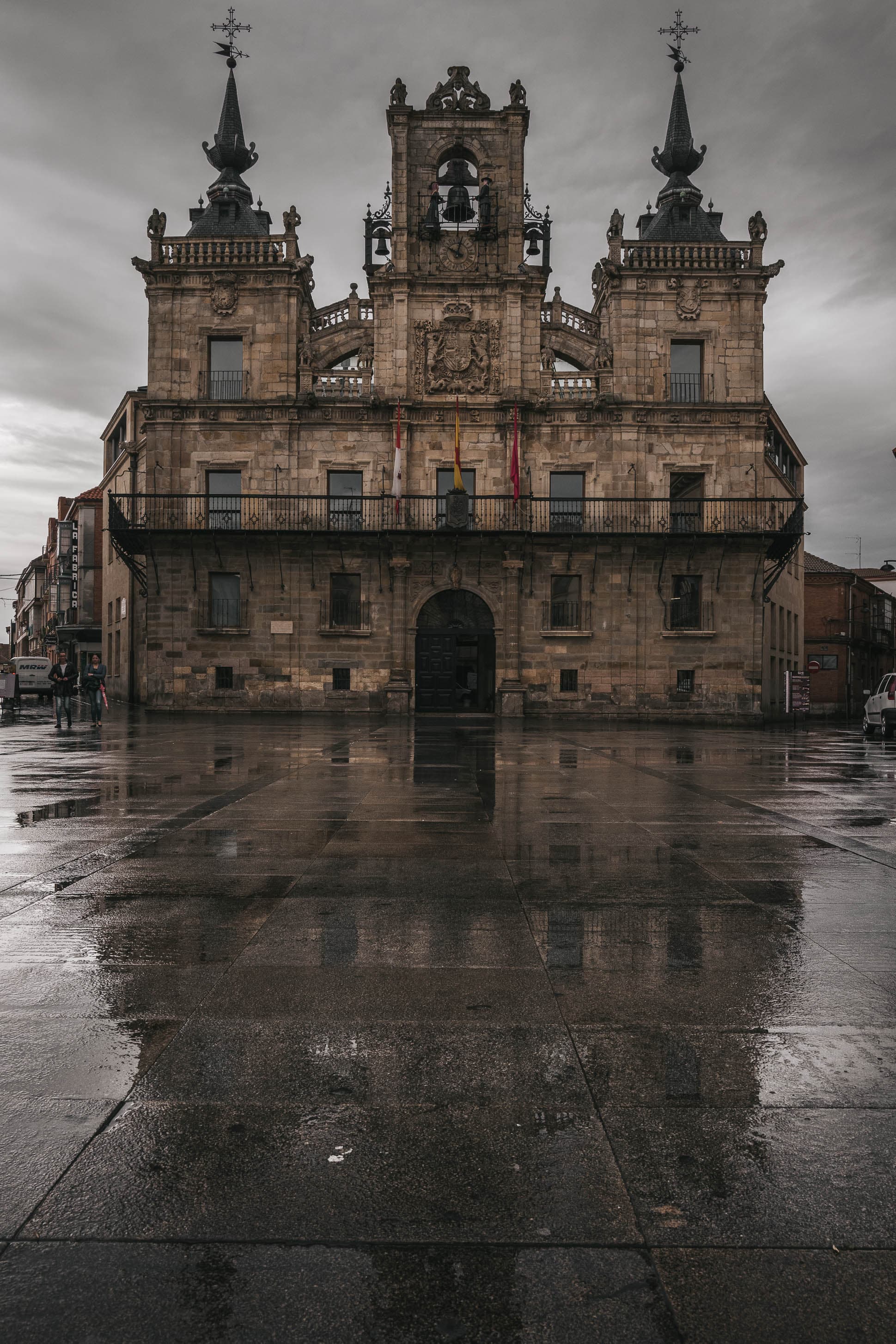
What winter offers is something increasingly rare on the modern Camino: solitude at scale. I walked entire days without seeing another pilgrim. Villages felt like they belonged to me alone. Bar owners had time to talk—really talk—because there was no queue of forty pilgrims behind me waiting for their café con leche.
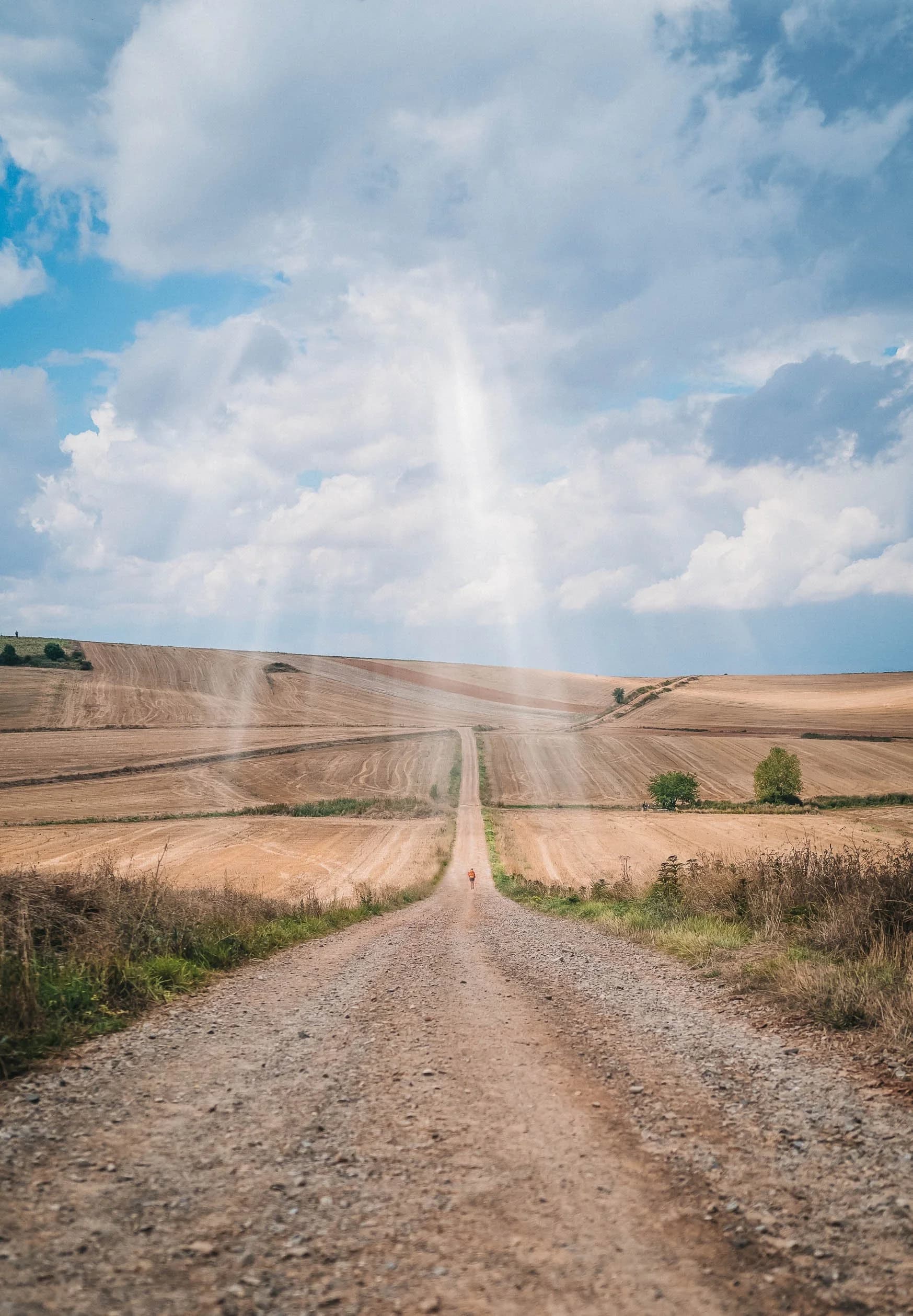
The Meseta in winter is otherworldly. I know, I know—people call it boring in summer. But under grey skies, with frost clinging to the stubble of harvested wheat fields and your breath visible in the still air, it becomes something else entirely. Stark. Meditative. The kind of landscape that forces you inward because there's nowhere else to look.
But go in knowing the challenges are real. Many albergues close from November through March. I carried a list of open accommodations that required constant updating via phone calls to tourist offices (this was before the excellent apps we have now, though I'd still suggest downloading Buen Camino and confirming availability). Some days I walked 30+ kilometres not by choice but by necessity—the next open bed was simply that far away.
The cold is manageable with proper gear. A good Patagonia Nano Puff jacket became my best friend, layered over merino and under a rain shell. My Sea to Summit Reactor sleeping bag liner added crucial warmth to refugio blankets of questionable thermal efficiency.
What's harder to prepare for is the psychological weight of short days and long evenings. Sunset at 6pm means arriving in town already in twilight, then filling hours until sleep in quiet bars where you might be the only customer. I found this meditative; others might find it crushingly lonely. Know thyself.
I've walked the Via Podiensis from Le Puy in April twice. The first time, I encountered biblical mud through the Aubrac plateau—the kind that adds five kilos to each boot and makes you reconsider the entire concept of walking for pleasure. Trail sections that looked benign on maps became ankle-deep rivers. My Darn Tough hiking socks dried overnight (barely), but my boots stayed damp for a week.
The second April journey? Wildflowers carpeting every hillside. Cherry blossoms in village orchards. Perfect 18-degree days that made every step feel like a privilege.
Spring's gift is renewal—both landscape and personal. There's something psychologically potent about walking through a world waking up. The camino feels generative, full of possibility. Lambs in Galician pastures. Bird activity everywhere. Green so aggressive it almost hurts your eyes after a grey winter.
The trade-off is infrastructure still ramping up. In March and early April, many albergues operate on reduced schedules or haven't opened yet. Restaurant hours can be spotty. That lovely café you read about in someone's September blog might not unlock its doors until May.
And the weather will change. Multiple times. Daily. I've experienced all four seasons in a single afternoon crossing the Pyrenees in late March—sunshine to rain to hail to sunshine again, with a bonus cameo from horizontal wind that tried to relocate me to a different postal code.
My suggestion is to pack for layers and surprises. A reliable rain poncho that covers both you and your pack isn't optional—it's mandatory. And build flexibility into your itinerary. Spring rewards those who can wait out a storm in a village bar rather than pushing through regardless.
My August Francés started with dread. Every piece of advice I'd absorbed suggested I was doing it wrong—subjecting myself to 40-degree days, packed albergues, and a tourist parade masquerading as pilgrimage. The forums were apocalyptic about summer walking.
Here's what actually happened: yes, the heat was brutal. The Meseta between Burgos and León felt like walking across a frying pan. I started at 5am most days, headlamp cutting through pre-dawn darkness, trying to bank kilometres before the sun became genuinely hostile. Siesta wasn't optional—it was survival strategy. Two to three hours sheltering in whatever shade I could find, waiting for the afternoon to relent.
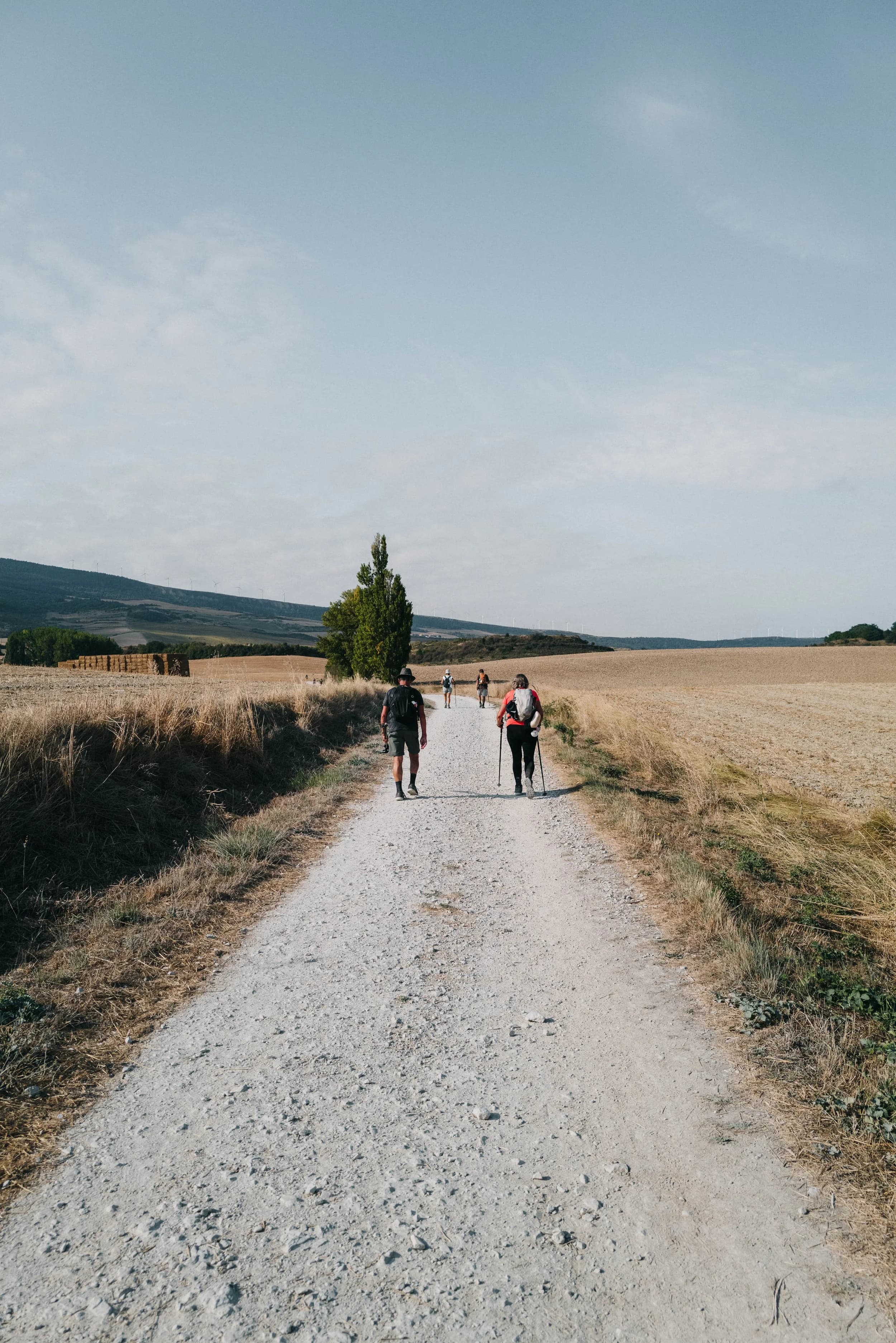
But the community was extraordinary. The volume of pilgrims meant I was never alone unless I wanted to be. Conversations happened constantly—in albergue kitchens, at fountain stops, over shared wine in the evening. Languages mixed freely. A German physiotherapist taught me stretches that saved my knees. A Brazilian grandmother shared her grandmother's recipe for a blister poultice that actually worked.
The famous crowd problem is also, paradoxically, a filtration system. Yes, there are more people. But the heat thins the herd. Day-trippers drop off. Those who remain past the first week tend to be genuinely committed—the kind of pilgrims you want to walk with.
Summer also means every service is operational. Every albergue. Every restaurant. Every gear shop and pharmacy and corner store. If something breaks or you need resupply, summer provides.
I would highly suggest the Portuguese coastal route for summer walking, actually. The Atlantic proximity moderates temperatures significantly. I walked from Porto to Santiago in July, and whilst it was warm, the ocean breeze made it entirely manageable. Plus, the beach detours aren't just scenic—they're strategic cooling opportunities.
What you'll sacrifice in summer is silence. The Camino's contemplative aspects require more deliberate seeking. You'll need to walk earlier or later than the pack, choose smaller albergues, or accept that your meditation might include a soundtrack of Italian teenagers and their portable speakers.
But "widely considered" is the problem. Everyone has read the same advice.
September and early October on the Francés now rival summer for crowd density, particularly on the final 100km from Sarria. The pilgrim office in Santiago can have queues stretching down the street. Albergues in popular stages fill by noon. That romantic notion of arriving in a village and finding a bed? Increasingly fictional without booking ahead.
I've adjusted my autumn strategy accordingly. Starting from further out—Saint-Jean-Pied-de-Port rather than Sarria—spreads the crowd impact. Walking the full Francés means experiencing varying densities: packed in the final stretch, but often peaceful through Castilla and León.
The Norte route offers an autumn alternative I've come to love. Starting in Irún and following the northern coast, you'll encounter a fraction of the Francés crowds whilst experiencing some of Spain's most dramatic scenery. Yes, it's harder. More elevation gain. More rain. But the Basque coastline in September, with summer tourists departed and the sea taking on a serious mood, is genuinely spectacular.
What autumn loses is daylight. By late October, you're looking at sunset around 7pm, then 6pm as November approaches. This constrains walking hours and changes the rhythm of days. Evening meals happen in darkness. Morning starts feel colder, slower to warm.
The festivals compensate somewhat. Harvest celebrations throughout October mean wine flowing freely and towns in festive moods. I've stumbled into village fiestas I didn't know existed, been handed glasses of young wine and invited to table I hadn't earned.
What's the Camino for, in your particular case? If you're seeking solitude and introspection, winter offers something summer cannot. If you want community and spontaneous friendship, summer delivers what winter withholds. Neither is superior—they're different pilgrimages wearing the same name.
How do you handle heat versus cold? I know walkers who become useless above 25 degrees but thrive in near-freezing mornings. I know others who function fine in August but find winter's 4pm darkness psychologically unbearable. Be honest about your physiological and emotional responses to weather.
How much logistical uncertainty can you tolerate? Summer and early autumn mean more open beds and services. Winter and early spring mean more planning, more flexibility, and more comfort with "we'll figure it out." Both can work—but they require different pilgrim personalities.
What's realistic given your life? This is the question that matters most. If your only available time is February or July, then that's your season. Period. Don't let hypothetical "perfect" months prevent you from walking at all. A January Camino is infinitely better than a September Camino that never happens because you couldn't get time off work.
For help thinking through these questions for your specific situation, I'd suggest having a conversation with My Camino Guide to explore what might work best for you.
Physical training matters regardless of when you walk. Cardiovascular fitness helps whether you're climbing O Cebreiro in April rain or August heat. Foot conditioning prevents blisters in January as surely as June.
Mental preparation matters more than anyone admits. The Camino will be hard—in ways you can predict and ways you absolutely cannot. Every season brings moments when you'll want to quit. Your resilience isn't about temperature; it's about why you're walking in the first place.
Gear flexibility matters enormously. I never walk now without both sun protection and rain gear, regardless of forecast. The Camino taught me that weather predictions are suggestions the Spanish mountains frequently ignore.
And flexibility of expectation matters most of all. Whatever season you choose, it won't match your imagination. It'll be better in ways you didn't anticipate and harder in ways you couldn't have guessed. The pilgrims who struggle most are those who arrive with rigid pictures of what the experience should look like.
And you know what? It doesn't matter that much.
The Camino will be waiting in its autumn gold or winter grey or summer blaze or spring mud. It will offer whatever it offers, and I'll walk into it with my pack and my blisters and my attempts at Spanish small talk. The way will be long. The way will be hard. The way will be exactly what I need, though I won't know why until it's over.
That's true in May. It's true in November. It's true for you, whenever you manage to get there.
So stop waiting for perfect conditions. They don't exist. Start planning for the conditions that work for your life. And then walk.
---
Try asking My Camino Guide:
- What gear do I need for walking the Camino in winter?
- How do I find open albergues in the off-season?
- What's the Norte route like compared to the Francés?
I believed this once. Then I walked the Camino Francés in February, again in August, once in late October, and various other times scattered across the calendar. I've trudged through Le Puy in spring mud so deep it swallowed my gaiters. I've baked on the Portuguese coastal route in July heat that made me question every life decision. I've walked to Finisterre in December when the wind off the Atlantic felt like it could strip paint.
And here's what I've learned after six Francés crossings, two journeys from Le Puy, and countless kilometres on the Norte, Portuguese routes, and beyond: there is no perfect season. There's only your season—the one that aligns with your life, your priorities, and what you're actually seeking from this experience.
The seductive lie of shoulder season perfection
Let's address the conventional wisdom head-on. The pilgrim orthodoxy goes something like this: May and September offer mild temperatures, manageable crowds, and reliable services. April and October are acceptable alternatives. Everything else is either purgatory or foolishness.This isn't entirely wrong. May and September are lovely. But this advice—repeated ad nauseam in guidebooks and forums—creates a self-fulfilling prophecy. Everyone walks in May and September because everyone says to walk in May and September. And then they complain about the crowds in May and September.
I've seen pilgrims arrive in Sarria in mid-September expecting tranquil solitude, only to find themselves in a conga line stretching toward Santiago. The shock on their faces is something else—they'd done everything "right" and still ended up in a experience that felt more marathon than meditation.
The truth is messier and more liberating: every season offers genuine gifts alongside genuine challenges. Your job isn't to find the mythical perfect window. It's to understand the trade-offs and decide which ones you're willing to accept.
Winter: the pilgrimage few talk about
Walking in winter is an act of deliberate contrarianism, and I say that with deep affection. My February Francés remains one of my most formative pilgrimages, though I'd be lying if I said it was comfortable.What winter offers is something increasingly rare on the modern Camino: solitude at scale. I walked entire days without seeing another pilgrim. Villages felt like they belonged to me alone. Bar owners had time to talk—really talk—because there was no queue of forty pilgrims behind me waiting for their café con leche.
The Meseta in winter is otherworldly. I know, I know—people call it boring in summer. But under grey skies, with frost clinging to the stubble of harvested wheat fields and your breath visible in the still air, it becomes something else entirely. Stark. Meditative. The kind of landscape that forces you inward because there's nowhere else to look.
But go in knowing the challenges are real. Many albergues close from November through March. I carried a list of open accommodations that required constant updating via phone calls to tourist offices (this was before the excellent apps we have now, though I'd still suggest downloading Buen Camino and confirming availability). Some days I walked 30+ kilometres not by choice but by necessity—the next open bed was simply that far away.
The cold is manageable with proper gear. A good Patagonia Nano Puff jacket became my best friend, layered over merino and under a rain shell. My Sea to Summit Reactor sleeping bag liner added crucial warmth to refugio blankets of questionable thermal efficiency.
What's harder to prepare for is the psychological weight of short days and long evenings. Sunset at 6pm means arriving in town already in twilight, then filling hours until sleep in quiet bars where you might be the only customer. I found this meditative; others might find it crushingly lonely. Know thyself.
Spring: mud, magnificence, and unpredictability
Spring on the Camino is a gamble, and I mean that as both warning and invitation.I've walked the Via Podiensis from Le Puy in April twice. The first time, I encountered biblical mud through the Aubrac plateau—the kind that adds five kilos to each boot and makes you reconsider the entire concept of walking for pleasure. Trail sections that looked benign on maps became ankle-deep rivers. My Darn Tough hiking socks dried overnight (barely), but my boots stayed damp for a week.
The second April journey? Wildflowers carpeting every hillside. Cherry blossoms in village orchards. Perfect 18-degree days that made every step feel like a privilege.
Spring's gift is renewal—both landscape and personal. There's something psychologically potent about walking through a world waking up. The camino feels generative, full of possibility. Lambs in Galician pastures. Bird activity everywhere. Green so aggressive it almost hurts your eyes after a grey winter.
The trade-off is infrastructure still ramping up. In March and early April, many albergues operate on reduced schedules or haven't opened yet. Restaurant hours can be spotty. That lovely café you read about in someone's September blog might not unlock its doors until May.
And the weather will change. Multiple times. Daily. I've experienced all four seasons in a single afternoon crossing the Pyrenees in late March—sunshine to rain to hail to sunshine again, with a bonus cameo from horizontal wind that tried to relocate me to a different postal code.
My suggestion is to pack for layers and surprises. A reliable rain poncho that covers both you and your pack isn't optional—it's mandatory. And build flexibility into your itinerary. Spring rewards those who can wait out a storm in a village bar rather than pushing through regardless.
Summer: the heat, the crowds, and the unexpected community
Summer is when the Camino transforms into something that barely resembles its winter incarnation. And I've walked into this transformation both deliberately and accidentally.My August Francés started with dread. Every piece of advice I'd absorbed suggested I was doing it wrong—subjecting myself to 40-degree days, packed albergues, and a tourist parade masquerading as pilgrimage. The forums were apocalyptic about summer walking.
Here's what actually happened: yes, the heat was brutal. The Meseta between Burgos and León felt like walking across a frying pan. I started at 5am most days, headlamp cutting through pre-dawn darkness, trying to bank kilometres before the sun became genuinely hostile. Siesta wasn't optional—it was survival strategy. Two to three hours sheltering in whatever shade I could find, waiting for the afternoon to relent.
But the community was extraordinary. The volume of pilgrims meant I was never alone unless I wanted to be. Conversations happened constantly—in albergue kitchens, at fountain stops, over shared wine in the evening. Languages mixed freely. A German physiotherapist taught me stretches that saved my knees. A Brazilian grandmother shared her grandmother's recipe for a blister poultice that actually worked.
The famous crowd problem is also, paradoxically, a filtration system. Yes, there are more people. But the heat thins the herd. Day-trippers drop off. Those who remain past the first week tend to be genuinely committed—the kind of pilgrims you want to walk with.
Summer also means every service is operational. Every albergue. Every restaurant. Every gear shop and pharmacy and corner store. If something breaks or you need resupply, summer provides.
I would highly suggest the Portuguese coastal route for summer walking, actually. The Atlantic proximity moderates temperatures significantly. I walked from Porto to Santiago in July, and whilst it was warm, the ocean breeze made it entirely manageable. Plus, the beach detours aren't just scenic—they're strategic cooling opportunities.
What you'll sacrifice in summer is silence. The Camino's contemplative aspects require more deliberate seeking. You'll need to walk earlier or later than the pack, choose smaller albergues, or accept that your meditation might include a soundtrack of Italian teenagers and their portable speakers.
Autumn: the golden hour that attracts everyone
Autumn is widely considered the sweet spot, and I won't entirely disagree. Walking into Santiago in October, with the Galician forests turning amber and the grape harvest in full swing, ranks among my most aesthetically beautiful Camino memories.But "widely considered" is the problem. Everyone has read the same advice.
September and early October on the Francés now rival summer for crowd density, particularly on the final 100km from Sarria. The pilgrim office in Santiago can have queues stretching down the street. Albergues in popular stages fill by noon. That romantic notion of arriving in a village and finding a bed? Increasingly fictional without booking ahead.
I've adjusted my autumn strategy accordingly. Starting from further out—Saint-Jean-Pied-de-Port rather than Sarria—spreads the crowd impact. Walking the full Francés means experiencing varying densities: packed in the final stretch, but often peaceful through Castilla and León.
The Norte route offers an autumn alternative I've come to love. Starting in Irún and following the northern coast, you'll encounter a fraction of the Francés crowds whilst experiencing some of Spain's most dramatic scenery. Yes, it's harder. More elevation gain. More rain. But the Basque coastline in September, with summer tourists departed and the sea taking on a serious mood, is genuinely spectacular.
What autumn loses is daylight. By late October, you're looking at sunset around 7pm, then 6pm as November approaches. This constrains walking hours and changes the rhythm of days. Evening meals happen in darkness. Morning starts feel colder, slower to warm.
The festivals compensate somewhat. Harvest celebrations throughout October mean wine flowing freely and towns in festive moods. I've stumbled into village fiestas I didn't know existed, been handed glasses of young wine and invited to table I hadn't earned.
How to find your season (a framework, not a formula)
Instead of asking "what's the best time to walk," try asking different questions:What's the Camino for, in your particular case? If you're seeking solitude and introspection, winter offers something summer cannot. If you want community and spontaneous friendship, summer delivers what winter withholds. Neither is superior—they're different pilgrimages wearing the same name.
How do you handle heat versus cold? I know walkers who become useless above 25 degrees but thrive in near-freezing mornings. I know others who function fine in August but find winter's 4pm darkness psychologically unbearable. Be honest about your physiological and emotional responses to weather.
How much logistical uncertainty can you tolerate? Summer and early autumn mean more open beds and services. Winter and early spring mean more planning, more flexibility, and more comfort with "we'll figure it out." Both can work—but they require different pilgrim personalities.
What's realistic given your life? This is the question that matters most. If your only available time is February or July, then that's your season. Period. Don't let hypothetical "perfect" months prevent you from walking at all. A January Camino is infinitely better than a September Camino that never happens because you couldn't get time off work.
For help thinking through these questions for your specific situation, I'd suggest having a conversation with My Camino Guide to explore what might work best for you.
The real preparation isn't about season
Here's what I've learned after all these kilometres across all these months: preparation adapts, but fundamentals remain constant.Physical training matters regardless of when you walk. Cardiovascular fitness helps whether you're climbing O Cebreiro in April rain or August heat. Foot conditioning prevents blisters in January as surely as June.
Mental preparation matters more than anyone admits. The Camino will be hard—in ways you can predict and ways you absolutely cannot. Every season brings moments when you'll want to quit. Your resilience isn't about temperature; it's about why you're walking in the first place.
Gear flexibility matters enormously. I never walk now without both sun protection and rain gear, regardless of forecast. The Camino taught me that weather predictions are suggestions the Spanish mountains frequently ignore.
And flexibility of expectation matters most of all. Whatever season you choose, it won't match your imagination. It'll be better in ways you didn't anticipate and harder in ways you couldn't have guessed. The pilgrims who struggle most are those who arrive with rigid pictures of what the experience should look like.
Walking into the unknown, whenever you can
I'm preparing for another crossing as I write this—my seventh Francés, though I'm considering the Espiritual Variant off the Portuguese route instead, walking those monastery paths along the Ría de Arousa that I haven't visited in years. I don't yet know which month I'll go. Work schedules. Family obligations. The eternal negotiation.And you know what? It doesn't matter that much.
The Camino will be waiting in its autumn gold or winter grey or summer blaze or spring mud. It will offer whatever it offers, and I'll walk into it with my pack and my blisters and my attempts at Spanish small talk. The way will be long. The way will be hard. The way will be exactly what I need, though I won't know why until it's over.
That's true in May. It's true in November. It's true for you, whenever you manage to get there.
So stop waiting for perfect conditions. They don't exist. Start planning for the conditions that work for your life. And then walk.
---
Try asking My Camino Guide:
- What gear do I need for walking the Camino in winter?
- How do I find open albergues in the off-season?
- What's the Norte route like compared to the Francés?