
A direct comparison exploring the distinct personalities of Spain's two most popular routes—terrain, crowds, accommodation availability, coastal vs. inland expe
There's a moment early in your Camino planning when you realize you're not just choosing a walking route—you're choosing an experience, a rhythm, even a version of yourself. I remember sitting in a café in Porto a few years back, watching pilgrims set off with their scallop shells, and thinking about how different their next two weeks would be compared to my first Camino Francés back in 2012. Same destination. Wildly different journeys.
Having walked the Francés six times now and completed both the Coastal and Central Portuguese routes (plus starting from Lisbon once, which is its own beautiful madness), I've got strong opinions about which route suits which pilgrim. Not better or worse—just different. And that difference matters more than most guidebooks let on.
So let's talk honestly about these two routes. Not the glossy brochure version, but the real experience of walking them in 2026.
The Portugués, by contrast, feels younger somehow. Lighter. It's not actually newer—pilgrims have walked from Portugal for centuries—but it has a different energy. Less medieval intensity, more easygoing charm. Whether you're taking the Central route through vineyard country or the Coastal path with its Atlantic breezes, Portugal offers something the Francés simply can't: a genuine change of country midway through your pilgrimage.
Here's what I mean: on the Francés, Spain is your constant companion from day one (well, after the Pyrenees crossing). You settle into Spanish rhythms, Spanish food, Spanish towns. On the Portugués, you experience Portugal's distinct culture—the language, the pastéis de nata, the slightly melancholic saudade that permeates everything—before crossing into Galicia and feeling that shift. Two countries, one pilgrimage. That transition at Valença/Tui is genuinely powerful.
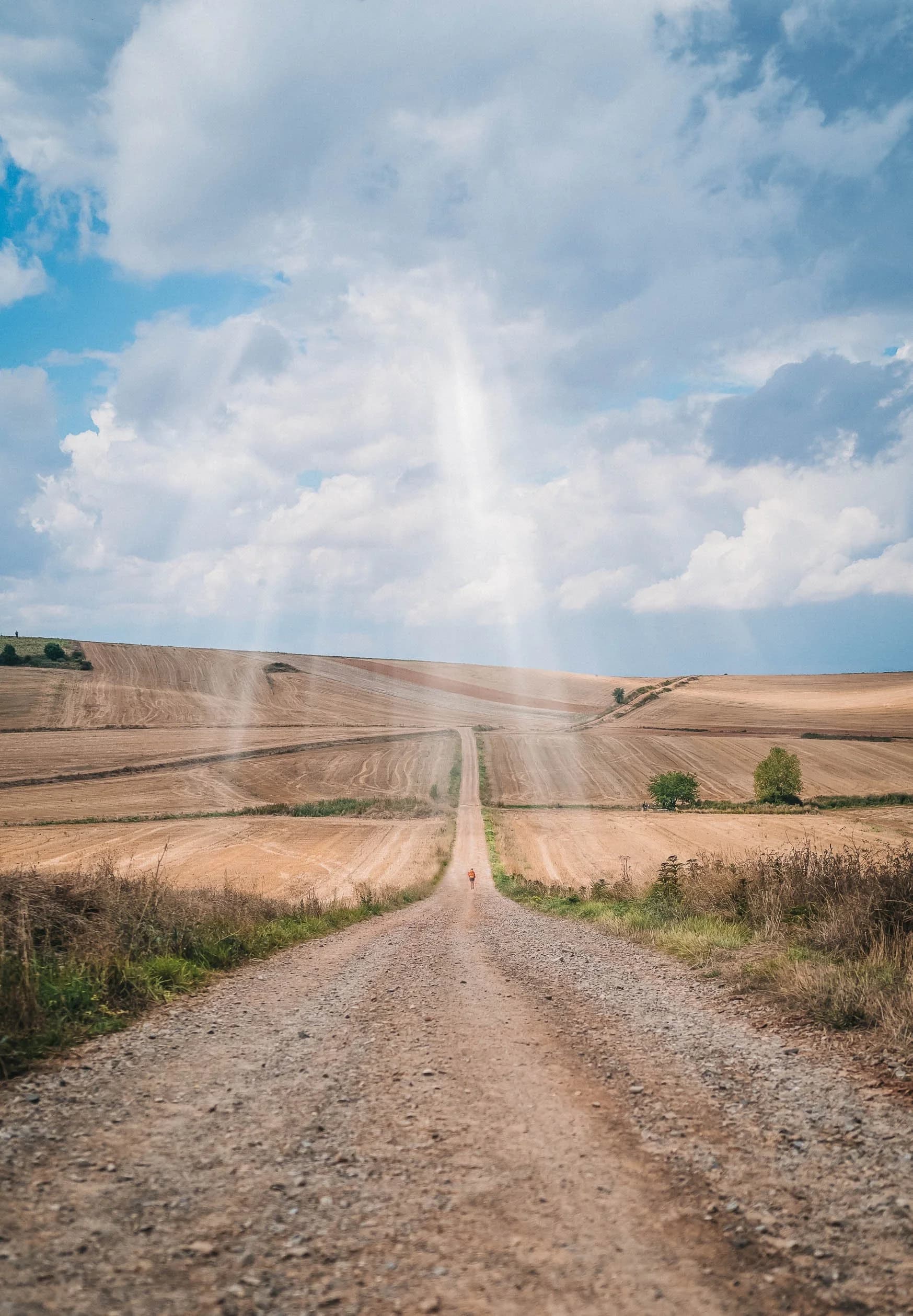
The Francés starts with a bang. That first day over the Pyrenees from Saint-Jean-Pied-de-Port to Roncesvalles is genuinely challenging—about 25 kilometers with significant elevation gain. I've seen people in tears at the top. I've been that person. And whilst the Meseta gets maligned as "flat and boring," don't underestimate 200+ kilometers of exposed walking with minimal shade. The heat in July and August can be brutal. The elevation profile of the Francés looks like an ambitious child's drawing: big spike at the start, rolling hills through wine country, the long flat middle section, then more serious climbing approaching O Cebreiro and the Galician mountains.
The Portugués is genuinely easier on the legs. The Central route from Porto involves nothing that would qualify as a mountain pass. You're walking through river valleys, alongside vineyards, through small towns that blend into one another. The daily stages feel achievable even when you're not at peak fitness. If you're starting from Lisbon, you'll add some coastal walking and more distance, but the terrain remains forgiving.
The Coastal Portugués variant is flatter still, with long stretches on boardwalks and beaches north of Porto. Beautiful, yes, but—and this is important—it can be monotonous in its own way. Sand walking is also more demanding than it looks on Instagram. Your calves will have opinions.
My suggestion for first-time pilgrims who are nervous about fitness: the Central Portugués from Porto is more forgiving. But if you want to be challenged, if you want terrain that demands something from you, the Francés delivers that in spades.
The Francés is busy. Busier than ever. In peak season (May, June, September, October), you will not be alone. Stages like Sarria to Santiago—the minimum required for a Compostela—become almost processional. I've walked into albergues in Galicia that felt like the UN, with a dozen languages bouncing off stone walls. This can be wonderful (the community! the shared experience!) or overwhelming (the snoring! the 5 AM rustling!), depending on your temperament.
The Portugués sees serious crowds too, but they're concentrated differently. The last 100 kilometers from Tui are now nearly as busy as the final Francés stages. But start from Porto or Lisbon? The first week will feel comparatively peaceful. The Coastal route draws fewer pilgrims than the Central route, though this gap is narrowing as word spreads.
Here's what I've learned over multiple walks: if solitude is genuinely important to you, neither of these routes in peak season will deliver it consistently. You'll need to start earlier in the day than everyone else, choose smaller villages for overnight stops, or walk in shoulder season (late March, early April, November).
That said, the Francés through the Meseta in October offered me some of my most reflective walking. Everyone clusters in certain towns, but between them? Kilometers of golden plains with no one else in sight. You have to work for solitude on the Francés, but it's there.
I'd recommend carrying something like a Sea to Summit Silk Liner for the basic albergues on the Francés—some require you to use your own sleeping bag liner, and even when they don't, it adds a comfort layer between you and well-worn mattresses.
The Portugués has caught up significantly, but gaps remain. The Central route from Porto is well-served. The Coastal route has fewer options in some stretches, meaning more planning is required. Starting from Lisbon, you'll encounter sections where accommodation is genuinely sparse—I remember one stretch south of Coimbra where my options were an expensive hotel or walking an extra eight kilometers to the next albergue. (I walked. My feet have never forgiven me.)
For 2026, my honest assessment: the Francés remains easier to walk without reservations, whilst the Portugués benefits from some advance planning, especially in peak months. If you're someone who gets anxious about where you'll sleep, the Francés infrastructure will ease your mind.
The Coastal Portugués (following the shoreline north of Porto through places like Esposende and Viana do Castelo) offers what the Francés simply cannot: ocean. Atlantic waves crashing, salt air, beach walks at sunset. If you've walked the Francés through landlocked Castile and León, that coastal experience feels revelatory.
But—and I say this having walked both Portuguese variants—the Coastal route sacrifices some authenticity for scenery. You'll walk on more pavement, through more tourist-developed beach towns, past more modern construction. The Central route, whilst less photogenic in the traditional sense, passes through agricultural Portugal in a way that feels closer to traditional pilgrimage. Romanesque churches, stone granaries, old women in black selling produce at roadside stands.
The Spiritual Variant (Variante Espiritual) splits the difference beautifully—you leave the Central route at Pontevedra and make your way to the coast, eventually taking a boat across the Ría de Arousa. It's a gorgeous detour that combines inland and coastal elements, though it requires some planning and isn't possible in all weather conditions.
My suggestion: if this is your first Portugués, walk the Central route from Porto. Save the Coastal for a return trip, or walk the Spiritual Variant in the final days for a taste of both worlds. The Central route is the "truer" pilgrimage experience, for whatever that's worth.
The Francés draws the full spectrum. You'll meet serious Catholics walking for deeply spiritual reasons. Retired couples ticking off a life dream. Twenty-somethings "finding themselves" (some succeeding, some just walking). Athletes treating it as an endurance challenge. People fleeing grief, divorce, job loss, midlife crisis. The diversity is extraordinary—I once walked with a Korean nun, a Brazilian bartender, and a Welsh dentist for three days through the Meseta, and we somehow found common ground.
The Portugués tends to attract slightly older pilgrims, more Europeans, and a higher percentage of people who've walked other Caminos before. It's seen as a "second Camino" for many—a gentler option after the Francés proved transformative. The community feels smaller, more intimate. You'll see the same faces more consistently because fewer people are walking.
Neither is better. But if you want the maximum chance of the "Camino family" experience—that phenomenon where strangers become close companions over shared blisters and hospitalero kindnesses—the Francés delivers it more reliably. The sheer numbers mean more potential connections.
Portugal's offerings are different but equally compelling—bacalhau (salt cod) prepared dozens of ways, francesinha in Porto (a heart-attack sandwich that somehow works), fresh seafood along the coast, vinho verde in the Minho region. The prices are also notably lower. A full pilgrim meal in Portugal often runs €8-10; the same in Spain might be €12-15.
Here's my confession: after six Francés walks, I've developed slight menu del día fatigue. The structure—first course, second course, dessert, wine, bread—becomes predictable. On the Portugués, the eating felt more spontaneous. Smaller portions at more frequent intervals. More pastry shops beckoning mid-morning.
If food is a significant motivation for your walk (no judgment—it's a valid pilgrimage reason), both routes deliver. But they deliver differently.
The Portugués is walkable slightly later into autumn and earlier in spring due to milder temperatures. November is risky on the Francés but potentially lovely on the Portugués. That said, the Portuguese coast gets serious winter storms—don't expect beach walking in January.
Gear-wise, both routes require the basics: good broken-in trail shoes (I'm partial to my Salomon X Ultra 4), a pack under 10% of your body weight, and layers for variable weather. The Francés demands more serious rain gear once you hit Galicia—something like a Frogg Toggs Ultra-Lite2 Rain Suit has saved me multiple times. The Coastal Portugués benefits from good sun protection for exposed beach sections.
If you're unsure what gear you'll need, ask about specific packing recommendations.
Walk the Francés if:
- This is your first Camino and you want the "full experience"
- You enjoy meeting large numbers of diverse people
- You want reliable infrastructure and don't want to plan ahead
- You're physically prepared and want terrain that challenges you
- The history and tradition of the route matter to you
- You have 30+ days and want a longer journey
Walk the Portugués if:
- You've done the Francés and want something different
- You prefer a quieter, more reflective experience
- Your fitness or time is limited (Porto to Santiago is ~240km)
- You're drawn to coastal scenery or Portuguese culture
- You're walking in shoulder season when Francés services may be limited
- You want to experience crossing from one country to another
But honestly? You'll probably walk both eventually. Most pilgrims do. The question is just which one first.
Go in knowing that neither route is perfect. The Francés has its over-touristed stretches and its boring suburbs. The Portugués has its highway walking and its less-maintained sections. Every Camino requires acceptance of what it is rather than insistence on what you imagined.
If you're still weighing options, plan your Camino with personalized advice. Or if you've got specific questions about timing, stages, or what to expect, ask about the details that matter to you.
The hardest part isn't choosing the route. It's deciding to go. Everything else sorts itself out along the way.
Buen Camino, wherever you walk.
---
Try asking My Camino Guide:
- What are the best stages to walk on the Camino Portugués Coastal route?
- How do I prepare physically for crossing the Pyrenees on day one of the Francés?
- Should I book accommodation in advance on the Portugués in October?
Having walked the Francés six times now and completed both the Coastal and Central Portuguese routes (plus starting from Lisbon once, which is its own beautiful madness), I've got strong opinions about which route suits which pilgrim. Not better or worse—just different. And that difference matters more than most guidebooks let on.
So let's talk honestly about these two routes. Not the glossy brochure version, but the real experience of walking them in 2026.
The Essential Character of Each Route
The Francés is the Camino. Capital T, capital C. It's the route that created the mythology, the infrastructure, the entire cultural phenomenon. Walking from Saint-Jean-Pied-de-Port to Santiago, you're tracing steps that pilgrims have walked for over a thousand years. There's weight to that—literally in terms of history, and sometimes figuratively when you're trudging through the Meseta wondering why you thought this was a good idea.The Portugués, by contrast, feels younger somehow. Lighter. It's not actually newer—pilgrims have walked from Portugal for centuries—but it has a different energy. Less medieval intensity, more easygoing charm. Whether you're taking the Central route through vineyard country or the Coastal path with its Atlantic breezes, Portugal offers something the Francés simply can't: a genuine change of country midway through your pilgrimage.
Here's what I mean: on the Francés, Spain is your constant companion from day one (well, after the Pyrenees crossing). You settle into Spanish rhythms, Spanish food, Spanish towns. On the Portugués, you experience Portugal's distinct culture—the language, the pastéis de nata, the slightly melancholic saudade that permeates everything—before crossing into Galicia and feeling that shift. Two countries, one pilgrimage. That transition at Valença/Tui is genuinely powerful.
What the Terrain Actually Demands of You
Let's talk about what your body will experience, because this is where many pilgrims make miscalculations.The Francés starts with a bang. That first day over the Pyrenees from Saint-Jean-Pied-de-Port to Roncesvalles is genuinely challenging—about 25 kilometers with significant elevation gain. I've seen people in tears at the top. I've been that person. And whilst the Meseta gets maligned as "flat and boring," don't underestimate 200+ kilometers of exposed walking with minimal shade. The heat in July and August can be brutal. The elevation profile of the Francés looks like an ambitious child's drawing: big spike at the start, rolling hills through wine country, the long flat middle section, then more serious climbing approaching O Cebreiro and the Galician mountains.
The Portugués is genuinely easier on the legs. The Central route from Porto involves nothing that would qualify as a mountain pass. You're walking through river valleys, alongside vineyards, through small towns that blend into one another. The daily stages feel achievable even when you're not at peak fitness. If you're starting from Lisbon, you'll add some coastal walking and more distance, but the terrain remains forgiving.
The Coastal Portugués variant is flatter still, with long stretches on boardwalks and beaches north of Porto. Beautiful, yes, but—and this is important—it can be monotonous in its own way. Sand walking is also more demanding than it looks on Instagram. Your calves will have opinions.
My suggestion for first-time pilgrims who are nervous about fitness: the Central Portugués from Porto is more forgiving. But if you want to be challenged, if you want terrain that demands something from you, the Francés delivers that in spades.
Crowds and Solitude: The 2026 Reality
I need to be honest about this, because it's changed dramatically since my first Camino.The Francés is busy. Busier than ever. In peak season (May, June, September, October), you will not be alone. Stages like Sarria to Santiago—the minimum required for a Compostela—become almost processional. I've walked into albergues in Galicia that felt like the UN, with a dozen languages bouncing off stone walls. This can be wonderful (the community! the shared experience!) or overwhelming (the snoring! the 5 AM rustling!), depending on your temperament.
The Portugués sees serious crowds too, but they're concentrated differently. The last 100 kilometers from Tui are now nearly as busy as the final Francés stages. But start from Porto or Lisbon? The first week will feel comparatively peaceful. The Coastal route draws fewer pilgrims than the Central route, though this gap is narrowing as word spreads.
Here's what I've learned over multiple walks: if solitude is genuinely important to you, neither of these routes in peak season will deliver it consistently. You'll need to start earlier in the day than everyone else, choose smaller villages for overnight stops, or walk in shoulder season (late March, early April, November).
That said, the Francés through the Meseta in October offered me some of my most reflective walking. Everyone clusters in certain towns, but between them? Kilometers of golden plains with no one else in sight. You have to work for solitude on the Francés, but it's there.
Where You'll Sleep (And How Easy It Is to Find a Bed)
Accommodation infrastructure is where the Francés genuinely shines. After 1,000+ years of pilgrimage, the villages along this route have figured out how to house walkers. Municipal albergues, private albergues, parochial refugios, casas rurales, hotels—the range is enormous. Even in busy season, flexibility about walking an extra few kilometers usually solves the "no beds" problem.I'd recommend carrying something like a Sea to Summit Silk Liner for the basic albergues on the Francés—some require you to use your own sleeping bag liner, and even when they don't, it adds a comfort layer between you and well-worn mattresses.
The Portugués has caught up significantly, but gaps remain. The Central route from Porto is well-served. The Coastal route has fewer options in some stretches, meaning more planning is required. Starting from Lisbon, you'll encounter sections where accommodation is genuinely sparse—I remember one stretch south of Coimbra where my options were an expensive hotel or walking an extra eight kilometers to the next albergue. (I walked. My feet have never forgiven me.)
For 2026, my honest assessment: the Francés remains easier to walk without reservations, whilst the Portugués benefits from some advance planning, especially in peak months. If you're someone who gets anxious about where you'll sleep, the Francés infrastructure will ease your mind.
The Inland vs. Coastal Question
This is really a Portugués-specific consideration, but it's worth addressing because it's a choice that trips people up.The Coastal Portugués (following the shoreline north of Porto through places like Esposende and Viana do Castelo) offers what the Francés simply cannot: ocean. Atlantic waves crashing, salt air, beach walks at sunset. If you've walked the Francés through landlocked Castile and León, that coastal experience feels revelatory.
But—and I say this having walked both Portuguese variants—the Coastal route sacrifices some authenticity for scenery. You'll walk on more pavement, through more tourist-developed beach towns, past more modern construction. The Central route, whilst less photogenic in the traditional sense, passes through agricultural Portugal in a way that feels closer to traditional pilgrimage. Romanesque churches, stone granaries, old women in black selling produce at roadside stands.
The Spiritual Variant (Variante Espiritual) splits the difference beautifully—you leave the Central route at Pontevedra and make your way to the coast, eventually taking a boat across the Ría de Arousa. It's a gorgeous detour that combines inland and coastal elements, though it requires some planning and isn't possible in all weather conditions.
My suggestion: if this is your first Portugués, walk the Central route from Porto. Save the Coastal for a return trip, or walk the Spiritual Variant in the final days for a taste of both worlds. The Central route is the "truer" pilgrimage experience, for whatever that's worth.
The People You'll Meet
Every Camino route attracts its tribe, and the Francés versus Portugués distinction is real.The Francés draws the full spectrum. You'll meet serious Catholics walking for deeply spiritual reasons. Retired couples ticking off a life dream. Twenty-somethings "finding themselves" (some succeeding, some just walking). Athletes treating it as an endurance challenge. People fleeing grief, divorce, job loss, midlife crisis. The diversity is extraordinary—I once walked with a Korean nun, a Brazilian bartender, and a Welsh dentist for three days through the Meseta, and we somehow found common ground.
The Portugués tends to attract slightly older pilgrims, more Europeans, and a higher percentage of people who've walked other Caminos before. It's seen as a "second Camino" for many—a gentler option after the Francés proved transformative. The community feels smaller, more intimate. You'll see the same faces more consistently because fewer people are walking.
Neither is better. But if you want the maximum chance of the "Camino family" experience—that phenomenon where strangers become close companions over shared blisters and hospitalero kindnesses—the Francés delivers it more reliably. The sheer numbers mean more potential connections.
Food and Wine: The Honest Comparison
Spanish food along the Francés varies enormously by region. The Basque Country offers pintxos and quality. Navarra brings robust stews. La Rioja is (obviously) wine heaven. Castile y León features roast lamb and hearty cocido. Galicia delivers seafood and the distinctive pimientos de Padrón. Over 800 kilometers, you're eating through Spanish culinary history.Portugal's offerings are different but equally compelling—bacalhau (salt cod) prepared dozens of ways, francesinha in Porto (a heart-attack sandwich that somehow works), fresh seafood along the coast, vinho verde in the Minho region. The prices are also notably lower. A full pilgrim meal in Portugal often runs €8-10; the same in Spain might be €12-15.
Here's my confession: after six Francés walks, I've developed slight menu del día fatigue. The structure—first course, second course, dessert, wine, bread—becomes predictable. On the Portugués, the eating felt more spontaneous. Smaller portions at more frequent intervals. More pastry shops beckoning mid-morning.
If food is a significant motivation for your walk (no judgment—it's a valid pilgrimage reason), both routes deliver. But they deliver differently.
Practical Matters: When to Walk and What to Bring
The best months for the Francés remain April, May, early June, September, and early October. July and August are hot and crowded; winter brings rain and closed facilities. The Meseta in summer is genuinely punishing.The Portugués is walkable slightly later into autumn and earlier in spring due to milder temperatures. November is risky on the Francés but potentially lovely on the Portugués. That said, the Portuguese coast gets serious winter storms—don't expect beach walking in January.
Gear-wise, both routes require the basics: good broken-in trail shoes (I'm partial to my Salomon X Ultra 4), a pack under 10% of your body weight, and layers for variable weather. The Francés demands more serious rain gear once you hit Galicia—something like a Frogg Toggs Ultra-Lite2 Rain Suit has saved me multiple times. The Coastal Portugués benefits from good sun protection for exposed beach sections.
If you're unsure what gear you'll need, ask about specific packing recommendations.
Making the Choice: Some Direct Advice
After all this, here's my honest recommendation:Walk the Francés if:
- This is your first Camino and you want the "full experience"
- You enjoy meeting large numbers of diverse people
- You want reliable infrastructure and don't want to plan ahead
- You're physically prepared and want terrain that challenges you
- The history and tradition of the route matter to you
- You have 30+ days and want a longer journey
Walk the Portugués if:
- You've done the Francés and want something different
- You prefer a quieter, more reflective experience
- Your fitness or time is limited (Porto to Santiago is ~240km)
- You're drawn to coastal scenery or Portuguese culture
- You're walking in shoulder season when Francés services may be limited
- You want to experience crossing from one country to another
But honestly? You'll probably walk both eventually. Most pilgrims do. The question is just which one first.
Go in knowing that neither route is perfect. The Francés has its over-touristed stretches and its boring suburbs. The Portugués has its highway walking and its less-maintained sections. Every Camino requires acceptance of what it is rather than insistence on what you imagined.
Your Next Step
I've given you the comparison, but only you know what you're seeking from this pilgrimage. Whether it's physical challenge, spiritual renewal, cultural immersion, or simply walking one foot in front of the other until something shifts inside you—both routes can deliver that. They just deliver it differently.If you're still weighing options, plan your Camino with personalized advice. Or if you've got specific questions about timing, stages, or what to expect, ask about the details that matter to you.
The hardest part isn't choosing the route. It's deciding to go. Everything else sorts itself out along the way.
Buen Camino, wherever you walk.
---
Try asking My Camino Guide:
- What are the best stages to walk on the Camino Portugués Coastal route?
- How do I prepare physically for crossing the Pyrenees on day one of the Francés?
- Should I book accommodation in advance on the Portugués in October?