A day-by-day account tracking how feet actually change across a full Camino Francés—from the first blisters in the Pyrenees to the calluses of Galicia—with prac
Let me tell you something they don't put in the glossy Camino guidebooks: your feet will stage a rebellion somewhere around day five. They'll file formal complaints. They might even attempt to secede from the rest of your body entirely. But here's the beautiful thing—if you treat them right, they'll eventually become your most loyal allies on the road to Santiago.
Having walked the Camino Francés six times now, plus the Via Podiensis twice, the Norte once, and various Portuguese routes, I've developed an intimate—perhaps uncomfortably intimate—relationship with my feet. I've watched them transform from soft, pampered city feet into hardened veterans worthy of their own war stories. And I've made every mistake in the book along the way.
This is the reality of what happens to your feet over 800 kilometers, stage by stage, with the practical wisdom I wish someone had shared with me before my first crossing of the Pyrenees.
The first blisters typically appear within 48 to 72 hours. For me, it's always the pinky toes first—those poor, cramped little things get squeezed and rubbed until they develop what I call "angry bubbles." Then come the heel blisters, particularly if your socks shift even slightly during those long descents.
What's actually happening here is your skin is responding to friction and moisture by creating fluid-filled protective pockets. Your body is trying to help you, believe it or not. The problem is that these pockets are exquisitely painful when you've got another 750 kilometers to walk.
My suggestion for this phase: Don't pop small blisters unless they're genuinely interfering with your walking. If you must drain a blister, sterilize a needle (I carry a small lighter for this purpose), pierce it at the edge, press out the fluid, and apply a hydrocolloid blister bandage like Compeed Advanced Blister Care. Leave the roof of the blister intact—it's your body's natural bandage.
During this first week, I'd highly suggest taping preventatively. Before my feet have even seen their first challenge of the day, I apply Leukotape P to my known problem areas. For most pilgrims, that's the back of the heel, the sides of the pinky toes, and the ball of the foot. Yes, it feels like overkill. No, you won't regret it.
The swelling during this phase can be dramatic. I've gained nearly a full shoe size by evening during the first week of every Camino I've walked. Your feet are adapting to carrying weight for hours on end—blood flow increases, tissues expand, and everything gets a bit... puffy. This is why evening foot elevation becomes almost religious practice amongst experienced pilgrims. Find your bunk, lie down, prop those feet up against the wall, and let gravity do its thing.
The initial angry blisters are either healing or have transformed into something more permanent. The skin that was raw and tender is starting to thicken. You might notice the beginning of calluses forming on the ball of your foot and possibly on your heels. This is good news. Calluses are your body's armor.
But this middle phase is tricky because it's when the deep tissue issues often emerge. The superficial skin problems of week one give way to the structural complaints of week two. Plantar fasciitis can flare up—that stabbing pain in your heel or arch when you take your first steps in the morning. Morton's neuroma (a painful nerve condition between your toes) sometimes makes its debut. Metatarsal stress can have you hobbling.
I've learned the hard way that this is the phase where you cannot be macho about pain. If something feels genuinely wrong—not just uncomfortable, but wrong—you need to address it. The Meseta is coming, and it's unforgiving.
One thing that saved me during a particularly brutal second week on my third Camino was switching to a more spacious shoe for the latter part of each day. I carried lightweight Teva sandals and changed into them after lunch when my feet were at their most swollen and angry. The relief was immediate and profound.
Your toenails may also start their own dramatic journey during this phase. That constant pressure against the front of your shoe—especially during descents—causes blood to pool under the nail. Black toenails are practically a Camino rite of passage. I've lost count of how many I've sacrificed to the trail. Most will eventually fall off, which sounds horrifying but is actually painless and somewhat satisfying in a weird way.
Go in knowing this: there's a high likelihood you'll lose at least one toenail if you're walking the full Camino. It's not a failure of preparation—it's just physics. Keeping your toenails trimmed short and straight across helps minimize the damage, but some of it is simply inevitable.
The repetitive motion on hard-packed paths creates different stresses than the varied terrain of the earlier stages. There's no variety in foot strike, no changing angles to distribute the pressure. It's the same motion, hour after hour, under the relentless Castilian sun.
By now—roughly days fifteen through twenty-two—your calluses should be well-established. They're your friends. I know some pilgrims who obsessively file them down, treating them like the enemy, but I'd argue against this. Those thick patches of skin are protecting you. Unless they're cracked or causing pressure problems, let them be.
What you need to watch for during the Meseta is the cumulative fatigue that manifests as dull, persistent aching. Not sharp pain—that's usually acute injury—but a deep weariness in the bones and tissues of your feet. This is overuse making itself known.
I started incorporating evening foot massage during my second Camino, and it became non-negotiable for every walk since. A simple technique: sit on your bed, cross one foot over the opposite knee, and work your thumbs firmly along the arch from heel to ball. Press into the spaces between the metatarsals. Circle around the ankle bones. It doesn't need to be sophisticated. What it needs to be is consistent.
A small golf ball or massage ball can intensify this practice—rolling your arch over it for five minutes before bed works wonders. I carry a lacrosse ball specifically for this purpose; it's one of those items that seems like dead weight until you need it, and then it becomes sacred.
But here's where the magic happens. By this point—somewhere around day twenty-five or twenty-six—your feet have fundamentally changed. The skin is thicker, tougher, and more resistant to friction. The muscles in your feet and lower legs have strengthened considerably. Your balance has improved because the small stabilizing muscles have been working overtime for weeks.
I remember during my fourth Camino, standing at the top of O Cebreiro and realizing that my feet didn't hurt. Not just "manageable discomfort"—actually didn't hurt. After 600 kilometers, they had finally stopped complaining and started cooperating.
This doesn't happen for everyone at the same point, and some pilgrims never reach this peaceful coexistence. But for most who have been diligent about care and sensible about pushing through versus resting, Galicia is where the body finally gets on board with what you're asking of it.
The moisture in Galicia presents one final challenge though. Those misty mornings, the occasional rain, and the humid eucalyptus forests mean your feet may be wet more often than they've been since the early days. Wet feet blister more easily, even toughened ones.
My approach in Galicia: I carry a lightweight pair of waterproof sock liners for when rain is threatening, and I'm religious about changing into dry socks during lunch breaks if the morning was damp. The Darn Tough Hiker Micro Crew socks have been my go-to for years—they handle moisture better than anything else I've tried, and the lifetime warranty means they eventually pay for themselves.
You, meanwhile, might feel like your feet could walk forever. This is both a triumph and a trap.
The last 100 kilometers is where overconfidence causes problems. Your feet feel good, so you push harder. You walk faster to keep ahead of the crowds. You tack on extra kilometers to reach a better albergue. And sometimes, in these final days, that's when injury strikes.
I've seen more problems in the last week than in all the weeks before combined—stress fractures from accumulated damage finally manifesting, Achilles tendinitis flaring because someone thought they could sprint the final stages, and simply catastrophic blisters from new pilgrims who didn't know better.
My advice for this final phase: walk it like you've walked every other day. Your feet have carried you this far. They deserve consistency, not a sudden demand for heroics.
The return to normal shoes will feel strange for weeks. After so much time in well-fitted hiking footwear, regular shoes feel flimsy, unsupportive, almost frivolous. Many pilgrims—myself included—find themselves gravitating towards more supportive everyday footwear long after the Camino ends.
The calluses will gradually soften over the following months, though some of mine have become permanent residents. The lost toenails will regrow (give it six months to a year). Any lingering aches typically resolve within a few weeks of rest.
But something changes permanently in how you understand your feet after walking 800 kilometers on them. You stop taking them for granted. You notice when they're unhappy. You develop a respect for these remarkable appendages that do so much while asking so little.
Morning: Tape known problem areas preventatively. Apply anti-friction balm to high-contact zones. Ensure socks are smooth with no wrinkles.
Midday: If possible, remove shoes and socks for ten to fifteen minutes. Let feet air out. Check for hot spots (the precursor to blisters) and address them immediately with tape or bandaging.
Evening: Wash feet thoroughly—this matters more than people realize, as bacteria contribute to blister formation. Apply a moisturizer to dry areas but not between toes (moisture there breeds fungal issues). Elevate feet for at least twenty minutes. Massage the arches and metatarsals. Address any blisters using proper technique.
This routine takes maybe thirty minutes total across the day. It can save your entire Camino.
But I know pilgrims who've sworn by boots, sandals, and everything in between. The key isn't finding the "right" shoe—it's finding the right shoe for your feet, and then putting serious kilometers on them before you hit the Pyrenees.
If you're still figuring out your footwear strategy, you can ask about specific topics or plan your Camino with guidance tailored to your situation.
The pain is temporary. The transformation is permanent. Not just the physical transformation of tougher, stronger feet, but the mental transformation that comes from proving to yourself, day after day, that you can keep going when your body begs you to stop.
Your feet carry you to Santiago. But really, your mind carries your feet. The relationship between the two is what the Camino reveals.
I'll be honest—there were moments on every single one of my Caminos when I looked at my battered feet and wondered if I could go on. And every single time, I did. Not because my feet were exceptional, but because I learned to work with them rather than against them.
You will too.
---
Try asking My Camino Guide:
- How do I prevent blisters on the Camino?
- What's the best daily foot care routine for pilgrims?
- When should I see a doctor for Camino foot problems?
Having walked the Camino Francés six times now, plus the Via Podiensis twice, the Norte once, and various Portuguese routes, I've developed an intimate—perhaps uncomfortably intimate—relationship with my feet. I've watched them transform from soft, pampered city feet into hardened veterans worthy of their own war stories. And I've made every mistake in the book along the way.
This is the reality of what happens to your feet over 800 kilometers, stage by stage, with the practical wisdom I wish someone had shared with me before my first crossing of the Pyrenees.
The First Week: A Rude Awakening (Saint-Jean to Pamplona and Beyond)
Nothing prepares you for the descent from the Pyrenees into Roncesvalles. Your feet, still soft from months of office work or regular life, suddenly find themselves slamming against the front of your boots for eight kilometers straight. This is where most feet receive their baptism by fire.The first blisters typically appear within 48 to 72 hours. For me, it's always the pinky toes first—those poor, cramped little things get squeezed and rubbed until they develop what I call "angry bubbles." Then come the heel blisters, particularly if your socks shift even slightly during those long descents.
What's actually happening here is your skin is responding to friction and moisture by creating fluid-filled protective pockets. Your body is trying to help you, believe it or not. The problem is that these pockets are exquisitely painful when you've got another 750 kilometers to walk.
My suggestion for this phase: Don't pop small blisters unless they're genuinely interfering with your walking. If you must drain a blister, sterilize a needle (I carry a small lighter for this purpose), pierce it at the edge, press out the fluid, and apply a hydrocolloid blister bandage like Compeed Advanced Blister Care. Leave the roof of the blister intact—it's your body's natural bandage.
During this first week, I'd highly suggest taping preventatively. Before my feet have even seen their first challenge of the day, I apply Leukotape P to my known problem areas. For most pilgrims, that's the back of the heel, the sides of the pinky toes, and the ball of the foot. Yes, it feels like overkill. No, you won't regret it.
The swelling during this phase can be dramatic. I've gained nearly a full shoe size by evening during the first week of every Camino I've walked. Your feet are adapting to carrying weight for hours on end—blood flow increases, tissues expand, and everything gets a bit... puffy. This is why evening foot elevation becomes almost religious practice amongst experienced pilgrims. Find your bunk, lie down, prop those feet up against the wall, and let gravity do its thing.
Days Eight Through Fifteen: The Negotiation Period
By the time you're walking through the Rioja wine country—past Logroño and towards Nájera and Santo Domingo—something interesting starts to happen. Your feet and you begin to reach an understanding.The initial angry blisters are either healing or have transformed into something more permanent. The skin that was raw and tender is starting to thicken. You might notice the beginning of calluses forming on the ball of your foot and possibly on your heels. This is good news. Calluses are your body's armor.
But this middle phase is tricky because it's when the deep tissue issues often emerge. The superficial skin problems of week one give way to the structural complaints of week two. Plantar fasciitis can flare up—that stabbing pain in your heel or arch when you take your first steps in the morning. Morton's neuroma (a painful nerve condition between your toes) sometimes makes its debut. Metatarsal stress can have you hobbling.
I've learned the hard way that this is the phase where you cannot be macho about pain. If something feels genuinely wrong—not just uncomfortable, but wrong—you need to address it. The Meseta is coming, and it's unforgiving.
One thing that saved me during a particularly brutal second week on my third Camino was switching to a more spacious shoe for the latter part of each day. I carried lightweight Teva sandals and changed into them after lunch when my feet were at their most swollen and angry. The relief was immediate and profound.
Your toenails may also start their own dramatic journey during this phase. That constant pressure against the front of your shoe—especially during descents—causes blood to pool under the nail. Black toenails are practically a Camino rite of passage. I've lost count of how many I've sacrificed to the trail. Most will eventually fall off, which sounds horrifying but is actually painless and somewhat satisfying in a weird way.
Go in knowing this: there's a high likelihood you'll lose at least one toenail if you're walking the full Camino. It's not a failure of preparation—it's just physics. Keeping your toenails trimmed short and straight across helps minimize the damage, but some of it is simply inevitable.
The Meseta: Your Feet Against the Infinite
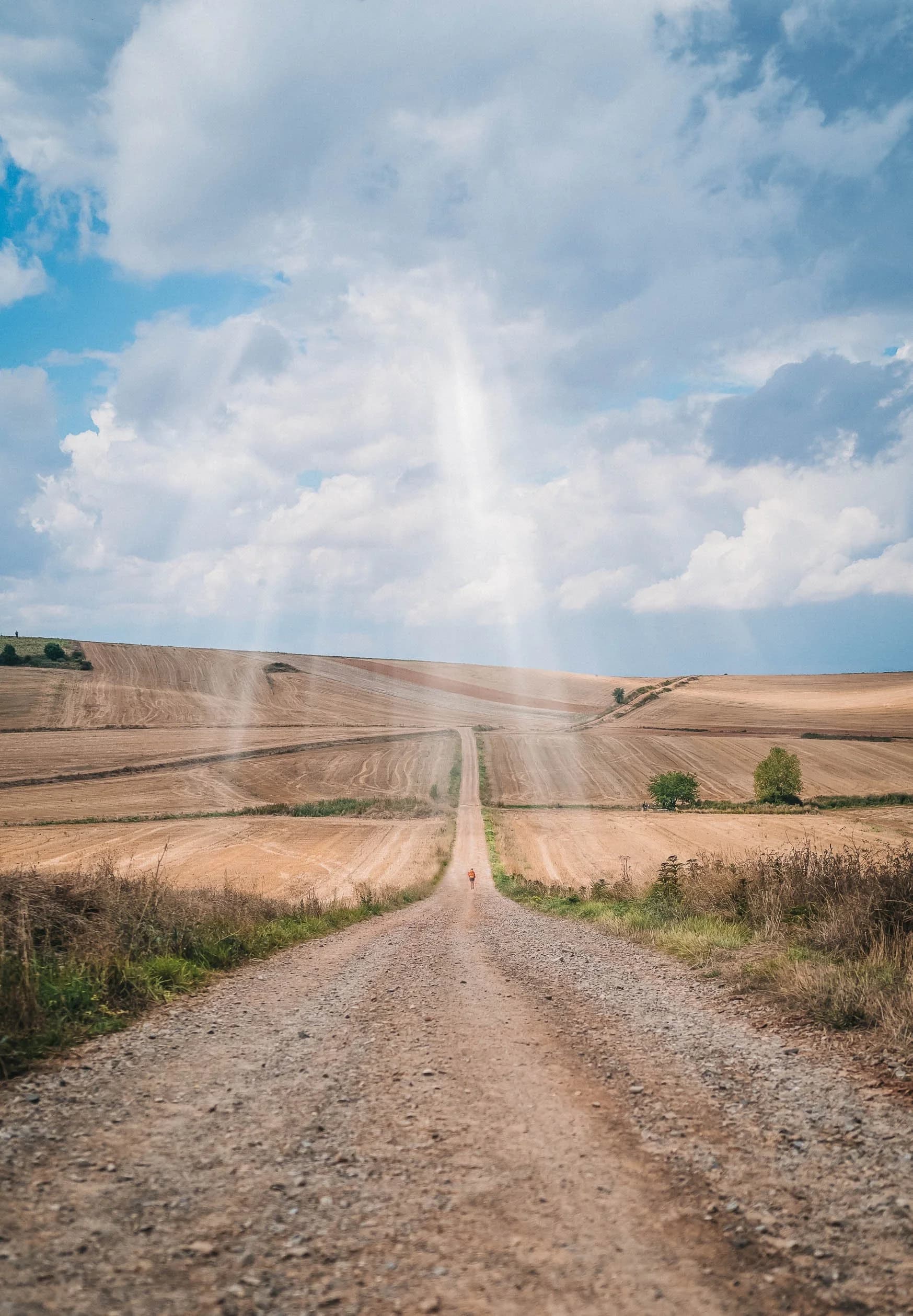
Nothing tests foot resilience quite like the Meseta. Those long, flat stages between Burgos and León—sometimes 30 kilometers with barely a village in sight—are where feet either break down completely or finally, mercifully, toughen up.The repetitive motion on hard-packed paths creates different stresses than the varied terrain of the earlier stages. There's no variety in foot strike, no changing angles to distribute the pressure. It's the same motion, hour after hour, under the relentless Castilian sun.
By now—roughly days fifteen through twenty-two—your calluses should be well-established. They're your friends. I know some pilgrims who obsessively file them down, treating them like the enemy, but I'd argue against this. Those thick patches of skin are protecting you. Unless they're cracked or causing pressure problems, let them be.
What you need to watch for during the Meseta is the cumulative fatigue that manifests as dull, persistent aching. Not sharp pain—that's usually acute injury—but a deep weariness in the bones and tissues of your feet. This is overuse making itself known.
I started incorporating evening foot massage during my second Camino, and it became non-negotiable for every walk since. A simple technique: sit on your bed, cross one foot over the opposite knee, and work your thumbs firmly along the arch from heel to ball. Press into the spaces between the metatarsals. Circle around the ankle bones. It doesn't need to be sophisticated. What it needs to be is consistent.
A small golf ball or massage ball can intensify this practice—rolling your arch over it for five minutes before bed works wonders. I carry a lacrosse ball specifically for this purpose; it's one of those items that seems like dead weight until you need it, and then it becomes sacred.
The Mountains Return: O Cebreiro and the Galician Reward
When you finally leave the Meseta behind and begin the climb to O Cebreiro, your feet face a new challenge: they have to remember how to handle elevation change again. After days of flatness, those steep ascents and descents can shock tissues that had adapted to repetitive, level walking.But here's where the magic happens. By this point—somewhere around day twenty-five or twenty-six—your feet have fundamentally changed. The skin is thicker, tougher, and more resistant to friction. The muscles in your feet and lower legs have strengthened considerably. Your balance has improved because the small stabilizing muscles have been working overtime for weeks.
I remember during my fourth Camino, standing at the top of O Cebreiro and realizing that my feet didn't hurt. Not just "manageable discomfort"—actually didn't hurt. After 600 kilometers, they had finally stopped complaining and started cooperating.
This doesn't happen for everyone at the same point, and some pilgrims never reach this peaceful coexistence. But for most who have been diligent about care and sensible about pushing through versus resting, Galicia is where the body finally gets on board with what you're asking of it.
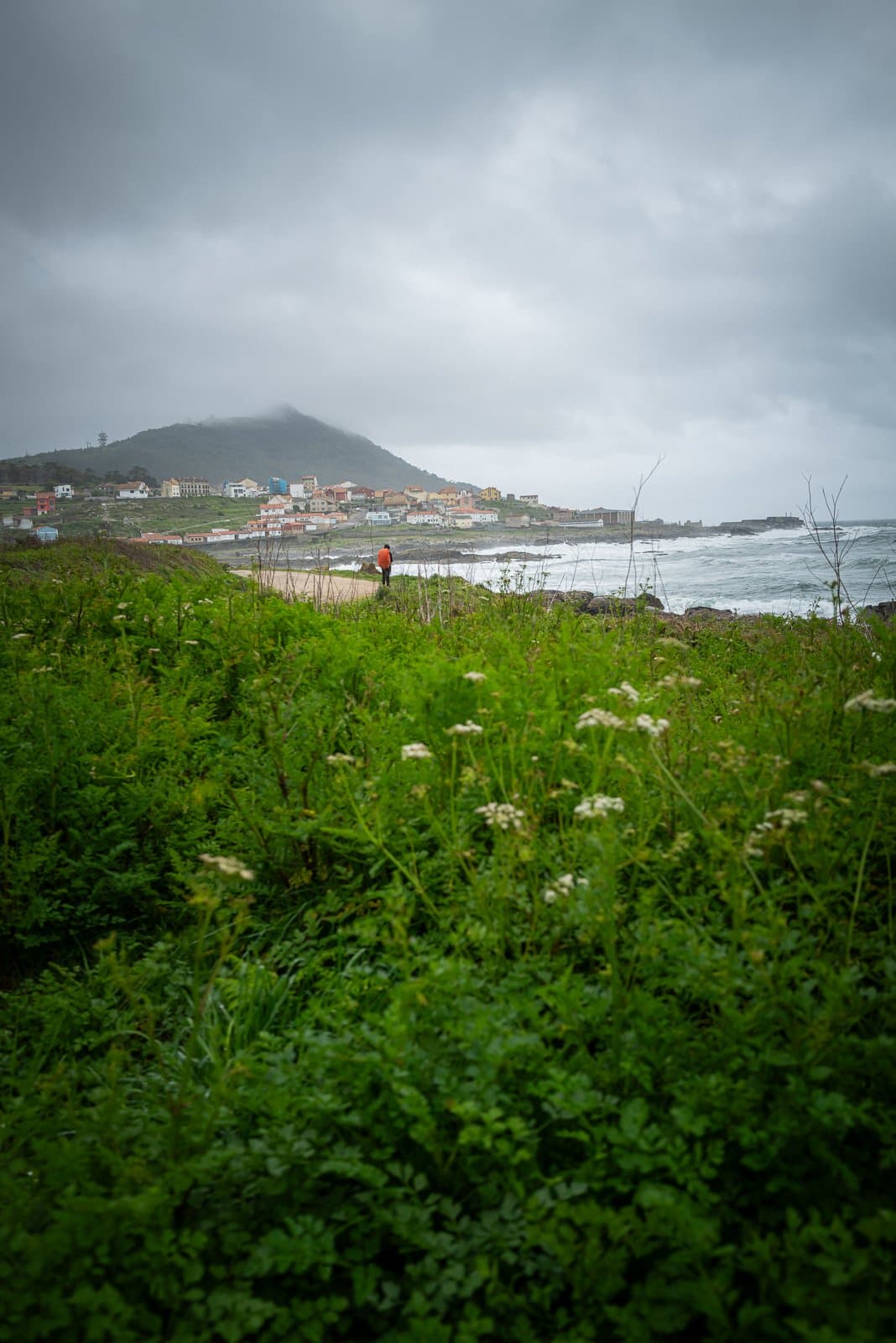
The moisture in Galicia presents one final challenge though. Those misty mornings, the occasional rain, and the humid eucalyptus forests mean your feet may be wet more often than they've been since the early days. Wet feet blister more easily, even toughened ones.
My approach in Galicia: I carry a lightweight pair of waterproof sock liners for when rain is threatening, and I'm religious about changing into dry socks during lunch breaks if the morning was damp. The Darn Tough Hiker Micro Crew socks have been my go-to for years—they handle moisture better than anything else I've tried, and the lifetime warranty means they eventually pay for themselves.
The Final 100 Kilometers: Triumph and Its Tolls
From Sarria onwards, the Camino fills with pilgrims who've joined for the final stretch. They're easy to spot—fresh-faced, clean clothes, and most tellingly, limping by day two. Their feet haven't had the preparation that yours have.You, meanwhile, might feel like your feet could walk forever. This is both a triumph and a trap.
The last 100 kilometers is where overconfidence causes problems. Your feet feel good, so you push harder. You walk faster to keep ahead of the crowds. You tack on extra kilometers to reach a better albergue. And sometimes, in these final days, that's when injury strikes.
I've seen more problems in the last week than in all the weeks before combined—stress fractures from accumulated damage finally manifesting, Achilles tendinitis flaring because someone thought they could sprint the final stages, and simply catastrophic blisters from new pilgrims who didn't know better.
My advice for this final phase: walk it like you've walked every other day. Your feet have carried you this far. They deserve consistency, not a sudden demand for heroics.
After the Cathedral: What Lingers
You'll walk into the Praza do Obradoiro with feet that are simultaneously destroyed and somehow stronger than they've ever been. The contradiction is real. Your feet will look awful—calloused, possibly missing a toenail or two, bearing the scars of healed blisters—but they'll feel oddly capable.The return to normal shoes will feel strange for weeks. After so much time in well-fitted hiking footwear, regular shoes feel flimsy, unsupportive, almost frivolous. Many pilgrims—myself included—find themselves gravitating towards more supportive everyday footwear long after the Camino ends.
The calluses will gradually soften over the following months, though some of mine have become permanent residents. The lost toenails will regrow (give it six months to a year). Any lingering aches typically resolve within a few weeks of rest.
But something changes permanently in how you understand your feet after walking 800 kilometers on them. You stop taking them for granted. You notice when they're unhappy. You develop a respect for these remarkable appendages that do so much while asking so little.
Daily Rituals That Made the Difference
If I had to distill everything I've learned about foot care into a simple daily practice, it would be this:Morning: Tape known problem areas preventatively. Apply anti-friction balm to high-contact zones. Ensure socks are smooth with no wrinkles.
Midday: If possible, remove shoes and socks for ten to fifteen minutes. Let feet air out. Check for hot spots (the precursor to blisters) and address them immediately with tape or bandaging.
Evening: Wash feet thoroughly—this matters more than people realize, as bacteria contribute to blister formation. Apply a moisturizer to dry areas but not between toes (moisture there breeds fungal issues). Elevate feet for at least twenty minutes. Massage the arches and metatarsals. Address any blisters using proper technique.
This routine takes maybe thirty minutes total across the day. It can save your entire Camino.
The Shoes Question
I haven't said much about footwear specifically because it's such a personal thing, but I'll offer this: the shoes that have carried me across multiple Caminos have been trail runners, not heavy hiking boots. The Salomon X Ultra series has been my go-to. They're light, they breathe, they dry quickly, and they have adequate support without the weight penalty of traditional boots.But I know pilgrims who've sworn by boots, sandals, and everything in between. The key isn't finding the "right" shoe—it's finding the right shoe for your feet, and then putting serious kilometers on them before you hit the Pyrenees.
If you're still figuring out your footwear strategy, you can ask about specific topics or plan your Camino with guidance tailored to your situation.
The Truth Nobody Tells You
Here's what I wish someone had told me before my first Camino: your feet will hurt. This is not a sign that you're doing it wrong. It's a sign that you're doing something extraordinary that human bodies weren't designed for—at least not without preparation.The pain is temporary. The transformation is permanent. Not just the physical transformation of tougher, stronger feet, but the mental transformation that comes from proving to yourself, day after day, that you can keep going when your body begs you to stop.
Your feet carry you to Santiago. But really, your mind carries your feet. The relationship between the two is what the Camino reveals.
I'll be honest—there were moments on every single one of my Caminos when I looked at my battered feet and wondered if I could go on. And every single time, I did. Not because my feet were exceptional, but because I learned to work with them rather than against them.
You will too.
---
Try asking My Camino Guide:
- How do I prevent blisters on the Camino?
- What's the best daily foot care routine for pilgrims?
- When should I see a doctor for Camino foot problems?