A day-in-the-life exploration of taking a rest day mid-pilgrimage—the guilt that surfaces, the practical decisions about where to stop, how to spend the hours,
Let me tell you about the morning I woke up in Burgos on my second Camino Francés and couldn't face the thought of putting on my boots. Not because I was injured—though my feet had certainly seen better days—but because something deeper was happening. My body was speaking a language I'd spent years learning to ignore, and for once, I decided to listen.
That decision, to simply not walk that day, became one of the most transformative moments of that particular pilgrimage. And yet, I spent the first two hours of my rest day feeling like an absolute fraud.
I've walked the Francés six times now, the Via Podiensis twice (once continuing all the way to Santiago), the Norte, both the coastal and inland routes of the Portugués, and made the trek to Finisterre five times. And I can tell you that even after all those kilometers, the guilt of a rest day still creeps in. Every. Single. Time.
You'll lie there in your albergue bunk—or whatever accommodation you've chosen for your day off—and the thoughts will come: Am I being lazy? Will I lose my Camino family? What if this makes me weak? Real pilgrims don't stop.
Let me be direct about this: those thoughts are nonsense. But knowing they're nonsense doesn't make them any less persistent.
On my Norte walk, I took a rest day in Santander. Whilst other pilgrims pushed on, I found myself sitting in a café, watching the sea, and feeling genuinely distressed about not walking. A Spanish man at the next table must have noticed something in my expression because he leaned over and said, "El Camino no se escapa." The Camino doesn't run away.
He was right, of course. Santiago would still be there tomorrow, and the day after that. The only deadline that matters is the one you've imposed on yourself—and most of those deadlines can flex more than you think.
The Amenities Question
Go in knowing this: a rest day in a small village with one bar and a closed pharmacy will feel very different from a rest day in a mid-sized town. Neither is wrong, but they serve different purposes.
If you need actual rest—sleep, laundry, minor foot care—a quiet village can be perfect. But if you're craving stimulation, good food, or the ability to resupply gear, you'll want to plan for somewhere larger.
My favorite rest day stops on the Francés have been Burgos, León, and—perhaps controversially—Sarria. Burgos and León are proper cities with cathedrals worth spending hours inside, restaurants that go beyond peregrino menus, and that lovely anonymity that comes with urban spaces. Sarria, despite its reputation as where "the tourists join," has a charming old town and excellent coffee shops where you can watch the constant flow of fresh faces beginning their own journeys.
On the Portugués, I've taken rest days in Porto (which, let's be honest, deserves several days) and Pontevedra. That medieval center in Pontevedra is genuinely special—all granite arcades and flower-filled plazas.
The Accommodation Decision
Here's where things get practical. Your albergue likely has a one-night limit, which means a rest day often requires different lodging or creative logistics.
My suggestion is this: book a private room in a hotel or pensión for your rest day, even if you've been doing albergues exclusively. The psychological benefit of a private space, a door that locks, and—let's not underestimate this—a full night's sleep without snoring strangers, is worth the extra euros.
I've paid anywhere from €25 to €60 for a rest day room, depending on the town and season. Budget it in advance. Treat it as essential equipment maintenance, because that's exactly what it is.
Some pilgrims choose to stay two nights in the same albergue by simply not booking a bed during the day—they leave their pack somewhere secure, wander, and return to claim a fresh bunk in the afternoon. This works, but it adds stress I personally don't want on a day meant for recuperation.
Morning: The Slow Unfolding
I'll never forget my first rest day—I set an alarm. Out of habit. Then I lay there, fully awake at 6:30 AM, feeling somehow criminal for not moving.
These days, I've learned to let rest days unfold differently. I stay in bed until my body decides it's ready. Sometimes that's 7 AM. Sometimes it's 10. The absence of a schedule is itself a gift, though it takes practice to receive it.
Eventually, I'll wander out for breakfast. And here's a key difference: on a rest day, I actually sit down for breakfast. Inside a café. At a table. With real cups instead of paper. I order something beyond the standard café con leche and tostada—maybe fresh-squeezed orange juice, eggs, whatever catches my eye.
This sounds minor, but after days of efficient pilgrim eating—grab and go, fuel for the next stage—the act of lingering over a meal becomes almost meditative.
Midday: Maintenance and Meandering
This is when I tend to the practical stuff, and honestly, there's usually more of it than you'd expect.
Laundry gets done properly. Not the rushed hand-wash-and-hope-it-dries situation that happens on walking days, but actual laundry. Many towns have lavanderías where you can drop off a bag in the morning and collect it clean and folded a few hours later. Worth every cent.
Feet get examined. Really examined. I'll find a pharmacy, pick up blister supplies if needed, and spend proper time assessing what's happening down there. On one rest day in León, a pharmacist spent twenty minutes advising me on my increasingly rebellious pinky toes. That conversation prevented what could have become a walk-ending situation.
If your gear needs attention, rest days are the time. I've replaced worn-out hiking socks in Burgos, bought emergency Compeed blister plasters in Pontevedra, and once found a cobbler in León who re-glued my separating boot sole whilst I waited. These things are nearly impossible when you're committed to walking twenty-plus kilometers daily.
And then, wandering. Pure aimless wandering. Into the cathedral (León's will genuinely stop your breath with its stained glass). Through the market. Along the river. Into shops I'd never enter at home. Some of my richest Camino memories come from rest days: the unexpected museum, the conversation with a local, the discovery of a hidden plaza where old men played cards beneath orange trees.
Afternoon: The Temptation to Catch Up
This is dangerous territory, and I'm going to be honest with you about it.
Around 2 or 3 PM, a strange restlessness often sets in. You've done your errands. You've seen the sights. And suddenly that pilgrim guilt returns with reinforcements: Maybe I could walk a short stage this afternoon. Just ten kilometers. Just to not lose the day entirely.
Don't.
This impulse defeats the entire purpose. A rest day split into a half-day plus a short walk becomes neither good rest nor a real walking day. You'll arrive at your next destination tired, having neither fully recovered nor made meaningful progress.
Instead, I've learned to have something planned for the afternoon. A specific café where I'll write in my journal. A bench in the park where I'll read. A second visit to the cathedral at a different hour, when the light shifts. The nap I should have taken but didn't because I felt guilty about it.
Evening: Reconnection
Some pilgrims worry about losing their "Camino family" during a rest day. Here's what I've noticed over multiple pilgrimages: the Camino has a strange way of reuniting people.
Yes, the friends you made will walk ahead. But the Camino is not a single line of pilgrims marching in lock-step. People vary their stages, take their own rest days, get waylaid by injuries or weather. More than once, I've "lost" someone during a rest day only to find them again three stages later, equally surprised and delighted.
And a rest day evening offers its own social possibilities. You might meet entirely new pilgrims—people who started a day behind you, or who are finishing a rest day of their own. Some of my longest-lasting Camino friendships began on rest days, when I wasn't exhausted at dinner and could actually have a real conversation.
If you're looking for connection, check the local albergue's common area even if you're staying elsewhere. Many host communal dinners where day-resting pilgrims are welcome.
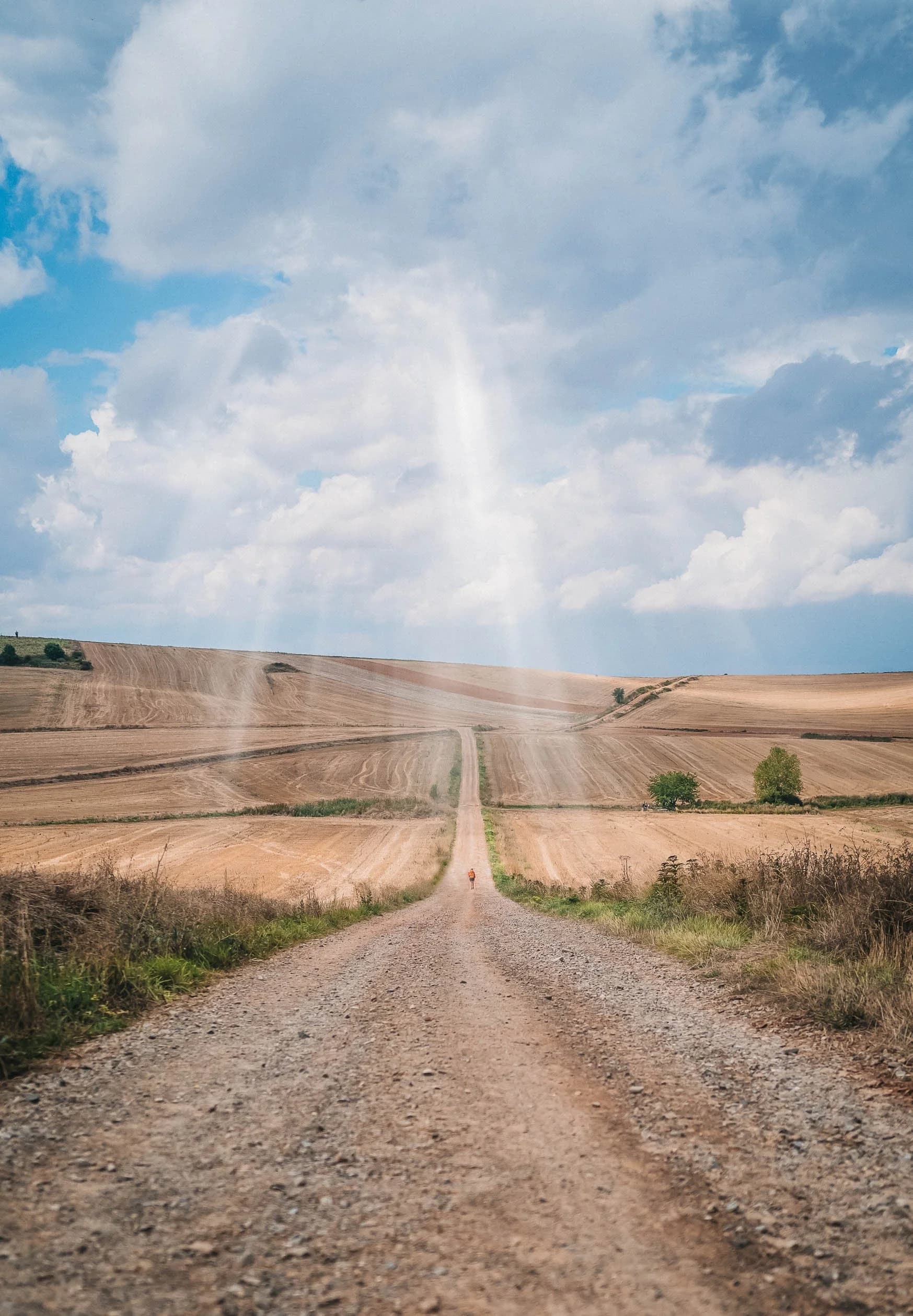
When you're walking every day, you're in a forward-motion trance. Wake, walk, arrive, eat, sleep, repeat. It's hypnotic and beautiful, but it's also relentless. You process experiences in quick snapshots, rarely pausing long enough for them to fully develop.
A rest day breaks that rhythm. And in the break, something interesting happens.
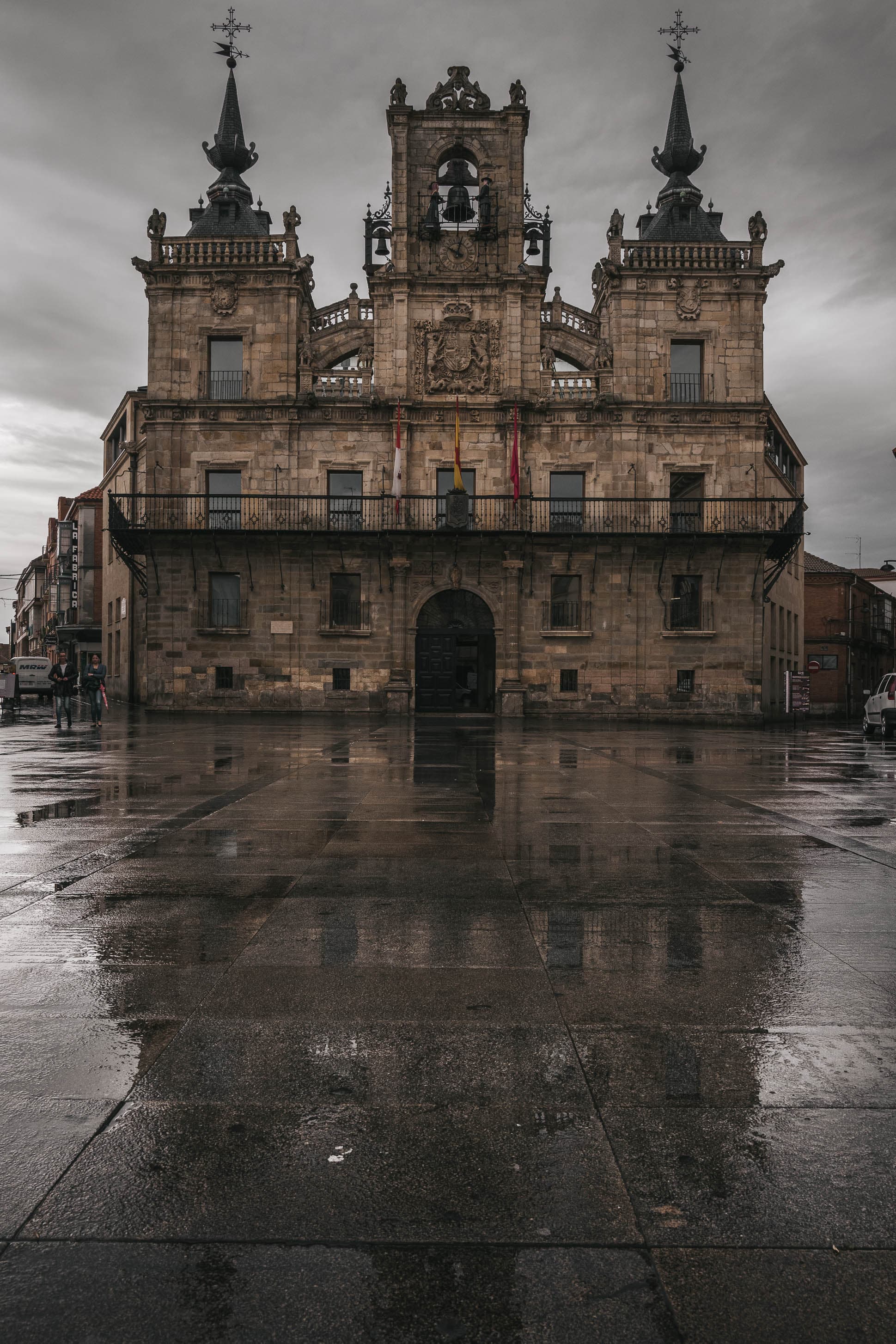
During a rest day in Astorga on my fourth Francés, I spent three hours sitting in the plaza watching the town's daily life unfold. Mothers with strollers. Elderly couples arm in arm. Children released from school, thundering across the stones. A wedding party emerging from the cathedral.
It suddenly struck me that all these hundreds of kilometers were not wilderness. They were someone's home. Every village I'd walked through, every campo I'd crossed—people lived their entire lives in these places. The Camino was extraordinary to me; to them, it was simply Tuesday.
That realization shifted something in my understanding of pilgrimage. I wasn't just walking through Spain; Spain was allowing me to pass through, hosting millions of pilgrims whilst continuing its own daily existence. The generosity of that, the patience of these communities—I wouldn't have seen it so clearly from the trail.
Rest days also offer space for the harder stuff. The questions about why you're walking, what you're seeking, what you're running from. These thoughts surface during walking too, of course, but a rest day gives them room to expand, to be examined rather than outpaced.
I won't pretend this is always pleasant. Some rest days have involved real confrontation with my own dissatisfaction, my patterns, my fears. The Camino is not always therapy, but when it functions that way, rest days provide the couch.
Your body will tell you, if you're willing to listen. Blisters that are getting worse despite treatment. Joint pain that isn't resolving with rest between stages. Exhaustion that sleep isn't fixing. Getting sick—yes, the Camino cold is real, and walking through it often just prolongs it.
On my Via Podiensis walk, I developed knee pain around Conques that I tried to push through for three days. Stubborn, stupid, very much in character. By the time I finally took a rest day, I needed two, and a visit to a doctor who made unimpressed faces whilst examining my swollen joint.
If I'd stopped earlier, I would have walked again sooner. The math isn't complicated, but the ego doesn't like it.
Mental and emotional exhaustion count too. There were days on the Norte when the constant social interaction of albergue life had simply drained me beyond function. Taking a rest day in a private room, speaking to almost no one, restored something essential. Introversion isn't weakness; it's a different kind of fuel requirement.
My general approach: plan for a rest day every 7-10 walking days on a longer route, with flexibility to move it based on how you're feeling. On the Francés, this might mean rest days in Santo Domingo de la Calzada, Burgos, León, and perhaps one more in the final stretch.
But—and this is crucial—hold those plans loosely. You might reach your intended rest day town feeling strong and eager to continue. You might need to stop three days earlier than planned. The Camino constantly teaches flexibility; let it.
If you want to think through where rest days might make sense for your specific itinerary, you can ask about optimal rest day locations for your route.
You have permission to stop.
You have permission to listen to your body. You have permission to not be the pilgrim who never rests. You have permission to experience a town rather than just pass through it. You have permission to move at your own pace, even when that pace is temporarily zero kilometers per hour.
The Camino is not a test of endurance, regardless of what some competitive pilgrims might suggest. It's a journey—your journey—and you get to walk it your way. Rest days aren't cheating. They're wisdom.
That morning in Burgos, the one I started with, turned into something beautiful. I watched the sun move across the cathedral facade. I ate an unreasonably long lunch. I called my family for the first time in a week. I journaled about things I'd been avoiding. I napped without guilt (well, with less guilt).
And when I walked out of the city the next morning, I felt genuinely renewed. Not just physically, but in some harder-to-name way. Ready for what came next.
That's what a rest day on the Camino actually looks like. Guilt, then release. Stillness, then unexpected discoveries. Permission, finally given.
The Camino will still be there tomorrow. Go in knowing that. And when you need to stop, stop.
---
Try asking My Camino Guide:
- How do I know if I'm pushing too hard on the Camino?
- What are the best cities for a rest day on the Camino Francés?
- How should I plan my daily stages to avoid burnout?
That decision, to simply not walk that day, became one of the most transformative moments of that particular pilgrimage. And yet, I spent the first two hours of my rest day feeling like an absolute fraud.
The Guilt Nobody Warns You About
Here's what they don't tell you in the guidebooks: the hardest part of taking a rest day isn't the logistics. It's the psychological warfare you wage against yourself whilst watching other pilgrims shoulder their packs and head out into the dawn.I've walked the Francés six times now, the Via Podiensis twice (once continuing all the way to Santiago), the Norte, both the coastal and inland routes of the Portugués, and made the trek to Finisterre five times. And I can tell you that even after all those kilometers, the guilt of a rest day still creeps in. Every. Single. Time.
You'll lie there in your albergue bunk—or whatever accommodation you've chosen for your day off—and the thoughts will come: Am I being lazy? Will I lose my Camino family? What if this makes me weak? Real pilgrims don't stop.
Let me be direct about this: those thoughts are nonsense. But knowing they're nonsense doesn't make them any less persistent.
On my Norte walk, I took a rest day in Santander. Whilst other pilgrims pushed on, I found myself sitting in a café, watching the sea, and feeling genuinely distressed about not walking. A Spanish man at the next table must have noticed something in my expression because he leaned over and said, "El Camino no se escapa." The Camino doesn't run away.
He was right, of course. Santiago would still be there tomorrow, and the day after that. The only deadline that matters is the one you've imposed on yourself—and most of those deadlines can flex more than you think.
Choosing Your Rest Day Location (The Strategic Art)
Not all rest days are created equal, and honestly, not all towns deserve a full day of your attention. Over the years, I've developed something of a methodology for choosing where to stop, and it goes beyond simply collapsing wherever my body gives out.The Amenities Question
Go in knowing this: a rest day in a small village with one bar and a closed pharmacy will feel very different from a rest day in a mid-sized town. Neither is wrong, but they serve different purposes.
If you need actual rest—sleep, laundry, minor foot care—a quiet village can be perfect. But if you're craving stimulation, good food, or the ability to resupply gear, you'll want to plan for somewhere larger.
My favorite rest day stops on the Francés have been Burgos, León, and—perhaps controversially—Sarria. Burgos and León are proper cities with cathedrals worth spending hours inside, restaurants that go beyond peregrino menus, and that lovely anonymity that comes with urban spaces. Sarria, despite its reputation as where "the tourists join," has a charming old town and excellent coffee shops where you can watch the constant flow of fresh faces beginning their own journeys.
On the Portugués, I've taken rest days in Porto (which, let's be honest, deserves several days) and Pontevedra. That medieval center in Pontevedra is genuinely special—all granite arcades and flower-filled plazas.
The Accommodation Decision
Here's where things get practical. Your albergue likely has a one-night limit, which means a rest day often requires different lodging or creative logistics.
My suggestion is this: book a private room in a hotel or pensión for your rest day, even if you've been doing albergues exclusively. The psychological benefit of a private space, a door that locks, and—let's not underestimate this—a full night's sleep without snoring strangers, is worth the extra euros.
I've paid anywhere from €25 to €60 for a rest day room, depending on the town and season. Budget it in advance. Treat it as essential equipment maintenance, because that's exactly what it is.
Some pilgrims choose to stay two nights in the same albergue by simply not booking a bed during the day—they leave their pack somewhere secure, wander, and return to claim a fresh bunk in the afternoon. This works, but it adds stress I personally don't want on a day meant for recuperation.
What the Hours Actually Hold
So you've made peace with stopping, you've found your accommodation, and suddenly you have an entire day stretching before you with no kilometers to cover. Now what?Morning: The Slow Unfolding
I'll never forget my first rest day—I set an alarm. Out of habit. Then I lay there, fully awake at 6:30 AM, feeling somehow criminal for not moving.
These days, I've learned to let rest days unfold differently. I stay in bed until my body decides it's ready. Sometimes that's 7 AM. Sometimes it's 10. The absence of a schedule is itself a gift, though it takes practice to receive it.
Eventually, I'll wander out for breakfast. And here's a key difference: on a rest day, I actually sit down for breakfast. Inside a café. At a table. With real cups instead of paper. I order something beyond the standard café con leche and tostada—maybe fresh-squeezed orange juice, eggs, whatever catches my eye.
This sounds minor, but after days of efficient pilgrim eating—grab and go, fuel for the next stage—the act of lingering over a meal becomes almost meditative.
Midday: Maintenance and Meandering
This is when I tend to the practical stuff, and honestly, there's usually more of it than you'd expect.
Laundry gets done properly. Not the rushed hand-wash-and-hope-it-dries situation that happens on walking days, but actual laundry. Many towns have lavanderías where you can drop off a bag in the morning and collect it clean and folded a few hours later. Worth every cent.
Feet get examined. Really examined. I'll find a pharmacy, pick up blister supplies if needed, and spend proper time assessing what's happening down there. On one rest day in León, a pharmacist spent twenty minutes advising me on my increasingly rebellious pinky toes. That conversation prevented what could have become a walk-ending situation.
If your gear needs attention, rest days are the time. I've replaced worn-out hiking socks in Burgos, bought emergency Compeed blister plasters in Pontevedra, and once found a cobbler in León who re-glued my separating boot sole whilst I waited. These things are nearly impossible when you're committed to walking twenty-plus kilometers daily.
And then, wandering. Pure aimless wandering. Into the cathedral (León's will genuinely stop your breath with its stained glass). Through the market. Along the river. Into shops I'd never enter at home. Some of my richest Camino memories come from rest days: the unexpected museum, the conversation with a local, the discovery of a hidden plaza where old men played cards beneath orange trees.
Afternoon: The Temptation to Catch Up
This is dangerous territory, and I'm going to be honest with you about it.
Around 2 or 3 PM, a strange restlessness often sets in. You've done your errands. You've seen the sights. And suddenly that pilgrim guilt returns with reinforcements: Maybe I could walk a short stage this afternoon. Just ten kilometers. Just to not lose the day entirely.
Don't.
This impulse defeats the entire purpose. A rest day split into a half-day plus a short walk becomes neither good rest nor a real walking day. You'll arrive at your next destination tired, having neither fully recovered nor made meaningful progress.
Instead, I've learned to have something planned for the afternoon. A specific café where I'll write in my journal. A bench in the park where I'll read. A second visit to the cathedral at a different hour, when the light shifts. The nap I should have taken but didn't because I felt guilty about it.
Evening: Reconnection
Some pilgrims worry about losing their "Camino family" during a rest day. Here's what I've noticed over multiple pilgrimages: the Camino has a strange way of reuniting people.
Yes, the friends you made will walk ahead. But the Camino is not a single line of pilgrims marching in lock-step. People vary their stages, take their own rest days, get waylaid by injuries or weather. More than once, I've "lost" someone during a rest day only to find them again three stages later, equally surprised and delighted.
And a rest day evening offers its own social possibilities. You might meet entirely new pilgrims—people who started a day behind you, or who are finishing a rest day of their own. Some of my longest-lasting Camino friendships began on rest days, when I wasn't exhausted at dinner and could actually have a real conversation.
If you're looking for connection, check the local albergue's common area even if you're staying elsewhere. Many host communal dinners where day-resting pilgrims are welcome.
The Lessons That Come From Not Walking
I said earlier that the Camino walked slowly sometimes teaches more than the Camino walked fast. Let me try to explain what I mean.When you're walking every day, you're in a forward-motion trance. Wake, walk, arrive, eat, sleep, repeat. It's hypnotic and beautiful, but it's also relentless. You process experiences in quick snapshots, rarely pausing long enough for them to fully develop.
A rest day breaks that rhythm. And in the break, something interesting happens.
During a rest day in Astorga on my fourth Francés, I spent three hours sitting in the plaza watching the town's daily life unfold. Mothers with strollers. Elderly couples arm in arm. Children released from school, thundering across the stones. A wedding party emerging from the cathedral.
It suddenly struck me that all these hundreds of kilometers were not wilderness. They were someone's home. Every village I'd walked through, every campo I'd crossed—people lived their entire lives in these places. The Camino was extraordinary to me; to them, it was simply Tuesday.
That realization shifted something in my understanding of pilgrimage. I wasn't just walking through Spain; Spain was allowing me to pass through, hosting millions of pilgrims whilst continuing its own daily existence. The generosity of that, the patience of these communities—I wouldn't have seen it so clearly from the trail.
Rest days also offer space for the harder stuff. The questions about why you're walking, what you're seeking, what you're running from. These thoughts surface during walking too, of course, but a rest day gives them room to expand, to be examined rather than outpaced.
I won't pretend this is always pleasant. Some rest days have involved real confrontation with my own dissatisfaction, my patterns, my fears. The Camino is not always therapy, but when it functions that way, rest days provide the couch.
Practical Signals That You Need To Stop
Because sometimes it's not just a nice idea—it's medically necessary.Your body will tell you, if you're willing to listen. Blisters that are getting worse despite treatment. Joint pain that isn't resolving with rest between stages. Exhaustion that sleep isn't fixing. Getting sick—yes, the Camino cold is real, and walking through it often just prolongs it.
On my Via Podiensis walk, I developed knee pain around Conques that I tried to push through for three days. Stubborn, stupid, very much in character. By the time I finally took a rest day, I needed two, and a visit to a doctor who made unimpressed faces whilst examining my swollen joint.
If I'd stopped earlier, I would have walked again sooner. The math isn't complicated, but the ego doesn't like it.
Mental and emotional exhaustion count too. There were days on the Norte when the constant social interaction of albergue life had simply drained me beyond function. Taking a rest day in a private room, speaking to almost no one, restored something essential. Introversion isn't weakness; it's a different kind of fuel requirement.
Integrating Rest Into Your Planning
If you're currently in the planning stages of your Camino, I'd encourage you to build rest days into your mental model from the start.My general approach: plan for a rest day every 7-10 walking days on a longer route, with flexibility to move it based on how you're feeling. On the Francés, this might mean rest days in Santo Domingo de la Calzada, Burgos, León, and perhaps one more in the final stretch.
But—and this is crucial—hold those plans loosely. You might reach your intended rest day town feeling strong and eager to continue. You might need to stop three days earlier than planned. The Camino constantly teaches flexibility; let it.
If you want to think through where rest days might make sense for your specific itinerary, you can ask about optimal rest day locations for your route.
The Permission You're Looking For
I'll close with this, because I think it's what many pilgrims need to hear:You have permission to stop.
You have permission to listen to your body. You have permission to not be the pilgrim who never rests. You have permission to experience a town rather than just pass through it. You have permission to move at your own pace, even when that pace is temporarily zero kilometers per hour.
The Camino is not a test of endurance, regardless of what some competitive pilgrims might suggest. It's a journey—your journey—and you get to walk it your way. Rest days aren't cheating. They're wisdom.
That morning in Burgos, the one I started with, turned into something beautiful. I watched the sun move across the cathedral facade. I ate an unreasonably long lunch. I called my family for the first time in a week. I journaled about things I'd been avoiding. I napped without guilt (well, with less guilt).
And when I walked out of the city the next morning, I felt genuinely renewed. Not just physically, but in some harder-to-name way. Ready for what came next.
That's what a rest day on the Camino actually looks like. Guilt, then release. Stillness, then unexpected discoveries. Permission, finally given.
The Camino will still be there tomorrow. Go in knowing that. And when you need to stop, stop.
---
Try asking My Camino Guide:
- How do I know if I'm pushing too hard on the Camino?
- What are the best cities for a rest day on the Camino Francés?
- How should I plan my daily stages to avoid burnout?