A day-by-day account of walking the most popular starting section, capturing the shifting energy as pilgrim numbers swell, the specific character of each town,
Let me tell you something nobody warned me about before my first Camino: the final 100 kilometers from Sarria to Santiago is both the most crowded and the most emotionally charged section of the entire Francés. I've now walked this stretch six times—sometimes as the final push of a full journey from Saint-Jean-Pied-de-Port, twice starting fresh from Sarria itself. Each experience has been radically different, and I've developed a complicated love for this five-day corridor that swells with pilgrims the closer you get to the cathedral.
If you're planning to walk just this section—and roughly 40% of all pilgrims do—go in knowing this: you'll encounter judgment from long-distance walkers, you'll question whether your journey "counts," and somewhere around day three, you'll stop caring about any of that. Because the Camino has a way of working on you regardless of how many kilometers are under your boots.
I'll be honest—when I first walked into Sarria after three weeks on the trail, I felt a flash of resentment toward the fresh-faced pilgrims loading up at the outfitter shops. But that was ego talking. Some of these walkers have health limitations. Some have exactly one week of annual leave. Some are testing whether they can handle more. Their reasons are none of my business.
The town itself is unremarkable—a working Galician municipality that happens to sit at the magical 100-kilometer mark. You'll find the Pilgrim Office on Rúa Maior for your first stamps, several gear shops charging tourist prices, and plenty of cafés selling their last cups of coffee before the trail.
My suggestion is to stay somewhere quiet on the edge of town if you're starting here. The central albergues fill with pre-walk anxiety, and you want sleep before tomorrow's 22-kilometer walk to Portomarín.
The Sarria to Portomarín stage (22.4 km) starts with a steady climb out of town past the Mosteiro da Madalena, then settles into rolling Galician countryside. The terrain here is forgiving—rural lanes, eucalyptus groves, tiny hamlets with names like Barbadelo and Ferreiros. You'll cross the medieval bridge in Paradela, pass through Vilachá, and begin to understand what people mean when they talk about Galicia's "green Spain."
The path is well-marked but increasingly busy. You'll encounter your first "Camino traffic jams" at narrow spots, something that feels absurd after the solitude of the Meseta but becomes normal by day two.
Portomarín announces itself dramatically. The town was entirely relocated in the 1960s when a reservoir flooded the original settlement, so you descend a long staircase to cross the bridge over the Miño River, then climb into a town that feels slightly displaced from time—because it literally is. The Romanesque church of San Nicolás was moved stone by stone to its current location, and there's something poignant about that kind of preservation.
I'd recommend having dinner at the small restaurants along the main arcade and watching the sunset over the reservoir. The town fills quickly in high season, so book ahead or arrive early.
The walk itself is pleasant but not spectacular—more eucalyptus, more small villages, more gently rolling terrain. You'll pass through Gonzar, Castromaior, Hospital da Cruz, and Ventas de Narón. The place names blur together, honestly. This isn't the dramatic scenery of the Pyrenees or the stark beauty of the Meseta. It's pastoral, repetitive, and meditative in a way that grows on you.
Somewhere along this stretch, I always notice the first meaningful conversations forming. The Camino's social alchemy works fast when everyone's sharing the same discomforts. Blisters become bonding opportunities. "Where are you from?" evolves into actual connection.
Palas de Rei is a modern town with good services but little charm. You're here to eat, sleep, and get your credential stamped—not to sightsee. I've had decent pilgrim meals at the restaurants along the main road, but nothing memorable. The public albergue is functional, and there are several private options if you want a quieter night.
One thing to know: around Palas de Rei, you might start encountering groups who seem different from the solo walkers and small clusters you've been meeting. Organized tours, school groups, corporate retreats. They're not bad people—they're just experiencing the Camino differently. Try not to let it bother you.
The path continues through Galician countryside, but now you're entering what I call the "infrastructure zone." More cafés, more stamp stations, more people selling trinkets. The villages of San Xulián, Leboreiro, and Furelos still retain character, but you'll also pass some newer developments that exist purely to service pilgrim traffic.
Melide deserves a stop, whether you sleep there or not. This is pulpo territory—Galician octopus cooked in copper pots and served with potatoes, olive oil, and paprika. The traditional pulperías line the main street, and they all claim to be the original. Ezequiel is the most famous, but I've had equally good pulpo at several others. Order a ración, get some bread to soak up the oil, and take your time. This is a food moment worth savoring.
After Melide, the path continues through Boente and Castañeda before the final push into Arzúa. This town marks the point where the Camino del Norte and the Primitivo join the Francés (though I've only walked the Norte myself), so you'll notice the population swelling further. The energy shifts again—more veterans in the mix, more languages being spoken, more diversity of experience.
Arzúa is famous for cheese and quemada (that theatrical Galician aguardiente ritual with fire and incantations). If someone offers you quemada, say yes. If you have a chance to try the local Arzúa-Ulloa cheese, definitely say yes. The town has a pleasant enough center, though like Palas de Rei, it's more functional than charming.
People are starting to process. What does arriving mean? What comes next? For those who started in Sarria, there might be defensiveness about the short distance, a worry that the experience somehow doesn't count. For long-distance walkers, there's often a bittersweet anticipation of ending.
I find this day emotionally harder than the final push into Santiago. The in-between space. Not quite finished. Not yet arrived.
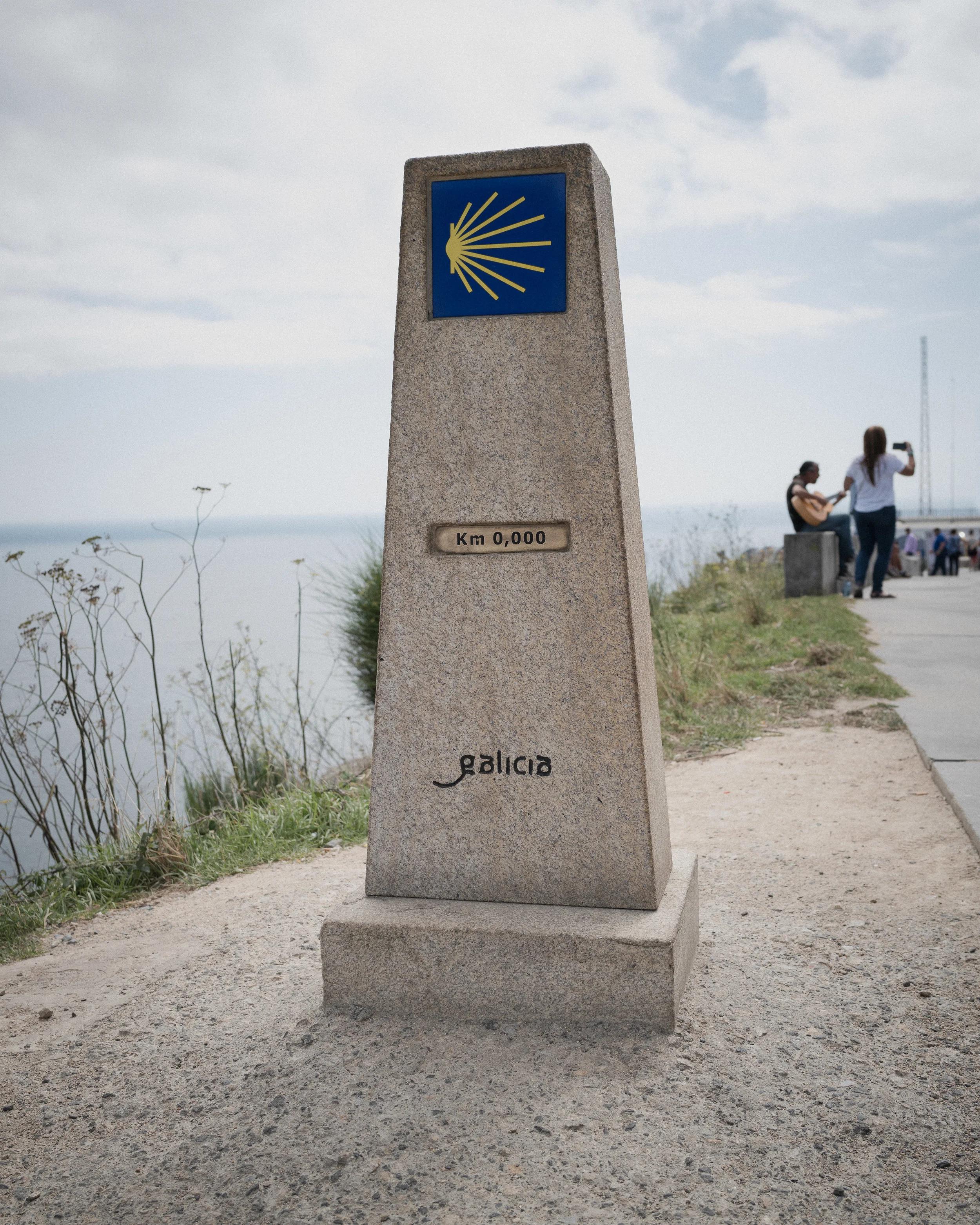
The villages along this route—Calzada, Calle, Boavista, Salceda, O Empalme—are unmemorable except for their role as waypoints. You'll pass kilometer markers counting down toward Santiago, which some find motivating and others find annoying.
O Pedrouzo (also called Arca) is the last overnight stop before Santiago for most pilgrims. It's essentially a pilgrim service town—albergues, restaurants, pharmacies, nothing more. But the anticipation here is palpable. Everyone's doing the math: Can I make it to the noon Pilgrim Mass tomorrow? Should I leave at 4 AM? What time do I need to be at the Pilgrim Office?
A few practical notes: The Pilgrim Office in Santiago is now appointment-based during busy seasons, so check their current system before arriving. The noon Mass is beautiful but crowded—if you can make it, wonderful, but don't destroy yourself trying. And the final 20 kilometers from O Pedrouzo include some urban walking through Santiago's outskirts, which isn't particularly scenic but isn't terrible either.
Many pilgrims leave before dawn, headlamps bobbing along the path like a strange procession. I've done it both ways—the predawn departure for the Pilgrim Mass, and the leisurely late morning start for a quieter arrival. Both have their merits.
The route takes you through Amenal and Lavacolla (where medieval pilgrims traditionally washed before entering the holy city—the name literally suggests washing a body part I won't specify). You'll climb Monte do Gozo, the "Mount of Joy" where pilgrims historically caught their first glimpse of Santiago's cathedral spires. Today, the view is blocked by development, and the summit is dominated by a large pilgrim monument and massive albergue complex. It's not quite the transcendent moment the name promises, but the knowing matters.
From Monte do Gozo, you descend into Santiago through increasingly urban streets. Through the neighborhood of San Lázaro. Past the airport road. Into the old town. The final approach through narrow medieval streets—Rúa dos Concheiros, Rúa de San Pedro—builds anticipation perfectly.
And then: the cathedral square.
I've arrived six times now, and each has been different. Sometimes tears. Sometimes numbness. Sometimes immediate hunger. The first time I walked from Sarria, I felt like I hadn't earned it. The third time, arriving from Saint-Jean, I felt like I owned the place. Neither feeling was quite right. The Camino gives you what you need, not what you expect, regardless of how many kilometers you walked.
But different doesn't mean lesser.
The person walking five days from Sarria might be recovering from surgery. Might be taking their elderly parent on a dream trip. Might be testing whether pilgrimage resonates before committing to more. Might have exactly this window between jobs, or kids, or obligations.
The Camino doesn't have a minimum buy-in for transformation. I've seen people completely altered by five days who approached it with intention. I've seen 800-kilometer veterans arrive bitter and unchanged. The distance matters less than the openness.
If you're walking from Sarria and feeling self-conscious, here's my suggestion: own your journey. When people ask where you started, say Sarria without apology. If someone gets snobbish, that reflects their insecurity, not yours.
Your feet will be tested on these Galician paths, which can be muddy and uneven. Good trail runners or lightweight hiking boots with decent grip make a difference. I've walked this section in both and prefer trail runners for their breathability, but that's personal preference.
Galicia is wetter than most of Spain, so a quality rain jacket isn't optional. You might not need it, but if rain hits these eucalyptus forests, you'll be grateful. A pack cover is worth its negligible weight.
For the crowded albergues along this route, earplugs and a sleep mask become non-negotiable. Seriously. The Sarria-Santiago corridor has more snorers per square meter than anywhere on the Camino.
Many pilgrims feel lost after arriving. The structure disappears. The purpose dissolves. Santiago is a beautiful city worth exploring, but that first day can be disorienting.
My suggestion: don't rush away. Give yourself at least one full day in Santiago before returning to normal life. Attend a Mass in the cathedral (the noon Pilgrim Mass if possible, or a quieter service). Wander the old town. Process what just happened.
And if you can, consider continuing to Finisterre—the "end of the earth"—for three more days of walking. I've made that trek five times now, and it provides a gentler transition than the abrupt stop in Santiago. The ocean feels like a proper ending.
You can plan your Camino with specific questions about timing, accommodations, or what to expect at each stage.
Day 1: Excitement, nervousness, everyone's comparing gear and stories.
Day 2: Finding rhythm, early connections forming, first physical complaints.
Day 3: The middle distance—neither beginning nor ending, often surprisingly hard.
Day 4: Anticipation builds, conversations turn reflective, some melancholy.
Day 5: Everything compressed into a few hours—exhaustion, joy, tears, emptiness, gratitude, hunger, all at once.
This arc plays out whether you've walked 100 kilometers or 800. The Camino is remarkably efficient at compressing emotional experience.
If you're wondering whether starting from Sarria will give you a "real" Camino experience, here's my honest answer: it will give you exactly the experience you bring to it. Walk with intention. Talk to strangers. Let the rhythm of steps and rest and meals and sleep work on you. Five days is enough time for something to shift.
And if it does—if something awakens and you find yourself wanting more—you can always come back and walk longer. That's what happened to me.
---
Try asking My Camino Guide:
- What's the best time of year to walk from Sarria to Santiago?
- Should I book albergues in advance for the final 100km?
- What happens if I miss the noon Pilgrim Mass in Santiago?
If you're planning to walk just this section—and roughly 40% of all pilgrims do—go in knowing this: you'll encounter judgment from long-distance walkers, you'll question whether your journey "counts," and somewhere around day three, you'll stop caring about any of that. Because the Camino has a way of working on you regardless of how many kilometers are under your boots.
The Sarria Starting Line: Day One's Peculiar Energy
Sarria feels like the first day of summer camp for adults. Everyone's gear is too clean. Packs are overstuffed with "just in case" items that'll get mailed home by day three. There's a nervous electricity in the air that veterans of the longer routes find either charming or annoying, depending on their mood.I'll be honest—when I first walked into Sarria after three weeks on the trail, I felt a flash of resentment toward the fresh-faced pilgrims loading up at the outfitter shops. But that was ego talking. Some of these walkers have health limitations. Some have exactly one week of annual leave. Some are testing whether they can handle more. Their reasons are none of my business.
The town itself is unremarkable—a working Galician municipality that happens to sit at the magical 100-kilometer mark. You'll find the Pilgrim Office on Rúa Maior for your first stamps, several gear shops charging tourist prices, and plenty of cafés selling their last cups of coffee before the trail.
My suggestion is to stay somewhere quiet on the edge of town if you're starting here. The central albergues fill with pre-walk anxiety, and you want sleep before tomorrow's 22-kilometer walk to Portomarín.
The Sarria to Portomarín stage (22.4 km) starts with a steady climb out of town past the Mosteiro da Madalena, then settles into rolling Galician countryside. The terrain here is forgiving—rural lanes, eucalyptus groves, tiny hamlets with names like Barbadelo and Ferreiros. You'll cross the medieval bridge in Paradela, pass through Vilachá, and begin to understand what people mean when they talk about Galicia's "green Spain."
The path is well-marked but increasingly busy. You'll encounter your first "Camino traffic jams" at narrow spots, something that feels absurd after the solitude of the Meseta but becomes normal by day two.
Portomarín announces itself dramatically. The town was entirely relocated in the 1960s when a reservoir flooded the original settlement, so you descend a long staircase to cross the bridge over the Miño River, then climb into a town that feels slightly displaced from time—because it literally is. The Romanesque church of San Nicolás was moved stone by stone to its current location, and there's something poignant about that kind of preservation.
I'd recommend having dinner at the small restaurants along the main arcade and watching the sunset over the reservoir. The town fills quickly in high season, so book ahead or arrive early.
Finding Your Rhythm: Portomarín to Palas de Rei
This second day covers roughly 25 kilometers, and it's where the Sarria starters begin sorting themselves out. The initial nervousness fades. People discover their natural pace. Some realize they overpacked and start shedding weight (the donation boxes at albergues along this section are goldmines of barely-used gear).The walk itself is pleasant but not spectacular—more eucalyptus, more small villages, more gently rolling terrain. You'll pass through Gonzar, Castromaior, Hospital da Cruz, and Ventas de Narón. The place names blur together, honestly. This isn't the dramatic scenery of the Pyrenees or the stark beauty of the Meseta. It's pastoral, repetitive, and meditative in a way that grows on you.
Somewhere along this stretch, I always notice the first meaningful conversations forming. The Camino's social alchemy works fast when everyone's sharing the same discomforts. Blisters become bonding opportunities. "Where are you from?" evolves into actual connection.
Palas de Rei is a modern town with good services but little charm. You're here to eat, sleep, and get your credential stamped—not to sightsee. I've had decent pilgrim meals at the restaurants along the main road, but nothing memorable. The public albergue is functional, and there are several private options if you want a quieter night.
One thing to know: around Palas de Rei, you might start encountering groups who seem different from the solo walkers and small clusters you've been meeting. Organized tours, school groups, corporate retreats. They're not bad people—they're just experiencing the Camino differently. Try not to let it bother you.
The Crowds Thicken: Palas de Rei to Arzúa
The third stage runs about 29 kilometers, making it the longest of the five days if you're following the traditional breakdown. Some pilgrims split this into two shorter days, stopping in Melide—and honestly, that's not a bad idea if your feet are protesting.The path continues through Galician countryside, but now you're entering what I call the "infrastructure zone." More cafés, more stamp stations, more people selling trinkets. The villages of San Xulián, Leboreiro, and Furelos still retain character, but you'll also pass some newer developments that exist purely to service pilgrim traffic.
Melide deserves a stop, whether you sleep there or not. This is pulpo territory—Galician octopus cooked in copper pots and served with potatoes, olive oil, and paprika. The traditional pulperías line the main street, and they all claim to be the original. Ezequiel is the most famous, but I've had equally good pulpo at several others. Order a ración, get some bread to soak up the oil, and take your time. This is a food moment worth savoring.
After Melide, the path continues through Boente and Castañeda before the final push into Arzúa. This town marks the point where the Camino del Norte and the Primitivo join the Francés (though I've only walked the Norte myself), so you'll notice the population swelling further. The energy shifts again—more veterans in the mix, more languages being spoken, more diversity of experience.
Arzúa is famous for cheese and quemada (that theatrical Galician aguardiente ritual with fire and incantations). If someone offers you quemada, say yes. If you have a chance to try the local Arzúa-Ulloa cheese, definitely say yes. The town has a pleasant enough center, though like Palas de Rei, it's more functional than charming.
The Anticipation Builds: Arzúa to O Pedrouzo
Day four is shorter—just under 20 kilometers—and psychologically strange. You're close enough to Santiago to feel the pull, but not close enough to arrive. The landscape is more of the same: eucalyptus, rural lanes, small villages. But the conversations have changed.People are starting to process. What does arriving mean? What comes next? For those who started in Sarria, there might be defensiveness about the short distance, a worry that the experience somehow doesn't count. For long-distance walkers, there's often a bittersweet anticipation of ending.
I find this day emotionally harder than the final push into Santiago. The in-between space. Not quite finished. Not yet arrived.
The villages along this route—Calzada, Calle, Boavista, Salceda, O Empalme—are unmemorable except for their role as waypoints. You'll pass kilometer markers counting down toward Santiago, which some find motivating and others find annoying.
O Pedrouzo (also called Arca) is the last overnight stop before Santiago for most pilgrims. It's essentially a pilgrim service town—albergues, restaurants, pharmacies, nothing more. But the anticipation here is palpable. Everyone's doing the math: Can I make it to the noon Pilgrim Mass tomorrow? Should I leave at 4 AM? What time do I need to be at the Pilgrim Office?
A few practical notes: The Pilgrim Office in Santiago is now appointment-based during busy seasons, so check their current system before arriving. The noon Mass is beautiful but crowded—if you can make it, wonderful, but don't destroy yourself trying. And the final 20 kilometers from O Pedrouzo include some urban walking through Santiago's outskirts, which isn't particularly scenic but isn't terrible either.
The Final Morning: O Pedrouzo to Santiago
This is the day. Twenty kilometers. Five hours if you walk steadily. Longer if you stop to process, which you should.Many pilgrims leave before dawn, headlamps bobbing along the path like a strange procession. I've done it both ways—the predawn departure for the Pilgrim Mass, and the leisurely late morning start for a quieter arrival. Both have their merits.
The route takes you through Amenal and Lavacolla (where medieval pilgrims traditionally washed before entering the holy city—the name literally suggests washing a body part I won't specify). You'll climb Monte do Gozo, the "Mount of Joy" where pilgrims historically caught their first glimpse of Santiago's cathedral spires. Today, the view is blocked by development, and the summit is dominated by a large pilgrim monument and massive albergue complex. It's not quite the transcendent moment the name promises, but the knowing matters.
From Monte do Gozo, you descend into Santiago through increasingly urban streets. Through the neighborhood of San Lázaro. Past the airport road. Into the old town. The final approach through narrow medieval streets—Rúa dos Concheiros, Rúa de San Pedro—builds anticipation perfectly.
And then: the cathedral square.
I've arrived six times now, and each has been different. Sometimes tears. Sometimes numbness. Sometimes immediate hunger. The first time I walked from Sarria, I felt like I hadn't earned it. The third time, arriving from Saint-Jean, I felt like I owned the place. Neither feeling was quite right. The Camino gives you what you need, not what you expect, regardless of how many kilometers you walked.
The Complicated Truth About "Only" Walking from Sarria
Here's what I've learned about this question that haunts so many Sarria starters: Yes, the experience is different when you've walked 800 kilometers versus 100. It's different in your body, your mind, your capacity to slow down. The long-distance walkers aren't wrong about that.But different doesn't mean lesser.
The person walking five days from Sarria might be recovering from surgery. Might be taking their elderly parent on a dream trip. Might be testing whether pilgrimage resonates before committing to more. Might have exactly this window between jobs, or kids, or obligations.
The Camino doesn't have a minimum buy-in for transformation. I've seen people completely altered by five days who approached it with intention. I've seen 800-kilometer veterans arrive bitter and unchanged. The distance matters less than the openness.
If you're walking from Sarria and feeling self-conscious, here's my suggestion: own your journey. When people ask where you started, say Sarria without apology. If someone gets snobbish, that reflects their insecurity, not yours.
Practical Gear for This Section
The Sarria to Santiago stretch doesn't require specialized equipment, but a few items matter:Your feet will be tested on these Galician paths, which can be muddy and uneven. Good trail runners or lightweight hiking boots with decent grip make a difference. I've walked this section in both and prefer trail runners for their breathability, but that's personal preference.
Galicia is wetter than most of Spain, so a quality rain jacket isn't optional. You might not need it, but if rain hits these eucalyptus forests, you'll be grateful. A pack cover is worth its negligible weight.
For the crowded albergues along this route, earplugs and a sleep mask become non-negotiable. Seriously. The Sarria-Santiago corridor has more snorers per square meter than anywhere on the Camino.
What Happens After You Arrive
The Pilgrim Office is where you'll receive your Compostela (if you walked for religious or spiritual reasons) or your certificate of distance (if not). Be prepared for lines during peak season, though the new appointment system has helped.Many pilgrims feel lost after arriving. The structure disappears. The purpose dissolves. Santiago is a beautiful city worth exploring, but that first day can be disorienting.
My suggestion: don't rush away. Give yourself at least one full day in Santiago before returning to normal life. Attend a Mass in the cathedral (the noon Pilgrim Mass if possible, or a quieter service). Wander the old town. Process what just happened.
And if you can, consider continuing to Finisterre—the "end of the earth"—for three more days of walking. I've made that trek five times now, and it provides a gentler transition than the abrupt stop in Santiago. The ocean feels like a proper ending.
You can plan your Camino with specific questions about timing, accommodations, or what to expect at each stage.
The Emotional Arc Nobody Talks About
Here's the five-day emotional pattern I've noticed in myself and others walking from Sarria:Day 1: Excitement, nervousness, everyone's comparing gear and stories.
Day 2: Finding rhythm, early connections forming, first physical complaints.
Day 3: The middle distance—neither beginning nor ending, often surprisingly hard.
Day 4: Anticipation builds, conversations turn reflective, some melancholy.
Day 5: Everything compressed into a few hours—exhaustion, joy, tears, emptiness, gratitude, hunger, all at once.
This arc plays out whether you've walked 100 kilometers or 800. The Camino is remarkably efficient at compressing emotional experience.
If you're wondering whether starting from Sarria will give you a "real" Camino experience, here's my honest answer: it will give you exactly the experience you bring to it. Walk with intention. Talk to strangers. Let the rhythm of steps and rest and meals and sleep work on you. Five days is enough time for something to shift.
And if it does—if something awakens and you find yourself wanting more—you can always come back and walk longer. That's what happened to me.
---
Try asking My Camino Guide:
- What's the best time of year to walk from Sarria to Santiago?
- Should I book albergues in advance for the final 100km?
- What happens if I miss the noon Pilgrim Mass in Santiago?