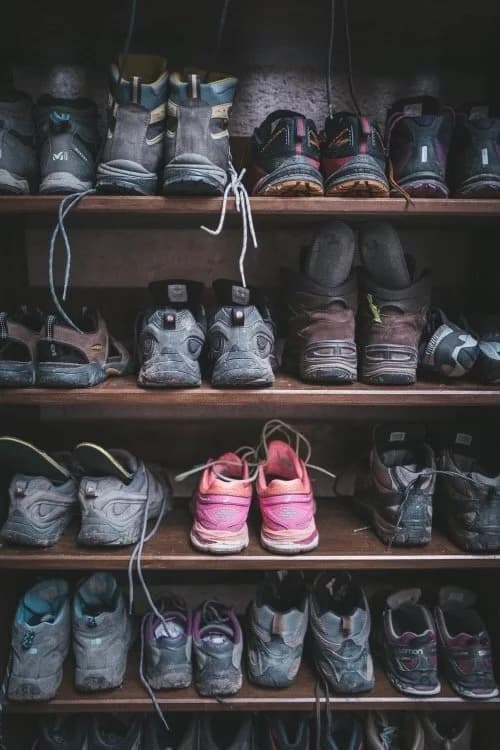
A pilgrim's hard-won wisdom on selecting the right footwear for 800km - trail runners, sizing tips, and the myths that'll wreck your feet.
So you're staring at a wall of hiking boots at REI, wondering which pair won't turn your feet into hamburger meat over 800 kilometres. I've been there. Multiple times, actually.
Updated for 2026: the principles below still stand, but the specific models have moved on. For what I'm actually walking in now, and why the Cascadia 19 replaced the 18, see The Camino Shoe Guide 2026.
After walking the Camino Frances six times, the Via Podiensis twice, the Norte, and the Portugués (both coastal and inland), I've made some truly questionable footwear decisions. I've also made some brilliant ones. The difference between the two? Understanding that the Camino isn't what most people think it is.
Here's the thing that surprises most first-timers: the Camino Frances is predominantly an urban hike. About 70% of it consists of hard-packed dirt, gravel tracks, or straight-up road. Those chunky mountaineering boots your mate recommended? They're overkill. And that overkill will cost you—in blisters, fatigue, and potentially your entire pilgrimage.
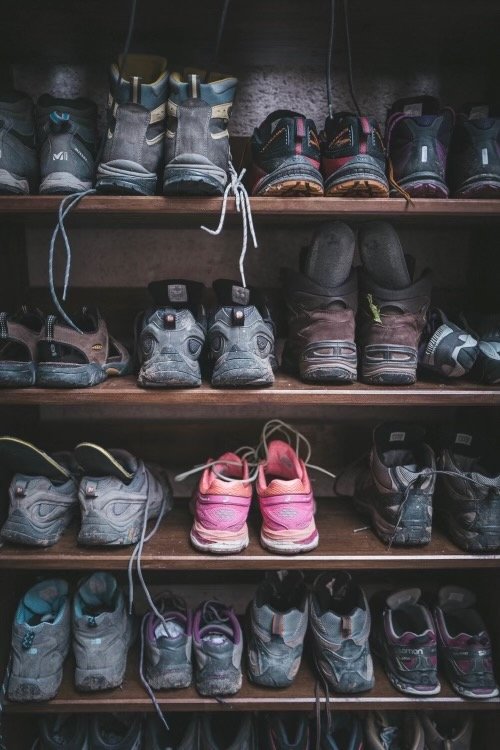
Traditional hiking boots weigh anywhere from 800g to 1.5kg per pair. A good pair of trail runners? 500-700g. Over 25-30 kilometres a day for five weeks, that difference compounds dramatically.
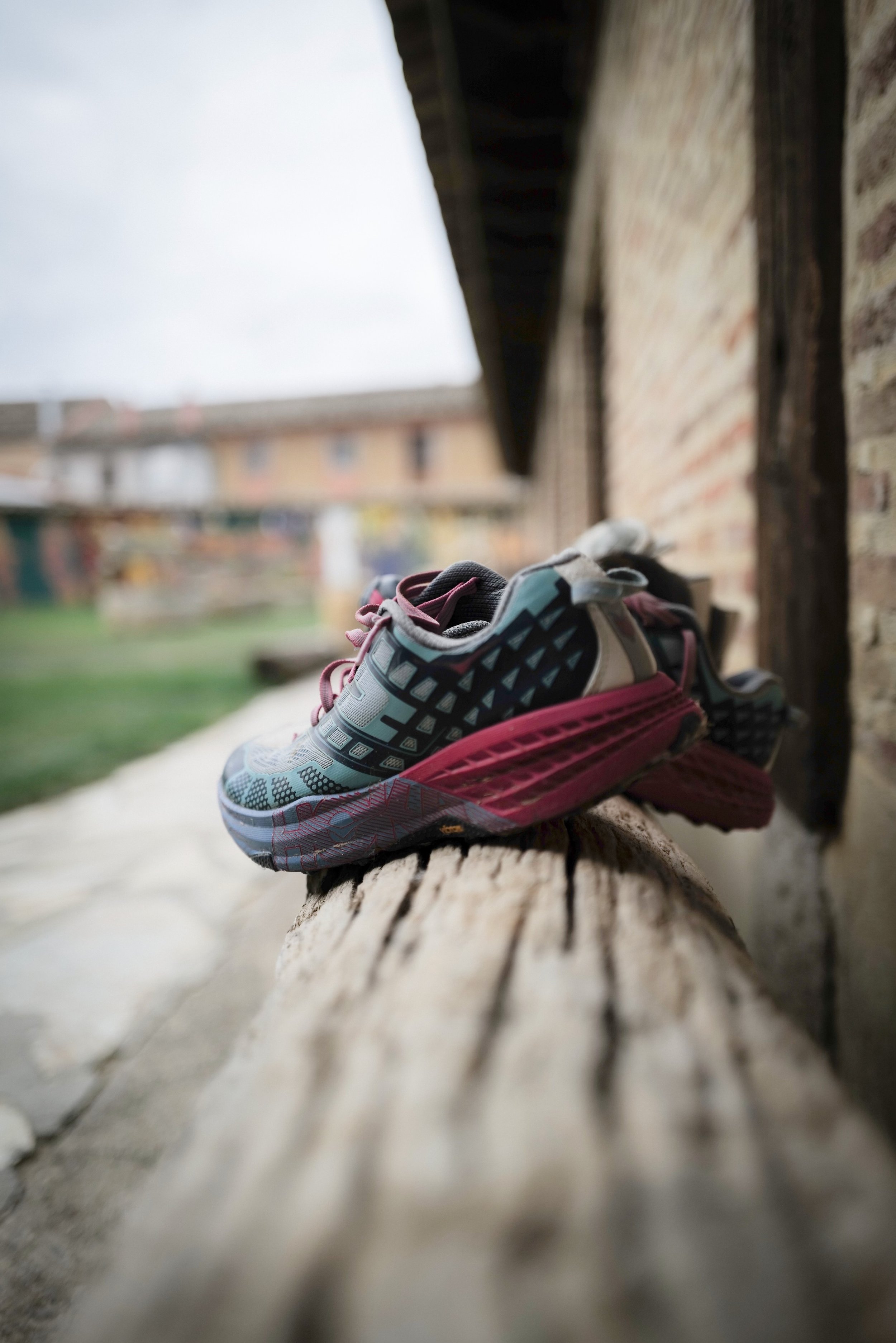

Pronation (your foot rolling inward) and supination (rolling outward) are natural movements, but excessive versions of either will cause problems over 800km. Get a gait analysis done at a proper running shop. It's free, it takes ten minutes, and it might save your Camino.
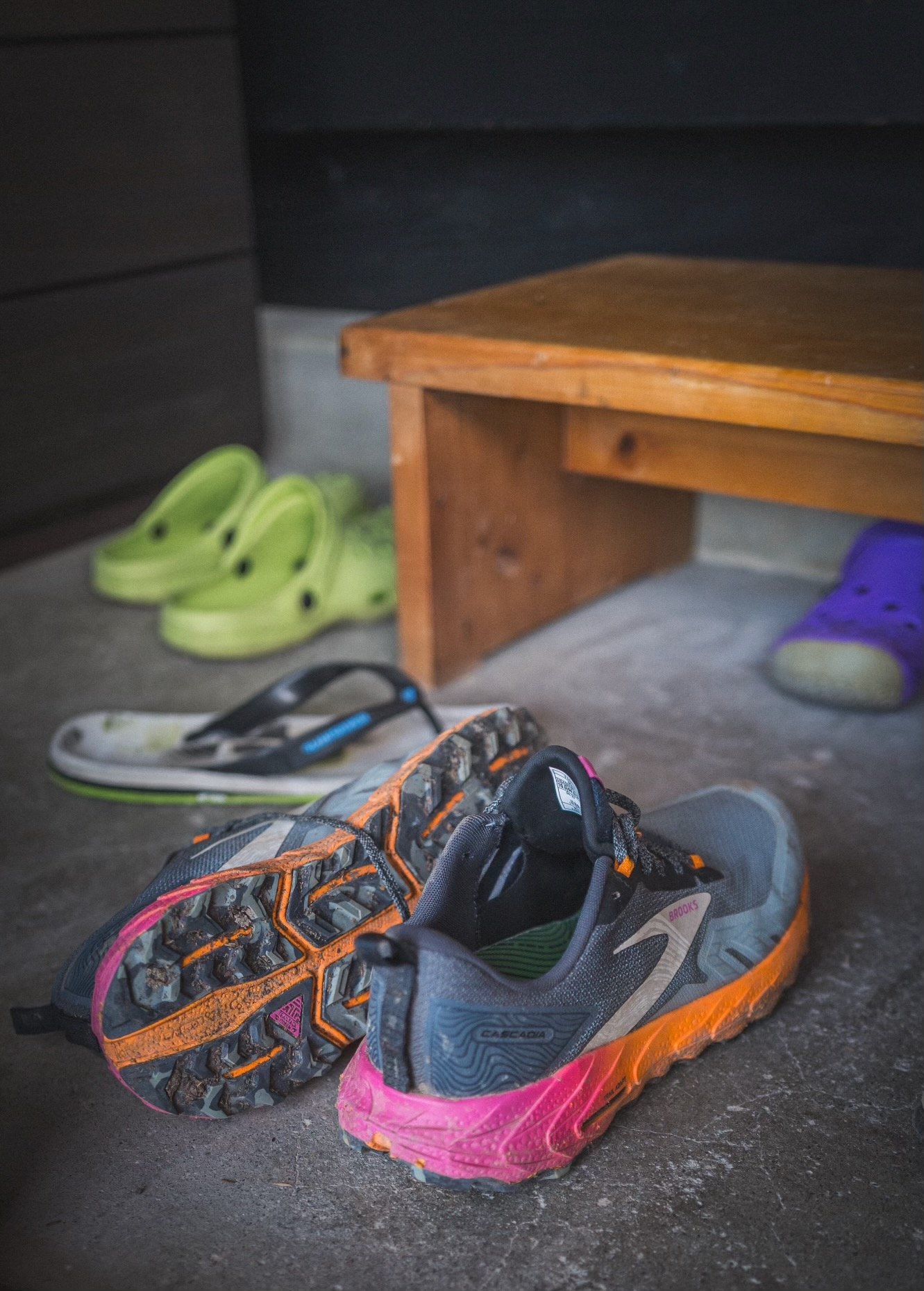
My suggestion is to aim for a minimum 25mm stack height. This gives you decent protection without turning every step into a wobbly mess.
Neither is inherently better—it depends on what you're used to. But here's the critical bit: don't switch to a dramatically different drop right before your Camino. Your Achilles tendon needs time to adapt. Months, not weeks.

A wide toe box is equally important. Your toes need room to spread naturally with each step. Cramped toes lead to black toenails, blisters between toes, and general misery.
I would highly suggest bringing one pair you've thoroughly tested and having a second pair (same model, same size) available to ship forward if needed.

- Heel slipping? Use the runner's loop (that extra hole at the top)
- Hot spots on top of your foot? Skip the laces over that area
- Wide forefoot, narrow heel? Lace the bottom half loosely, the top half tightly
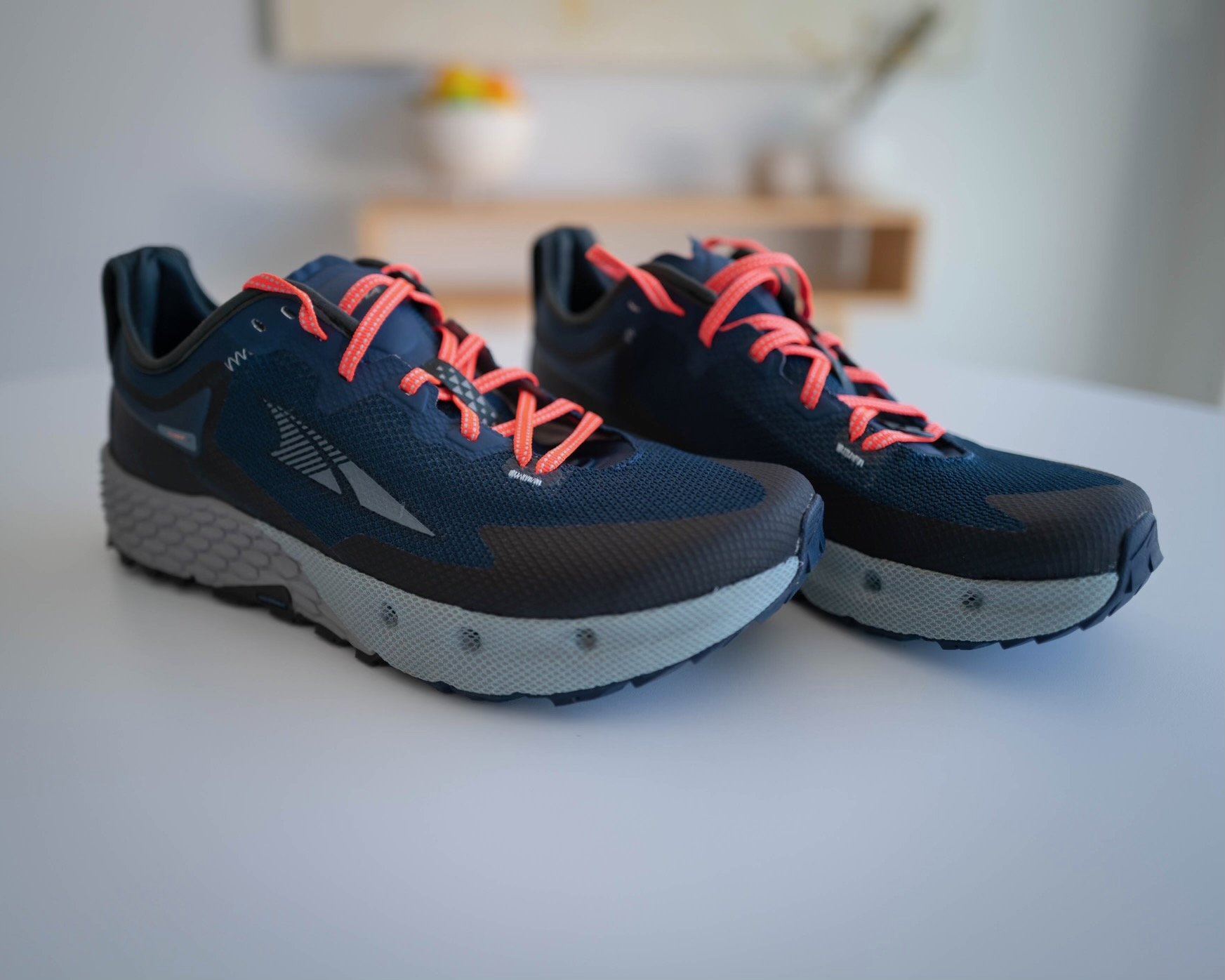
- Altra Timp 6 - Wide toe box, zero drop, excellent cushioning. Ease into zero drop over months, not weeks
- Brooks Cascadia 19 - Great all-rounder and a big step up from the stiff 18. Softer foam, 6mm drop, more flexible rock plate
- Hoka Speedgoat 6 - Maximum cushioning for those who want cloud-like comfort
- Topo Athletic Terraventure 5 - Wide toe box, 3mm drop, and a rock plate for the hillier routes
I've written up all of these in far more detail, along with the Brooks Ghost Trail, the Mount to Coast T1, and the Norda 001, in the 2026 shoe guide. That post is where the current recommendations live.
Non-waterproof mesh shoes will get wet in rain. They'll also dry in an hour or two whilst you're walking. Waterproof shoes stay damp all day.
Bring a pair of dry socks in a plastic bag. Change into them at lunch if your feet got wet. Problem solved.
If you can do that without discomfort, hotspots, or blisters, you've found your shoe. If not, try something else. There's no shame in returning shoes that don't work for your feet.

Take your time. Do the research. Test thoroughly. And when someone on the trail insists their way is the only way, smile politely and keep walking in whatever works for your feet.
Buen Camino.
---
Try asking My Camino Guide:
- What shoes should I bring for the Camino?
- How do I prevent blisters?
- What gear do I need for the Camino Frances?
Updated for 2026: the principles below still stand, but the specific models have moved on. For what I'm actually walking in now, and why the Cascadia 19 replaced the 18, see The Camino Shoe Guide 2026.
After walking the Camino Frances six times, the Via Podiensis twice, the Norte, and the Portugués (both coastal and inland), I've made some truly questionable footwear decisions. I've also made some brilliant ones. The difference between the two? Understanding that the Camino isn't what most people think it is.
Here's the thing that surprises most first-timers: the Camino Frances is predominantly an urban hike. About 70% of it consists of hard-packed dirt, gravel tracks, or straight-up road. Those chunky mountaineering boots your mate recommended? They're overkill. And that overkill will cost you—in blisters, fatigue, and potentially your entire pilgrimage.
Trail Runners vs Hiking Boots: The Great Debate
I'm firmly in the trail runner camp now, though I wasn't always. Studies consistently show that the weight of your shoes significantly increases the chance of injury. Every 100 grams on your feet is equivalent to roughly 500 grams on your back. Think about that for a moment.Traditional hiking boots weigh anywhere from 800g to 1.5kg per pair. A good pair of trail runners? 500-700g. Over 25-30 kilometres a day for five weeks, that difference compounds dramatically.
The Eight Things That Actually Matter
1. Stability and Support
Your arch type matters more than brand loyalty. If you've got flat feet or high arches, you need shoes that accommodate that reality—not fight against it.Pronation (your foot rolling inward) and supination (rolling outward) are natural movements, but excessive versions of either will cause problems over 800km. Get a gait analysis done at a proper running shop. It's free, it takes ten minutes, and it might save your Camino.
2. Ankle Support
Here's where I'll upset some traditionalists: you don't need heavy ankle support. What you need is ankle stability, which is different. A high-ankle trail runner provides plenty of stability whilst still allowing natural movement. Stiff boots actually prevent your ankle from adapting to uneven terrain, which can paradoxically increase injury risk.3. Cushioning
You want enough padding to absorb impact on those long road sections, but not so much that you lose all terrain feedback. This is a balance, and it's personal. Some pilgrims swear by maximalist cushioning (Hoka devotees, you know who you are). Others prefer a more connected feel.My suggestion is to aim for a minimum 25mm stack height. This gives you decent protection without turning every step into a wobbly mess.
4. Flexibility
Your shoe needs to flex with your foot, not against it. The toe box should bend naturally when you push down on it. If it doesn't, you're fighting your shoe with every step. That's 30,000 steps a day of unnecessary resistance.5. The Drop
Drop refers to the height difference between your heel and toe. Traditional hiking boots have a significant drop (10-12mm). Zero-drop shoes, like Altras, put your heel and toe at the same level.Neither is inherently better—it depends on what you're used to. But here's the critical bit: don't switch to a dramatically different drop right before your Camino. Your Achilles tendon needs time to adapt. Months, not weeks.
6. Toe Box and Sizing
Go one full size larger than your normal running shoes. Your feet will swell. They just will. There's no avoiding it. By the end of each day, you'll have gained half a size or more.A wide toe box is equally important. Your toes need room to spread naturally with each step. Cramped toes lead to black toenails, blisters between toes, and general misery.
7. Durability
Trail runners will last 500-800km before they need replacing. That means if you're walking the entire Frances from Saint-Jean-Pied-de-Port, you might need to replace them partway through, or at least have a backup pair shipped ahead.I would highly suggest bringing one pair you've thoroughly tested and having a second pair (same model, same size) available to ship forward if needed.
8. Lacing Patterns
This is the secret weapon most pilgrims ignore. Different lacing techniques can solve specific problems:- Heel slipping? Use the runner's loop (that extra hole at the top)
- Hot spots on top of your foot? Skip the laces over that area
- Wide forefoot, narrow heel? Lace the bottom half loosely, the top half tightly
The Shoes I Actually Recommend
Based on my experience, these models work well for the Camino:- Altra Timp 6 - Wide toe box, zero drop, excellent cushioning. Ease into zero drop over months, not weeks
- Brooks Cascadia 19 - Great all-rounder and a big step up from the stiff 18. Softer foam, 6mm drop, more flexible rock plate
- Hoka Speedgoat 6 - Maximum cushioning for those who want cloud-like comfort
- Topo Athletic Terraventure 5 - Wide toe box, 3mm drop, and a rock plate for the hillier routes
I've written up all of these in far more detail, along with the Brooks Ghost Trail, the Mount to Coast T1, and the Norda 001, in the 2026 shoe guide. That post is where the current recommendations live.
The Waterproof Myth
Avoid waterproof shoes. I know it sounds counterintuitive—you're walking through Spain, it rains, you want dry feet. But waterproof membranes trap moisture inside the shoe. Your feet sweat. That moisture has nowhere to go. Result? Blisters.Non-waterproof mesh shoes will get wet in rain. They'll also dry in an hour or two whilst you're walking. Waterproof shoes stay damp all day.
Bring a pair of dry socks in a plastic bag. Change into them at lunch if your feet got wet. Problem solved.
The One-Week Test
Before committing to any shoe for your Camino, hike in them daily for one week. Not alternating days. Every single day. Minimum 10km each day, ideally with your loaded pack.If you can do that without discomfort, hotspots, or blisters, you've found your shoe. If not, try something else. There's no shame in returning shoes that don't work for your feet.
The Bottom Line
Your shoes are the single most important gear decision you'll make for the Camino. More important than your pack, your sleeping bag, or that fancy merino wool everything. Get them right, and you'll barely think about your feet. Get them wrong, and you'll think about nothing else.Take your time. Do the research. Test thoroughly. And when someone on the trail insists their way is the only way, smile politely and keep walking in whatever works for your feet.
Buen Camino.
---
Try asking My Camino Guide:
- What shoes should I bring for the Camino?
- How do I prevent blisters?
- What gear do I need for the Camino Frances?