A comprehensive guide to waterproof jackets, pack covers, and quick-dry clothing that will keep pilgrims comfortable during the unpredictable spring and fall we
There's a particular kind of misery that comes from being wet on the Camino. I'm not talking about a light drizzle that makes everything feel romantically atmospheric—I mean properly soaked, water running down your back, squelching in your boots, questioning every life decision that led you here. I've experienced this more times than I'd like to admit, especially during my shoulder season walks. And whilst I can't promise you'll stay perfectly dry (this is the Camino, not a climate-controlled shopping mall), I can share exactly what gear has kept me functional—and occasionally even comfortable—through some genuinely foul weather.
I've walked the Camino Frances six times now, the Via Podiensis twice (once going all the way to Santiago), the Norte, both the coastal and inland Portuguese routes from Lisbon, and the Finisterre route five times. That's a lot of kilometres in a lot of weather conditions. Some of my most vivid memories involve horizontal rain in Galicia, surprise mountain storms in the Pyrenees, and that one particularly grim stretch on the Norte where I'm fairly certain I grew gills.
Shoulder season—roughly late February through April, and September through November—offers incredible advantages: fewer crowds, cooler walking temperatures, and that gorgeous shifting light that photographers dream about. But it also brings unpredictable weather that can swing from sunshine to sideways rain in the time it takes to eat your bocadillo. Here's what you actually need.
After trying various options over the years, I've landed firmly in the three-layer Gore-Tex camp for shoulder season. My current choice is the Arc'teryx Beta LT, which has survived four Caminos now and shows no signs of giving up. Yes, it's expensive. Yes, it's worth it. The key is finding something that's genuinely waterproof (not just "water-resistant"—there's a massive difference), breathable enough that you're not swimming in your own sweat whilst climbing to O'Cebreiro, and light enough that you won't resent carrying it.
For a more budget-friendly option that still performs admirably, the Outdoor Research Foray offers excellent value. The pit zips are a genuine blessing on those warmer rainy days when you need ventilation but can't take the jacket off.
A few hard-won lessons:
- Forget ponchos. I know they're popular, and I've tried them. They're fine for flat terrain in gentle rain, but the moment you're climbing or the wind picks up, they become either a sail or a steam room. I watched mine turn into a kite somewhere after Saint-Jean-Pied-de-Port on my first Camino and never looked back.
- Hood design matters immensely. Look for a hood with a stiff brim that can accommodate a hat underneath and cinches securely. You'll be walking into wind-driven rain more than you'd like—a floppy hood is useless.
- Test the zippers. Run them up and down in the shop. You'll be operating them with cold, wet fingers, possibly whilst still walking. If they're fiddly when you're warm and dry, they'll be a nightmare when you actually need them.
My suggestion is to use both a pack cover AND an internal waterproof liner. Belt and suspenders. Paranoid? Maybe. Dry gear? Absolutely.
For the cover, the Osprey Ultralight Raincover has proven reliable across multiple trips—just make sure you get the right size for your pack. For the internal liner, a simple heavy-duty garbage bag works perfectly well, or you can go with something more purpose-built like a Sea to Summit Pack Liner.
The liner is your insurance policy. When (not if) the cover fails or you set your pack down in a puddle outside a café in León, your sleeping bag and spare clothes stay dry. I stuff everything important into the liner first, then pack normally. It adds maybe 60 grams and precisely zero regret.
I've become a devoted convert to the prAna Stretch Zion pants. They're not fully waterproof, but they shed light rain surprisingly well, dry incredibly fast, and are comfortable enough to wear day after day. The stretch is particularly welcome on those steep descents into Molinaseca or climbing out of Sarria.
For wetter conditions, convertible pants with zip-off legs offer versatility—start warm in the morning, convert to shorts by afternoon when the sun breaks through. The Columbia Silver Ridge convertible pants offer excellent value and dry overnight even in humid albergue conditions.
Go in knowing that truly waterproof pants are usually uncomfortably hot for actual walking. I carry a pair of lightweight rain pants for the truly awful days—those sideways-rain-all-day experiences where you just need a barrier between you and the weather. They pack down tiny and weigh next to nothing. Most days they stay in my pack. But when I need them, I really need them.
Gaiters serve multiple purposes: they keep water from running down your legs into your boots, they stop mud and gravel from sneaking in over the top, and they add a surprising amount of warmth on cold mornings. That last point matters more than you'd think when you're starting out at 6 AM in October.
I use the Outdoor Research Bugout Gaiters for most conditions—they're light, breathable, and cover just enough ankle and lower leg to make a real difference. For truly foul weather, full-length gaiters like the Black Diamond FrontPoint provide more coverage, though they're admittedly overkill for most Camino conditions.
The key is getting gaiters that seal properly around your specific boots. Bring your boots when you shop for gaiters, or at least know your boot's ankle circumference. A gap at the top defeats the purpose entirely.
Merino does things synthetic fabrics simply can't: it regulates temperature in both cold and warm conditions, it resists odour for days (crucial in close-quarters albergue sleeping), and—here's the magic for shoulder season—it keeps you warm even when damp. That last property has saved more than a few miserable days.
The Smartwool Merino 150 base layer has become my go-to for shoulder season walks. It's light enough for most conditions but warm enough for cold mornings. For cooler shoulder seasons (late March in the mountains or November anywhere), the Icebreaker Oasis 200 provides more warmth without bulk.
My suggestion is to bring two merino tops and alternate them daily. Hang the sweaty one on your pack during dry stretches—it'll air out remarkably well. Both will last the entire Camino without becoming offensive, which cannot be said for synthetic alternatives.
And please, for the love of all that's holy, bring merino socks too. Darn Tough makes indestructible ones that have survived all my Caminos and still look brand new. They're expensive per pair but last essentially forever, and your feet are the last place you want to be dealing with wet, smelly synthetic fabric.
The Sea to Summit Pocket Towel lives permanently in my pack's side pocket. I use it to wipe down my pack before bringing it inside, to dry off my feet before putting on dry socks, and to mop up after those surprise rain showers that hit just as you've sat down for coffee. It dries remarkably fast and packs smaller than a sandwich.
For a larger option that still travels well, the Sea to Summit DryLite Towel in medium size works for actual showering whilst still being light enough to justify the space. But honestly, the tiny pocket towel does 90% of the work.
---
A few final thoughts from too many wet kilometres:
Layer your waterproofing like you layer clothing. Waterproof jacket on the outside, quick-dry clothes in the middle, merino base layer against your skin. Each layer has a job.
Dry what you can, when you can. Sunshine breaks in shoulder season are opportunities, not just nice moments. Get your damp stuff airing immediately—on your pack, on café chairs, on whatever surface presents itself. You never know when the next dry spell will come.
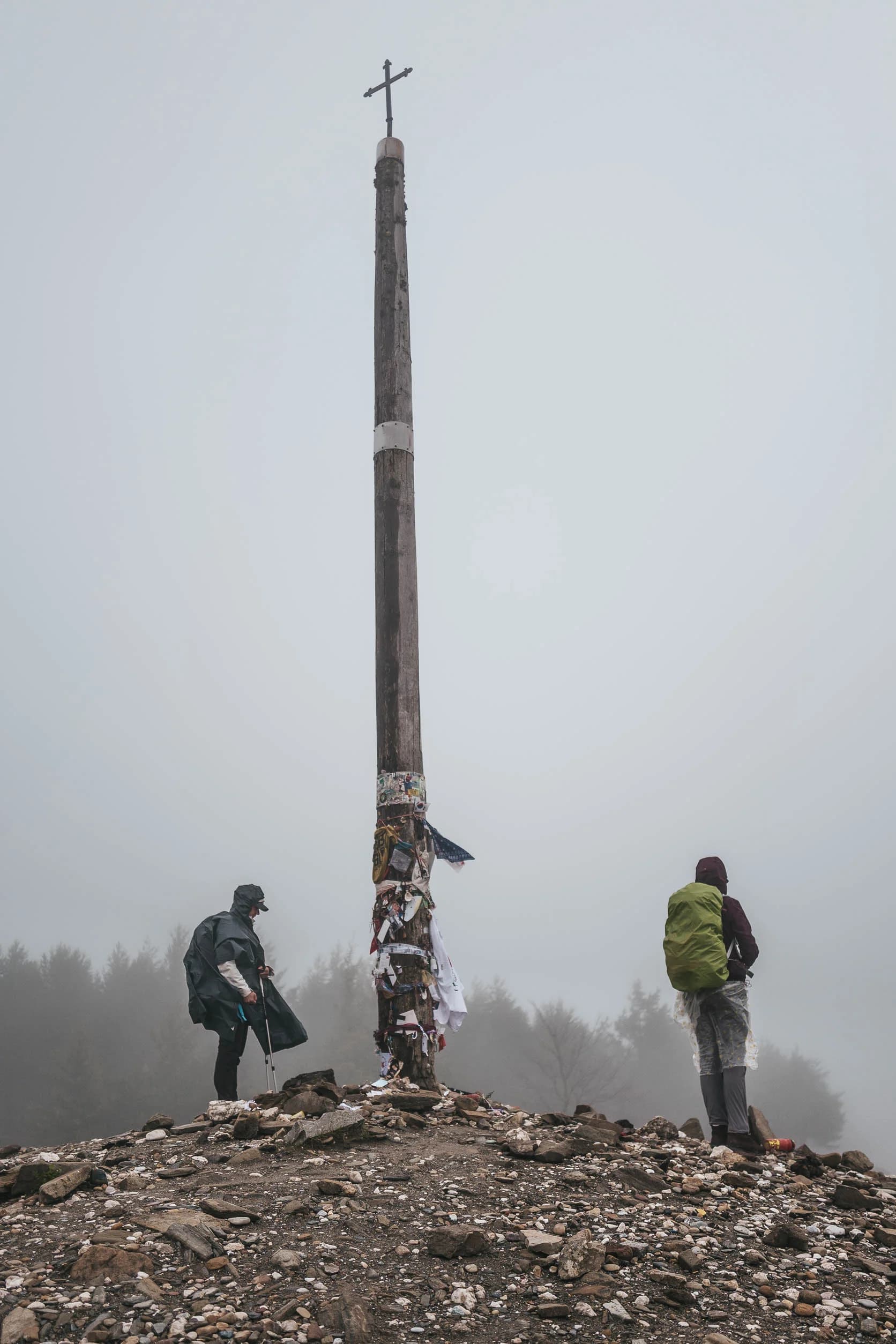
Accept that sometimes you'll be wet. I've had walks where the rain simply didn't stop for three days straight. My jacket kept my core dry enough, my pack liner protected my sleeping bag, and my merino stayed warm against my skin. Was I comfortable? No. Was I able to continue? Yes. That's the goal.
Test your setup before you leave. Stand in the shower with your loaded pack and cover on. Silly? Absolutely. Better than discovering your cover's seams leak somewhere between Pamplona and Puente la Reina? Without question.
Shoulder season on the Camino offers something the summer crowds never see: that shifting light through cloud breaks, the dramatic skies over the meseta, the profound quiet of autumn mornings. It's worth a little rain gear investment to experience it comfortably.
Need help figuring out what else to bring, or when exactly to time your walk for optimal weather? You can plan your Camino with personalised recommendations, or ask about shoulder season weather patterns on specific routes.
Buen Camino—and may your rain gear serve you well.
---
Try asking My Camino Guide:
- What waterproof boots work best for muddy Camino conditions?
- How do I dry my gear at albergues during rainy season?
- What should I pack for walking the Camino in April?
I've walked the Camino Frances six times now, the Via Podiensis twice (once going all the way to Santiago), the Norte, both the coastal and inland Portuguese routes from Lisbon, and the Finisterre route five times. That's a lot of kilometres in a lot of weather conditions. Some of my most vivid memories involve horizontal rain in Galicia, surprise mountain storms in the Pyrenees, and that one particularly grim stretch on the Norte where I'm fairly certain I grew gills.
Shoulder season—roughly late February through April, and September through November—offers incredible advantages: fewer crowds, cooler walking temperatures, and that gorgeous shifting light that photographers dream about. But it also brings unpredictable weather that can swing from sunshine to sideways rain in the time it takes to eat your bocadillo. Here's what you actually need.
1. A Proper Waterproof Jacket (Your Most Critical Piece)
I cannot overstate how important your jacket is. This is the one piece of gear where I'd suggest spending real money. A mediocre jacket will leave you damp from either rain penetration or your own trapped sweat—both equally unpleasant when you've got 20 kilometres still to walk.After trying various options over the years, I've landed firmly in the three-layer Gore-Tex camp for shoulder season. My current choice is the Arc'teryx Beta LT, which has survived four Caminos now and shows no signs of giving up. Yes, it's expensive. Yes, it's worth it. The key is finding something that's genuinely waterproof (not just "water-resistant"—there's a massive difference), breathable enough that you're not swimming in your own sweat whilst climbing to O'Cebreiro, and light enough that you won't resent carrying it.
For a more budget-friendly option that still performs admirably, the Outdoor Research Foray offers excellent value. The pit zips are a genuine blessing on those warmer rainy days when you need ventilation but can't take the jacket off.
A few hard-won lessons:
- Forget ponchos. I know they're popular, and I've tried them. They're fine for flat terrain in gentle rain, but the moment you're climbing or the wind picks up, they become either a sail or a steam room. I watched mine turn into a kite somewhere after Saint-Jean-Pied-de-Port on my first Camino and never looked back.
- Hood design matters immensely. Look for a hood with a stiff brim that can accommodate a hat underneath and cinches securely. You'll be walking into wind-driven rain more than you'd like—a floppy hood is useless.
- Test the zippers. Run them up and down in the shop. You'll be operating them with cold, wet fingers, possibly whilst still walking. If they're fiddly when you're warm and dry, they'll be a nightmare when you actually need them.
2. Pack Cover and Liner: The Belt-and-Suspenders Approach
Here's something I learned the hard way on my first Portuguese Coastal walk: pack covers blow off. Not sometimes. Regularly. That fancy elastic-edged cover that seemed so secure at home will catch the Atlantic wind and sail majestically into a field, leaving your pack exposed to the elements whilst you stand there swearing.My suggestion is to use both a pack cover AND an internal waterproof liner. Belt and suspenders. Paranoid? Maybe. Dry gear? Absolutely.
For the cover, the Osprey Ultralight Raincover has proven reliable across multiple trips—just make sure you get the right size for your pack. For the internal liner, a simple heavy-duty garbage bag works perfectly well, or you can go with something more purpose-built like a Sea to Summit Pack Liner.
The liner is your insurance policy. When (not if) the cover fails or you set your pack down in a puddle outside a café in León, your sleeping bag and spare clothes stay dry. I stuff everything important into the liner first, then pack normally. It adds maybe 60 grams and precisely zero regret.
3. Quick-Dry Hiking Pants (Not Your Regular Trousers)
Cotton kills joy on the Camino. I've watched pilgrims slog along in sodden jeans—they might as well be wearing wet cement. In shoulder season, you need pants that can handle getting wet (because they will) and then dry quickly (because you'll need them tomorrow).I've become a devoted convert to the prAna Stretch Zion pants. They're not fully waterproof, but they shed light rain surprisingly well, dry incredibly fast, and are comfortable enough to wear day after day. The stretch is particularly welcome on those steep descents into Molinaseca or climbing out of Sarria.
For wetter conditions, convertible pants with zip-off legs offer versatility—start warm in the morning, convert to shorts by afternoon when the sun breaks through. The Columbia Silver Ridge convertible pants offer excellent value and dry overnight even in humid albergue conditions.
Go in knowing that truly waterproof pants are usually uncomfortably hot for actual walking. I carry a pair of lightweight rain pants for the truly awful days—those sideways-rain-all-day experiences where you just need a barrier between you and the weather. They pack down tiny and weigh next to nothing. Most days they stay in my pack. But when I need them, I really need them.
4. Waterproof Gaiters: Your Boots' Best Friend
Nobody talks about gaiters enough. They're not glamorous, they're not exciting to photograph for Instagram, but they're quietly brilliant for shoulder season walking.Gaiters serve multiple purposes: they keep water from running down your legs into your boots, they stop mud and gravel from sneaking in over the top, and they add a surprising amount of warmth on cold mornings. That last point matters more than you'd think when you're starting out at 6 AM in October.
I use the Outdoor Research Bugout Gaiters for most conditions—they're light, breathable, and cover just enough ankle and lower leg to make a real difference. For truly foul weather, full-length gaiters like the Black Diamond FrontPoint provide more coverage, though they're admittedly overkill for most Camino conditions.
The key is getting gaiters that seal properly around your specific boots. Bring your boots when you shop for gaiters, or at least know your boot's ankle circumference. A gap at the top defeats the purpose entirely.
5. Merino Wool Base Layers: The Unsung Heroes
I spent years walking in synthetic base layers before someone finally convinced me to try merino wool. I felt like a fool for waiting so long.Merino does things synthetic fabrics simply can't: it regulates temperature in both cold and warm conditions, it resists odour for days (crucial in close-quarters albergue sleeping), and—here's the magic for shoulder season—it keeps you warm even when damp. That last property has saved more than a few miserable days.
The Smartwool Merino 150 base layer has become my go-to for shoulder season walks. It's light enough for most conditions but warm enough for cold mornings. For cooler shoulder seasons (late March in the mountains or November anywhere), the Icebreaker Oasis 200 provides more warmth without bulk.
My suggestion is to bring two merino tops and alternate them daily. Hang the sweaty one on your pack during dry stretches—it'll air out remarkably well. Both will last the entire Camino without becoming offensive, which cannot be said for synthetic alternatives.
And please, for the love of all that's holy, bring merino socks too. Darn Tough makes indestructible ones that have survived all my Caminos and still look brand new. They're expensive per pair but last essentially forever, and your feet are the last place you want to be dealing with wet, smelly synthetic fabric.
6. A Compact Microfiber Towel That Actually Works
This one might seem tangential to rain gear, but hear me out. In shoulder season, you'll encounter wet conditions not just from rain but from morning dew, condensation in budget albergues, and that general dampness that permeates everything in Galicia. Having a towel that dries quickly and packs small makes an enormous difference in keeping everything else dry.The Sea to Summit Pocket Towel lives permanently in my pack's side pocket. I use it to wipe down my pack before bringing it inside, to dry off my feet before putting on dry socks, and to mop up after those surprise rain showers that hit just as you've sat down for coffee. It dries remarkably fast and packs smaller than a sandwich.
For a larger option that still travels well, the Sea to Summit DryLite Towel in medium size works for actual showering whilst still being light enough to justify the space. But honestly, the tiny pocket towel does 90% of the work.
---
Putting It All Together
The shoulder season Camino isn't about staying perfectly dry—that's a fantasy. It's about managing moisture effectively so you stay functional and (mostly) comfortable. The difference between a miserable rainy day and a challenging-but-manageable one often comes down to having gear that works and knowing how to use it.A few final thoughts from too many wet kilometres:
Layer your waterproofing like you layer clothing. Waterproof jacket on the outside, quick-dry clothes in the middle, merino base layer against your skin. Each layer has a job.
Dry what you can, when you can. Sunshine breaks in shoulder season are opportunities, not just nice moments. Get your damp stuff airing immediately—on your pack, on café chairs, on whatever surface presents itself. You never know when the next dry spell will come.
Accept that sometimes you'll be wet. I've had walks where the rain simply didn't stop for three days straight. My jacket kept my core dry enough, my pack liner protected my sleeping bag, and my merino stayed warm against my skin. Was I comfortable? No. Was I able to continue? Yes. That's the goal.
Test your setup before you leave. Stand in the shower with your loaded pack and cover on. Silly? Absolutely. Better than discovering your cover's seams leak somewhere between Pamplona and Puente la Reina? Without question.
Shoulder season on the Camino offers something the summer crowds never see: that shifting light through cloud breaks, the dramatic skies over the meseta, the profound quiet of autumn mornings. It's worth a little rain gear investment to experience it comfortably.
Need help figuring out what else to bring, or when exactly to time your walk for optimal weather? You can plan your Camino with personalised recommendations, or ask about shoulder season weather patterns on specific routes.
Buen Camino—and may your rain gear serve you well.
---
Try asking My Camino Guide:
- What waterproof boots work best for muddy Camino conditions?
- How do I dry my gear at albergues during rainy season?
- What should I pack for walking the Camino in April?