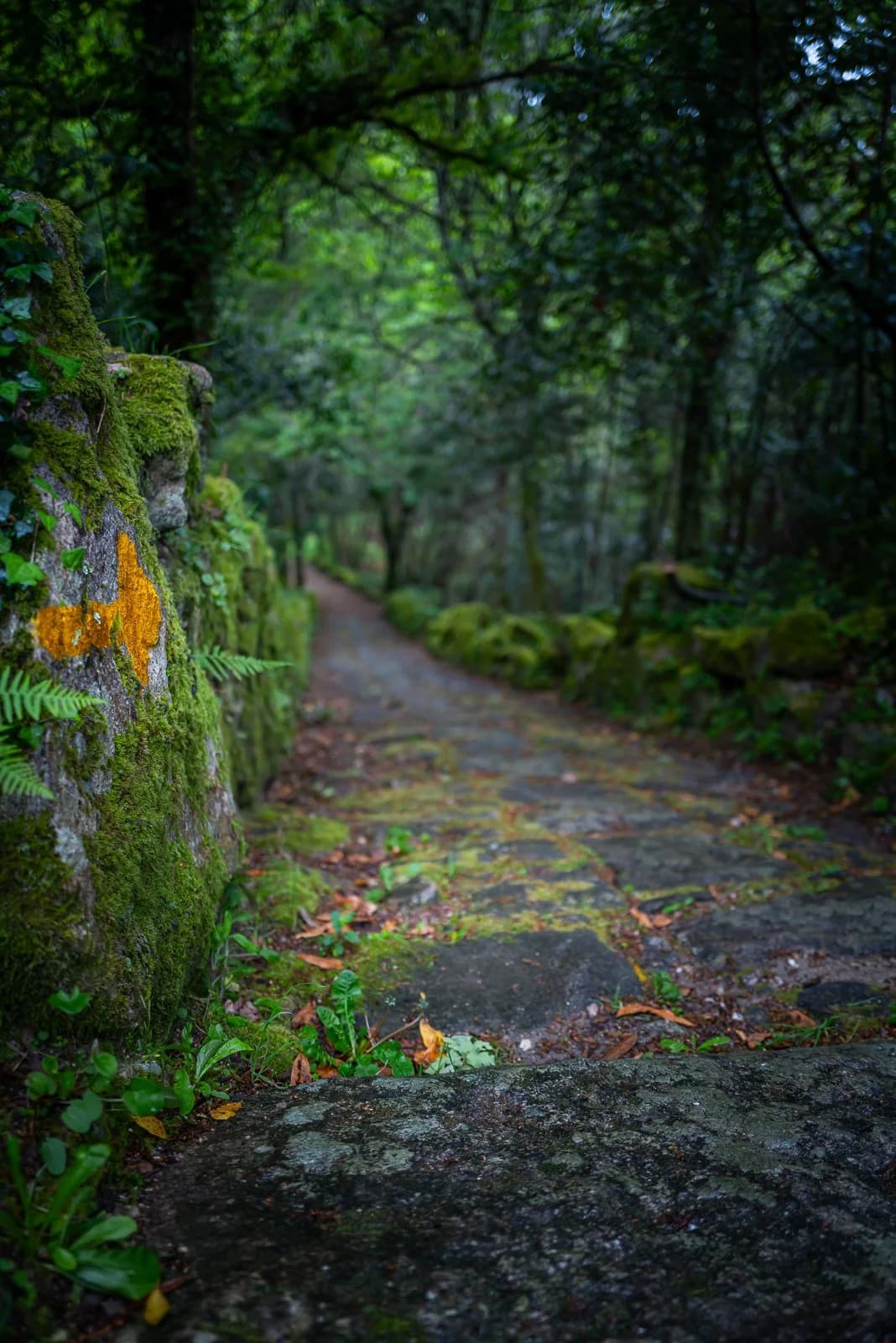
An in-depth comparison of ultralight backpack options that help pilgrims keep their pack weight down without sacrificing comfort or durability on long-distance
Let me be honest with you: I used to be that pilgrim. The one who showed up at Saint-Jean-Pied-de-Port with a 12kg pack, convinced I needed every single item I'd meticulously packed. By Pamplona, I'd shipped half of it home. By Burgos, I was fantasizing about setting the whole thing on fire.
Over my six crossings of the Francés, two journeys along the Via Podiensis (including one glorious continuous walk from Le Puy to Santiago), my adventures on the Norte, and multiple trips on the Portugués routes—I've learned one truth that I now preach to anyone who'll listen: your backpack weight matters more than almost anything else.
And here's the thing most people don't realize initially: the backpack itself is often one of the heaviest items you're carrying. That "comfortable" 2kg pack becomes a cruel joke after 25 kilometers in the Meseta sun. So let's talk about backpacks that won't punish you before you've even loaded them.
Going ultralight—specifically choosing a backpack under 1kg—forces you to make smart decisions about everything else. It's a mindset as much as a gear choice. And whilst a sub-1kg pack might sound flimsy, modern materials have made it possible to carry 8-10kg of gear in something that weighs less than a bottle of water.
Now, a word of warning: ultralight packs require you to pack light. You can't stuff 15kg into these things and expect miracles. If you're planning to bring three books, a laptop, and backup sandals "just in case," stop reading now—this article isn't for you. But if you're ready to embrace the freedom of a truly light load, read on.
Comfort over features. I don't need seventeen pockets and a built-in rain cover with its own pocket. I need something that sits well on my back for 8 hours straight.
Ventilation. The Meseta in July taught me this lesson. And the climb out of Portomarin. And basically every hill on the Norte. Your back will sweat—the question is how much.
Durability that matches reality. These packs will get thrown on bunk beds, dragged across stone floors, and occasionally used as pillows. They need to survive that, but they don't need to survive a Himalayan expedition.
Volume between 30-40 liters. Smaller than 30L and you're making compromises that'll hurt. Larger than 40L and you'll fill it with things you don't need. Trust me on this.
The hip belt actually works (unlike many ultralight packs), and the mesh back panel provides decent ventilation. I've carried this from Le Puy-en-Velay all the way to Santiago without a single comfort complaint. The fabric is surprisingly tough—mine has held up across thousands of kilometers with only minor wear.
Who it's for: Pilgrims who want maximum flexibility and proven durability.
Drawback: The price. It's an investment. But so is your spine.
The AirSpeed suspension system keeps the pack off your back, which on a hot day climbing to Cruz de Ferro, feels like a small miracle. It's slightly heavier than pure ultralight options, but the tradeoff in comfort and features makes sense for many walkers.
I used an earlier version of this on my first Camino Norte, and it handled the constant up-and-down of that route admirably. The rain cover is removable (save that weight if you're walking in summer), and there are enough pockets to keep organized pilgrims happy without going overboard.
Who it's for: First-timers who want a balance of light weight and traditional pack features.
Drawback: Not quite as light as the true ultralight options, and the mesh can snag.
What I love about the Circuit is its simplicity. It's basically a well-designed bag with shoulder straps and a hip belt—no gimmicks, no unnecessary features. The roll-top closure means you're never fighting with zippers, and the exterior mesh pocket swallowed my guidebook, rain jacket, and snacks without complaint.
Who it's for: Experienced hikers who understand what they actually need from a pack.
Drawback: No frame sheet included (though you can add one), so proper packing technique matters.
I lent my Crown2 to a friend walking the Coastal Portugués, and she raved about it. The hip belt is surprisingly comfortable for a pack at this price point, and the fabric has proven more durable than expected. It's not sexy or exciting, but it works.
Who it's for: Budget-conscious pilgrims who still want quality.
Drawback: The hip belt pockets are oddly small, and the compression straps could be better positioned.
Here's the catch: this pack demands commitment. There's no frame, minimal padding, and the hip belt is more of a suggestion than a support system. You need to pack light (under 7kg total) and pack carefully, using your sleeping bag and clothes to create a soft back panel.
I used a Zpacks pack (their slightly larger Arc) on my most recent Finisterre walk, and with a light load, it was revelatory. But I wouldn't recommend it for a first-time pilgrim or anyone carrying more than 8kg base weight.
Who it's for: Experienced ultralight hikers who've already dialed in their kit.
Drawback: Expensive, requires careful packing, and zero comfort margin if you overload it.
For a fraction of what you'd spend on premium ultralight packs, Decathlon has produced something shockingly competent. The back ventilation works, the straps are comfortable, and at 940 grams, it hangs with packs costing three times as much. The build quality isn't quite at the level of the other packs on this list, but for a single Camino? It'll do the job.
I met a German pilgrim on the Francés last year who'd used this pack from Saint-Jean to Santiago without issues. That's a pretty solid endorsement.
Who it's for: Budget pilgrims, particularly those who aren't sure if they'll keep doing long-distance walking.
Drawback: Hip belt isn't as supportive as premium options, and the fabric feels less robust.
The FreeFloat hip belt moves with your body rather than fighting it—something I particularly appreciated on the relentless climbing of the Via Podiensis through the Aubrac. The mesh back panel actually keeps the pack off your back (unlike some "ventilated" designs that are purely marketing), and the overall build quality is excellent.
Who it's for: Pilgrims who prioritize comfort and are willing to accept a few extra grams for it.
Drawback: Slightly heavier than the pure ultralight options, and the exterior pockets aren't as accessible as I'd like.
At 470 grams and just 17 liters, this is what I now use when I walk to Finisterre and back. My entire kit—sleeping bag liner, one change of clothes, toiletries, electronics, rain jacket—fits with room to spare. The Dyneema fabric is essentially bomb-proof, and the pack just disappears on your back.
Is this practical for a first Camino? Absolutely not. But once you've learned what you actually need versus what you think you need, a pack like this becomes possible. And the freedom of carrying so little weight is genuinely life-changing.
Who it's for: Experienced minimalist pilgrims who've done the hard work of trimming their kit.
Drawback: Tiny capacity means zero margin for error in your packing.
If you're a first-timer: Go with the Osprey Exos 38 or Gregory Focal 38. You'll appreciate the comfort features whilst you're still learning what works for you.
If you're on a budget: The Decathlon Forclaz or Granite Gear Crown2 will serve you well without breaking the bank.
If you're an experienced hiker: The Gossamer Gear Mariposa or ULA Circuit will feel natural, and you'll appreciate the weight savings.
If you're a committed ultralight enthusiast: Look at the Zpacks Nero or Hyperlite Daybreak—but be honest about whether your kit is actually light enough to justify them.
The best backpack is one that fits your body, suits your packing style, and encourages you to carry less. Trying packs on with weight is ideal if you can manage it—most outdoor stores will let you load them up and walk around.
And remember: whatever pack you choose, the Camino will still be hard. There will be days when your shoulders ache and your feet throb and you question every decision that led you to this moment. But if your pack is light and comfortable, those days will be fewer, and the good days—walking through morning mist in Galicia, watching the sun set over the Meseta, sharing wine with strangers who become friends—will far outnumber them.
If you want more personalized advice on gear or route planning, feel free to ask about specific topics. I'm always happy to share what I've learned from my mistakes—and trust me, I've made plenty.
Buen Camino, and may your pack be light.
---
Try asking My Camino Guide:
- What's the ideal base weight for a Camino backpack?
- How do I pack ultralight for the Camino Frances?
- What are the essential items I need for the Camino?
Over my six crossings of the Francés, two journeys along the Via Podiensis (including one glorious continuous walk from Le Puy to Santiago), my adventures on the Norte, and multiple trips on the Portugués routes—I've learned one truth that I now preach to anyone who'll listen: your backpack weight matters more than almost anything else.
And here's the thing most people don't realize initially: the backpack itself is often one of the heaviest items you're carrying. That "comfortable" 2kg pack becomes a cruel joke after 25 kilometers in the Meseta sun. So let's talk about backpacks that won't punish you before you've even loaded them.
Why Ultralight Matters on the Camino
I've met hundreds of pilgrims over the years, and the pattern is always the same. Those lugging heavy packs are the ones I see limping into Hornillos del Camino, nursing blisters in Sarria, and quietly crying in the bathroom of some albergue in O Cebreiro. The lighter your pack, the further you can walk with less damage to your body. It really is that simple.Going ultralight—specifically choosing a backpack under 1kg—forces you to make smart decisions about everything else. It's a mindset as much as a gear choice. And whilst a sub-1kg pack might sound flimsy, modern materials have made it possible to carry 8-10kg of gear in something that weighs less than a bottle of water.
Now, a word of warning: ultralight packs require you to pack light. You can't stuff 15kg into these things and expect miracles. If you're planning to bring three books, a laptop, and backup sandals "just in case," stop reading now—this article isn't for you. But if you're ready to embrace the freedom of a truly light load, read on.
What I Look for in a Camino-Specific Pack
Before diving into specific recommendations, let me share what actually matters after walking thousands of kilometers across Spain and France:Comfort over features. I don't need seventeen pockets and a built-in rain cover with its own pocket. I need something that sits well on my back for 8 hours straight.
Ventilation. The Meseta in July taught me this lesson. And the climb out of Portomarin. And basically every hill on the Norte. Your back will sweat—the question is how much.
Durability that matches reality. These packs will get thrown on bunk beds, dragged across stone floors, and occasionally used as pillows. They need to survive that, but they don't need to survive a Himalayan expedition.
Volume between 30-40 liters. Smaller than 30L and you're making compromises that'll hurt. Larger than 40L and you'll fill it with things you don't need. Trust me on this.
The Top 8 Ultralight Backpacks for the Camino
1. Gossamer Gear Mariposa 60 (737g)
Yes, it's technically 60 liters, but hear me out. The Gossamer Gear Mariposa has been my go-to for the past four Caminos, and I'm slightly obsessed with it. At just 737 grams, it's absurdly light for its capacity—which means you can compress it down for a lighter load or have room to spare when carrying extra water across the Meseta.The hip belt actually works (unlike many ultralight packs), and the mesh back panel provides decent ventilation. I've carried this from Le Puy-en-Velay all the way to Santiago without a single comfort complaint. The fabric is surprisingly tough—mine has held up across thousands of kilometers with only minor wear.
Who it's for: Pilgrims who want maximum flexibility and proven durability.
Drawback: The price. It's an investment. But so is your spine.
2. Osprey Exos 38 (940g)
The Osprey Exos 38 squeaks in just under our 1kg limit at 940 grams, and it's the pack I recommend most often to first-time pilgrims. Why? Because Osprey's warranty is legendary, the fit system is genuinely excellent, and you can actually try these on at outdoor stores before committing.The AirSpeed suspension system keeps the pack off your back, which on a hot day climbing to Cruz de Ferro, feels like a small miracle. It's slightly heavier than pure ultralight options, but the tradeoff in comfort and features makes sense for many walkers.
I used an earlier version of this on my first Camino Norte, and it handled the constant up-and-down of that route admirably. The rain cover is removable (save that weight if you're walking in summer), and there are enough pockets to keep organized pilgrims happy without going overboard.
Who it's for: First-timers who want a balance of light weight and traditional pack features.
Drawback: Not quite as light as the true ultralight options, and the mesh can snag.
3. ULA Circuit (992g)
The ULA Circuit is a thru-hiking legend that translates beautifully to Camino life. At 992 grams for the 68-liter version, it offers an incredible weight-to-volume ratio. The hand-made construction from a small American company means quality control that mass-produced packs can't match.What I love about the Circuit is its simplicity. It's basically a well-designed bag with shoulder straps and a hip belt—no gimmicks, no unnecessary features. The roll-top closure means you're never fighting with zippers, and the exterior mesh pocket swallowed my guidebook, rain jacket, and snacks without complaint.
Who it's for: Experienced hikers who understand what they actually need from a pack.
Drawback: No frame sheet included (though you can add one), so proper packing technique matters.
4. Granite Gear Crown2 38 (930g)
Here's my budget pick. The Granite Gear Crown2 38 delivers roughly 80% of the performance of packs costing twice as much, at 930 grams. The removable lid converts to a lumbar pack for day excursions (helpful if you want to leave your main bag at an albergue and explore a city), and the ventilated back panel is genuinely effective.I lent my Crown2 to a friend walking the Coastal Portugués, and she raved about it. The hip belt is surprisingly comfortable for a pack at this price point, and the fabric has proven more durable than expected. It's not sexy or exciting, but it works.
Who it's for: Budget-conscious pilgrims who still want quality.
Drawback: The hip belt pockets are oddly small, and the compression straps could be better positioned.
5. Zpacks Nero 38L (315g)
Now we're getting truly ultralight. The Zpacks Nero weighs a mind-bending 315 grams—less than a can of beans. It's a frameless pack made from Dyneema Composite Fabric, which is essentially space-age material that's both waterproof and remarkably strong.Here's the catch: this pack demands commitment. There's no frame, minimal padding, and the hip belt is more of a suggestion than a support system. You need to pack light (under 7kg total) and pack carefully, using your sleeping bag and clothes to create a soft back panel.
I used a Zpacks pack (their slightly larger Arc) on my most recent Finisterre walk, and with a light load, it was revelatory. But I wouldn't recommend it for a first-time pilgrim or anyone carrying more than 8kg base weight.
Who it's for: Experienced ultralight hikers who've already dialed in their kit.
Drawback: Expensive, requires careful packing, and zero comfort margin if you overload it.
6. Decathlon Forclaz Ultralight 40L (940g)
I almost didn't include this one because I'm slightly snobby about gear. But then I remembered all the pilgrims on tight budgets who deserve good options, and the Forclaz Ultralight genuinely delivers.For a fraction of what you'd spend on premium ultralight packs, Decathlon has produced something shockingly competent. The back ventilation works, the straps are comfortable, and at 940 grams, it hangs with packs costing three times as much. The build quality isn't quite at the level of the other packs on this list, but for a single Camino? It'll do the job.
I met a German pilgrim on the Francés last year who'd used this pack from Saint-Jean to Santiago without issues. That's a pretty solid endorsement.
Who it's for: Budget pilgrims, particularly those who aren't sure if they'll keep doing long-distance walking.
Drawback: Hip belt isn't as supportive as premium options, and the fabric feels less robust.
7. Gregory Focal 38 (950g)
Gregory makes excellent packs, and the Focal 38 is their answer to the ultralight movement. At 950 grams, it's not the lightest option, but the suspension system is noticeably better than most competitors at this weight.The FreeFloat hip belt moves with your body rather than fighting it—something I particularly appreciated on the relentless climbing of the Via Podiensis through the Aubrac. The mesh back panel actually keeps the pack off your back (unlike some "ventilated" designs that are purely marketing), and the overall build quality is excellent.
Who it's for: Pilgrims who prioritize comfort and are willing to accept a few extra grams for it.
Drawback: Slightly heavier than the pure ultralight options, and the exterior pockets aren't as accessible as I'd like.
8. Hyperlite Mountain Gear Daybreak 17 (470g)
Wait, 17 liters? Hear me out. The Hyperlite Daybreak is for a very specific pilgrim: someone who's walked before, knows exactly what they need, and is ready to commit to true minimalism.At 470 grams and just 17 liters, this is what I now use when I walk to Finisterre and back. My entire kit—sleeping bag liner, one change of clothes, toiletries, electronics, rain jacket—fits with room to spare. The Dyneema fabric is essentially bomb-proof, and the pack just disappears on your back.
Is this practical for a first Camino? Absolutely not. But once you've learned what you actually need versus what you think you need, a pack like this becomes possible. And the freedom of carrying so little weight is genuinely life-changing.
Who it's for: Experienced minimalist pilgrims who've done the hard work of trimming their kit.
Drawback: Tiny capacity means zero margin for error in your packing.
How to Choose the Right One for You
Here's my honest framework after helping dozens of friends plan your Camino:If you're a first-timer: Go with the Osprey Exos 38 or Gregory Focal 38. You'll appreciate the comfort features whilst you're still learning what works for you.
If you're on a budget: The Decathlon Forclaz or Granite Gear Crown2 will serve you well without breaking the bank.
If you're an experienced hiker: The Gossamer Gear Mariposa or ULA Circuit will feel natural, and you'll appreciate the weight savings.
If you're a committed ultralight enthusiast: Look at the Zpacks Nero or Hyperlite Daybreak—but be honest about whether your kit is actually light enough to justify them.
A Few Final Thoughts
Go in knowing that the lightest pack isn't always the best pack for you. I've seen ultralight enthusiasts suffer because they chose weight savings over fit, and I've seen heavier packs cause problems simply because they encouraged overpacking.The best backpack is one that fits your body, suits your packing style, and encourages you to carry less. Trying packs on with weight is ideal if you can manage it—most outdoor stores will let you load them up and walk around.
And remember: whatever pack you choose, the Camino will still be hard. There will be days when your shoulders ache and your feet throb and you question every decision that led you to this moment. But if your pack is light and comfortable, those days will be fewer, and the good days—walking through morning mist in Galicia, watching the sun set over the Meseta, sharing wine with strangers who become friends—will far outnumber them.
If you want more personalized advice on gear or route planning, feel free to ask about specific topics. I'm always happy to share what I've learned from my mistakes—and trust me, I've made plenty.
Buen Camino, and may your pack be light.
---
Try asking My Camino Guide:
- What's the ideal base weight for a Camino backpack?
- How do I pack ultralight for the Camino Frances?
- What are the essential items I need for the Camino?