The preparation errors that sideline pilgrims before they reach Burgos - and the training approach that actually works.
I've watched it happen dozens of times. A pilgrim arrives in Saint-Jean-Pied-de-Port, fresh-faced and eager, only to limp into Roncesvalles eight hours later looking like they've just survived a minor car accident. And here's the thing—it's almost never about fitness. It's about how they prepared.
After walking the Camino Frances six times, the Via Podiensis twice, the Norte, and both the coastal and inland routes of the Portugués, I've made every mistake on this list. Some of them twice. The good news? They're all avoidable. Let me save you the blisters, the tendinitis, and the humiliation of shipping half your pack home from Pamplona.
You've been walking 10km every weekend for three months. You feel great. Your legs are strong. You're ready. Then day one hits, and suddenly there's 7kg strapped to your back, and everything—everything—feels different.
Your gait changes. Your posture shifts. Muscles you didn't know existed start screaming somewhere around kilometre 15. That confident stride you had on your Sunday morning walks? Gone.
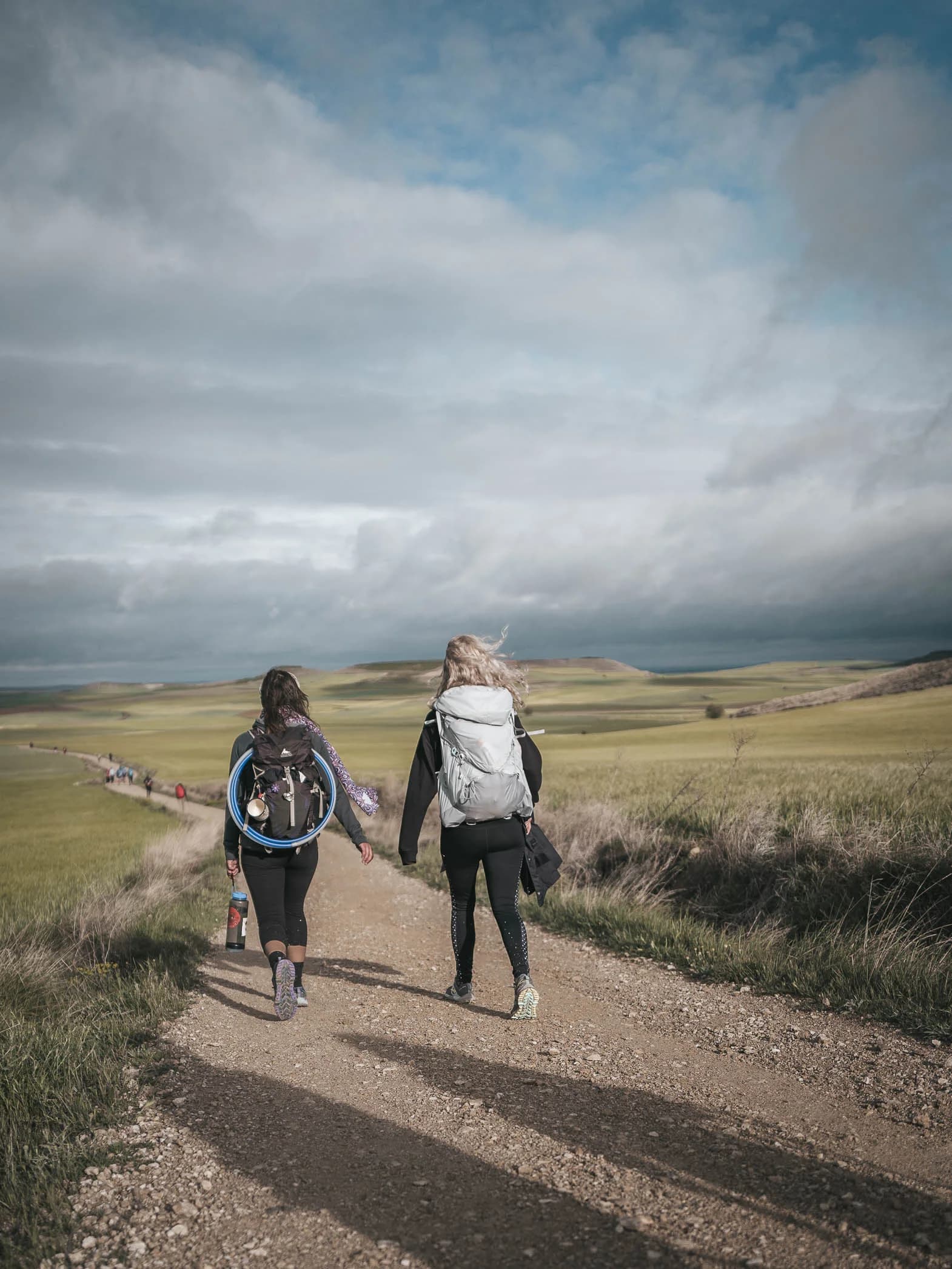
I would highly suggest training with your actual pack, loaded to your actual Camino weight, for at least the final 4-6 weeks before you leave. Start with shorter walks and build up. By the end, you should be comfortable doing 20-25km with your full pack—in one go, not spread across a day.
And here's the detail most people miss: train on varied terrain. Flat pavement is fine for building base fitness, but the Camino throws everything at you. Rocky paths, steep descents, uneven cobblestones. Your ankles and knees need to adapt to instability, not just distance.
I've seen pilgrims hobbling into albergues on day two with feet that look like raw meat because they bought shiny new boots a week before departure. Your shoes need hundreds of kilometres on them before you walk to Santiago. Not dozens. Hundreds.
Whatever you plan to wear—trail runners, hiking shoes, lightweight boots—they should be so well-worn that they feel like extensions of your feet. The leather should be softened, the sole should be molded to your gait, and you should know exactly where the hot spots might develop.
My suggestion is to do your entire training program in your Camino shoes. If they're going to cause problems, better to discover that in your local park than on the meseta with 500km still to go.
Your body doesn't adapt that quickly. What adapts is your pain tolerance—which tricks you into thinking you're ready whilst your tendons, joints, and muscles are quietly filing complaints.
Proper Camino training takes time. Real time. I'd recommend starting at least 12 weeks before your departure date, not 2-4 weeks like many guides suggest. Begin with 5km walks, three times a week. Add 1-2km each week. By week eight, you should be doing one long walk (15-20km) per week, plus shorter maintenance walks.
The goal isn't to arrive at the Camino already exhausted from training. It's to arrive with a body that's adapted to sustained walking and can handle the gradual increase in daily distance.
But here's what actually destroys pilgrims: the downhills.
Descending puts enormous stress on your knees, quads, and ankles. The muscles work eccentrically—lengthening under load—which causes far more microdamage than climbing. And the Camino has brutal descents. The drop into Zubiri. The rocky path down from Alto del Perdón. The endless descent into Molinaseca.
Train specifically for downhills. Find the steepest hill in your area and walk down it. Repeatedly. Focus on your technique: shorter steps, slightly bent knees, using trekking poles to absorb impact. Your future knees will thank you.
I learned this lesson the hard way on the Via Podiensis, where some of the descents through the Aubrac are absolutely punishing. By the time I reached Conques, I could barely walk down stairs. Don't be me.
Carrying a pack for 6-8 hours a day requires core stability you don't develop from just walking. Without it, your lower back compensates, your posture collapses, and by mid-afternoon you're hunched over like Quasimodo, which throws off your entire gait and leads to hip and knee problems.
Add these to your training routine:
- Planks (front and side) - 3 sets of 30-60 seconds, three times per week
- Dead bugs - 3 sets of 10 per side
- Bird dogs - 3 sets of 10 per side
- Glute bridges - 3 sets of 15
You don't need to become a gym rat. Fifteen minutes of core work, three times a week, is enough. But that fifteen minutes might be the difference between finishing strong and dropping out in Burgos.
Start by doing at least one training walk that's genuinely uncomfortable. Not dangerous—uncomfortable. Walk in light rain. Walk when you're tired. Walk when you'd rather be doing anything else. The Camino will serve up plenty of days when the weather is miserable, your body aches, and the next albergue is still 8km away.
Knowing you can push through discomfort—because you've done it before—makes an enormous difference when the actual hard days arrive.
Weeks 1-4: Build your base
- 3 walks per week: 5km, 5km, 8km
- Add 1-2km per week to each walk
- Start incorporating stairs and hills
- Begin core exercises
Weeks 5-8: Add the pack
- Introduce your loaded pack (start at 4-5kg, build to full weight)
- 2-3 walks per week with pack: 10km, 10km, 15km
- One long walk per week on varied terrain
- Continue core work
Weeks 9-12: Simulate the Camino
- Back-to-back walking days (walk Saturday AND Sunday)
- One 20-25km walk per week with full pack
- Practice your foot care routine
- Taper slightly in the final week
If you can walk 20km with your pack on Saturday, then 15km on Sunday, and wake up Monday feeling tired but not broken, you're ready.
Go in knowing this: the work you do in the months before you start pays dividends every single day on the trail. Those 15-minute core sessions? They'll keep you walking upright when others are bent over in pain. Those practice walks with your pack? They'll save you from the shipping boxes piling up at every post office in Galicia.
Start early. Train smart. And when you finally reach that shell marker in Saint-Jean, your body will be ready for the journey ahead.
Buen Camino.
---
Try asking My Camino Guide:
- How should I train for the Camino?
- What's the best way to prevent blisters?
- How heavy should my backpack be?
After walking the Camino Frances six times, the Via Podiensis twice, the Norte, and both the coastal and inland routes of the Portugués, I've made every mistake on this list. Some of them twice. The good news? They're all avoidable. Let me save you the blisters, the tendinitis, and the humiliation of shipping half your pack home from Pamplona.
Mistake #1: Training Without Your Pack
This is the big one. The mistake that takes down more first-timers than any other.You've been walking 10km every weekend for three months. You feel great. Your legs are strong. You're ready. Then day one hits, and suddenly there's 7kg strapped to your back, and everything—everything—feels different.
Your gait changes. Your posture shifts. Muscles you didn't know existed start screaming somewhere around kilometre 15. That confident stride you had on your Sunday morning walks? Gone.
I would highly suggest training with your actual pack, loaded to your actual Camino weight, for at least the final 4-6 weeks before you leave. Start with shorter walks and build up. By the end, you should be comfortable doing 20-25km with your full pack—in one go, not spread across a day.
And here's the detail most people miss: train on varied terrain. Flat pavement is fine for building base fitness, but the Camino throws everything at you. Rocky paths, steep descents, uneven cobblestones. Your ankles and knees need to adapt to instability, not just distance.
Mistake #2: Breaking In Shoes on the Trail
I cannot stress this enough: the Camino is not the place to break in new footwear.I've seen pilgrims hobbling into albergues on day two with feet that look like raw meat because they bought shiny new boots a week before departure. Your shoes need hundreds of kilometres on them before you walk to Santiago. Not dozens. Hundreds.
Whatever you plan to wear—trail runners, hiking shoes, lightweight boots—they should be so well-worn that they feel like extensions of your feet. The leather should be softened, the sole should be molded to your gait, and you should know exactly where the hot spots might develop.
My suggestion is to do your entire training program in your Camino shoes. If they're going to cause problems, better to discover that in your local park than on the meseta with 500km still to go.
Mistake #3: Going From Zero to Hero
Here's the scenario: you've been mostly sedentary for the past year. Maybe decades. You decide to walk the Camino, and suddenly you're doing 15km training walks every day for two weeks straight.Your body doesn't adapt that quickly. What adapts is your pain tolerance—which tricks you into thinking you're ready whilst your tendons, joints, and muscles are quietly filing complaints.
Proper Camino training takes time. Real time. I'd recommend starting at least 12 weeks before your departure date, not 2-4 weeks like many guides suggest. Begin with 5km walks, three times a week. Add 1-2km each week. By week eight, you should be doing one long walk (15-20km) per week, plus shorter maintenance walks.
The goal isn't to arrive at the Camino already exhausted from training. It's to arrive with a body that's adapted to sustained walking and can handle the gradual increase in daily distance.
Mistake #4: Ignoring the Downhills
Everyone worries about the uphills. The Napoleon Route on day one. O Cebreiro. The climb into Villafranca del Bierzo.But here's what actually destroys pilgrims: the downhills.
Descending puts enormous stress on your knees, quads, and ankles. The muscles work eccentrically—lengthening under load—which causes far more microdamage than climbing. And the Camino has brutal descents. The drop into Zubiri. The rocky path down from Alto del Perdón. The endless descent into Molinaseca.
Train specifically for downhills. Find the steepest hill in your area and walk down it. Repeatedly. Focus on your technique: shorter steps, slightly bent knees, using trekking poles to absorb impact. Your future knees will thank you.
I learned this lesson the hard way on the Via Podiensis, where some of the descents through the Aubrac are absolutely punishing. By the time I reached Conques, I could barely walk down stairs. Don't be me.
Mistake #5: Neglecting Everything Above the Ankles
Your legs get all the attention in Camino training. Fair enough—they're doing most of the work. But pilgrims routinely ignore their core, their back, and their shoulders until those areas start failing.Carrying a pack for 6-8 hours a day requires core stability you don't develop from just walking. Without it, your lower back compensates, your posture collapses, and by mid-afternoon you're hunched over like Quasimodo, which throws off your entire gait and leads to hip and knee problems.
Add these to your training routine:
- Planks (front and side) - 3 sets of 30-60 seconds, three times per week
- Dead bugs - 3 sets of 10 per side
- Bird dogs - 3 sets of 10 per side
- Glute bridges - 3 sets of 15
You don't need to become a gym rat. Fifteen minutes of core work, three times a week, is enough. But that fifteen minutes might be the difference between finishing strong and dropping out in Burgos.
The Mental Side Nobody Talks About
Physical preparation gets all the attention, but the Camino is as much a mental challenge as a physical one. And you can train for that too.Start by doing at least one training walk that's genuinely uncomfortable. Not dangerous—uncomfortable. Walk in light rain. Walk when you're tired. Walk when you'd rather be doing anything else. The Camino will serve up plenty of days when the weather is miserable, your body aches, and the next albergue is still 8km away.
Knowing you can push through discomfort—because you've done it before—makes an enormous difference when the actual hard days arrive.
What Good Preparation Actually Looks Like
Here's the training approach I recommend, based on twelve weeks out from departure:Weeks 1-4: Build your base
- 3 walks per week: 5km, 5km, 8km
- Add 1-2km per week to each walk
- Start incorporating stairs and hills
- Begin core exercises
Weeks 5-8: Add the pack
- Introduce your loaded pack (start at 4-5kg, build to full weight)
- 2-3 walks per week with pack: 10km, 10km, 15km
- One long walk per week on varied terrain
- Continue core work
Weeks 9-12: Simulate the Camino
- Back-to-back walking days (walk Saturday AND Sunday)
- One 20-25km walk per week with full pack
- Practice your foot care routine
- Taper slightly in the final week
If you can walk 20km with your pack on Saturday, then 15km on Sunday, and wake up Monday feeling tired but not broken, you're ready.
The Bottom Line
The Camino is forgiving. It really is. I've seen people with minimal preparation finish the entire Frances. But there's a difference between surviving the Camino and enjoying it. Proper training puts you in the second category.Go in knowing this: the work you do in the months before you start pays dividends every single day on the trail. Those 15-minute core sessions? They'll keep you walking upright when others are bent over in pain. Those practice walks with your pack? They'll save you from the shipping boxes piling up at every post office in Galicia.
Start early. Train smart. And when you finally reach that shell marker in Saint-Jean, your body will be ready for the journey ahead.
Buen Camino.
---
Try asking My Camino Guide:
- How should I train for the Camino?
- What's the best way to prevent blisters?
- How heavy should my backpack be?