A practical language guide covering key Spanish phrases for albergues, restaurants, pharmacies, and trail navigation, plus tips for communicating when you don't
There's a particular kind of panic that sets in when you're exhausted after walking 30 kilometers, you've finally found an albergue with beds available, and the hospitalero is rapid-firing questions at you in Spanish whilst you stand there nodding like a confused bobblehead. Been there. Many times, actually.
Over six Camino Francés pilgrimages, two walks of the Via Podiensis from Le Puy, plus treks on the Norte, Portuguese routes, and more walks to Finisterre than I care to admit, I've discovered that language barriers are simultaneously more manageable and more humbling than most people expect. You don't need to be fluent. You don't even need to be good. But having a handful of key phrases—and the confidence to mangle them enthusiastically—transforms your Camino experience.
Let me share what actually works on the ground.
But here's the thing: you'll miss so much if you rely on that crutch.
The best conversations I've had—the ones that revealed hidden restaurants, warned me about upcoming trail conditions, or simply made a lonely afternoon at a café feel like community—happened in broken Spanish. Sometimes broken Portuguese on the Camino Portugués. Occasionally in a bizarre hybrid language that was neither Spanish nor English but somehow worked anyway.
And in smaller villages? Especially through the Meseta on the Francés, or the rural stretches approaching O Cebreiro, or those tiny hamlets between Astorga and Ponferrada? English evaporates entirely. You're on your own with whatever Spanish you've got.
This is your opener. Learn it. Love it. I must have said it five thousand times across my Caminos.
"Soy peregrino/peregrina." (soy pair-eh-GREE-no/pair-eh-GREE-na) — I am a pilgrim.
Sounds obvious, but in some albergues—particularly municipal ones—this establishes that you're entitled to pilgrim pricing and priority over tourists.
"¿Cuánto cuesta?" (KWAHN-toh KWAYS-tah) — How much does it cost?
"Una noche, por favor." (OO-nah NO-chay, por fah-VOR) — One night, please.
"¿A qué hora hay que salir?" (ah kay OR-ah eye kay sah-LEER) — What time do we have to leave?
This last one is crucial. Municipal albergues especially have strict departure times (often 8:00 AM, sometimes earlier). Nothing ruins a morning like discovering you've overslept checkout whilst still half-conscious.
"¿Puede sellar mi credencial?" (PWAY-day say-YAR mee kreh-den-SYAHL) — Can you stamp my credential?
Sometimes they'll ask where you started:
"Empecé en [Saint-Jean-Pied-de-Port / Sarria / Lisboa]." (em-peh-SAY en...) — I started in...
And where you're going:
"Voy a Santiago." (voy ah sahn-tee-AH-go) — I'm going to Santiago.
"...y después a Finisterre." (...ee des-PWES ah fee-nee-STAIR-ray) — ...and then to Finisterre.
(I always add that last bit. Finisterre has become something of a pilgrimage within my pilgrimage. Five times now, walking those final 90 kilometers to the end of the earth.)
"¿Litera de arriba o de abajo?" — Top bunk or bottom?
- "Arriba" (ah-REE-bah) — Top
- "Abajo" (ah-BAH-ho) — Bottom
Always request bottom if you have knee issues. Those bunk bed ladders at 5:30 AM in the dark, whilst trying not to wake twenty sleeping pilgrims? A special kind of nightmare.
"¿Dónde están los baños?" (DON-day es-TAHN los BAH-nyos) — Where are the bathrooms?
"¿Hay lavadora?" (eye lah-vah-DOR-ah) — Is there a washing machine?
"¿Hay cocina?" (eye ko-SEE-nah) — Is there a kitchen?
The menú del peregrino is your friend: typically 10-14 euros for a three-course meal with bread and wine. Incredible value, and often the easiest way to order.
"Una cerveza, por favor." — A beer, please.
"Un vino tinto/blanco." — A red/white wine.
"Agua con gas / sin gas." — Sparkling / still water.
"La cuenta, por favor." — The bill, please.
- Bocadillo — A sandwich on crusty bread (bocadillo de jamón is ham; bocadillo de queso is cheese)
- Pulpo — Octopus (especially in Galicia—don't leave without trying pulpo a la gallega)
- Caldo gallego — Galician soup with greens and meat
- Empanada — Savory filled pastry
- Tarta de Santiago — Almond cake, essential in Santiago
- Pimientos de Padrón — Small green peppers, some hot, some not (the Russian roulette of tapas)
"¿Tiene algo vegetariano?" (TYEH-neh AHL-go veh-heh-tah-ree-AH-no) — Do you have anything vegetarian?
I've watched vegetarian friends struggle through rural Spain. The answer is often "we can make you a salad," but asking opens doors.
"Sin carne, por favor." — Without meat, please.
"Soy alérgico/a a..." — I'm allergic to... (gluten = gluten, nueces = nuts, mariscos = shellfish)
"¿Tiene tostada con tomate?" — Do you have toast with tomato? (Pan con tomate is everywhere and surprisingly filling)
"¿Puede poner más?" — Can you add more? (When the portion seems pilgrim-insufficient)
"Necesito algo para..." (neh-seh-SEE-toh AHL-go PAH-rah) — I need something for...
- ...las ampollas — blisters
- ...el dolor de rodilla — knee pain
- ...el dolor de espalda — back pain
- ...la diarrea — diarrhea (happens to everyone, nobody talks about it)
- ...el estreñimiento — constipation
- ...las quemaduras del sol — sunburn
- ...los calambres musculares — muscle cramps
"¿Tiene tiritas?" (tee-REE-tahs) — Do you have bandages/band-aids?
"¿Tiene ibuprofeno?" — Do you have ibuprofen?
Fun fact: in Spain, pharmacists are remarkably knowledgeable and often better first-line medical advice than a full doctor visit for common pilgrim ailments. Don't be shy about describing your problem—they've seen it all.
"Me duele aquí." (meh DWAY-leh ah-KEE) — It hurts here. (Point at the afflicted area.)
I once spent ten minutes in a pharmacy in Burgos trying to explain tendinitis through interpretive dance before learning I could just point and say "me duele aquí." Humbling.
For blister care specifically, I'd suggest bringing your own supplies. Compeed blister pads (Compeed Advanced Blister Care) are expensive in Spain. Stock up before you go.
This has saved me more times than I can count, particularly when exiting large cities like Pamplona, Burgos, and León where urban sprawl obscures the trail.
"¿Es este el camino correcto?" — Is this the right way?
"¿Estoy perdido/a." — I'm lost.
"¿Cuántos kilómetros hasta [next town]?" — How many kilometers to...?
- A la derecha — To the right
- A la izquierda — To the left
- Todo recto — Straight ahead
- Al lado de — Next to
- Detrás de — Behind
- Enfrente de — In front of / across from
And distance:
- Cerca — Close
- Lejos — Far
- Unos [number] kilómetros — About X kilometers
On the Camino Norte, I got lost outside Bilbao and asked a local fisherman for directions. He responded with a five-minute monologue, hands waving expressively, voice rising and falling dramatically. I understood perhaps 15% of the words but 100% of the intent. He walked me to the correct path, patted my shoulder, and sent me off. Language barrier? Sure. Communication failure? Not at all.
- 20: veinte
- 30: treinta
- 50: cincuenta
- 100: cien
For prices, you'll hear things like "son doce euros" (that's twelve euros). If you're struggling:
"¿Puede escribirlo?" — Can you write it down?
People are remarkably patient with pilgrims.
- A las siete de la mañana — At seven in the morning
- Por la tarde — In the afternoon
- Mañana — Tomorrow
- Ayer — Yesterday
- Drawing pictures on napkins—I've ordered entire meals this way
- Google Translate's camera feature for menus (download Spanish offline before your trip)
- Numbers on your phone calculator for prices
- Smiling genuinely opens more doors than perfect grammar
The key is abandoning dignity. You're not going to look sophisticated. Accept it. Lean into it. People appreciate the effort far more than they judge the execution.
- Medical situations requiring precision
- Reading complicated signs or instructions
- When you're simply too exhausted to think
Good news: Spanish and Portuguese speakers often understand each other reasonably well, especially in written form.
Some Portuguese essentials that differ from Spanish:
- Obrigado/Obrigada (thank you) instead of gracias
- Bom dia (good morning) instead of buenos días
- Por favor is the same
- Quanto custa? (how much?) instead of cuánto cuesta
- Peregrino is the same
The Portuguese are incredibly warm and often speak better English than their Spanish counterparts (just an observation, not a judgment). But making even a small effort in Portuguese—especially in rural areas between Lisbon and Porto—generates enormous goodwill.
Focus on French basics until Conques or so, then start shifting to Spanish. By Saint-Jean-Pied-de-Port, you're in the Basque country where Spanish, French, AND Basque all intermingle. It's glorious chaos.
The good news: pilgrims in these regions are even more patient because everyone's dealing with the same linguistic soup.
Say "Buenos días" to every pilgrim you pass. Thank every hospitalero with "Muchas gracias." Order your coffee in Spanish even when you know the barista speaks English.
You'll mangle it. You'll accidentally tell someone your shoes are very grandmother (actual mistake I made). You'll point at the wrong menu item and receive surprise intestines. These become your best stories.
What I've found over six Camino Francés walks is that language fluency matters far less than linguistic courage. The willingness to try, fail, laugh at yourself, and try again creates more connection than perfection ever could.
1. Download offline language packs for Spanish (and Portuguese/French if relevant)
2. Practice the albergue check-in phrases until they're automatic
3. Bring a small pocket phrasebook (Lonely Planet Spanish Phrasebook) for downtime study
4. Do 15 minutes daily on Duolingo for a month before—not to become fluent, but to train your ear to Spanish sounds
And go in knowing: no amount of preparation replaces the on-the-ground learning that happens organically. Some of my best Spanish was learned sitting in plazas, drinking wine with locals who had endless patience for my butchered verb conjugations.
They're invitations—to slow down, to pay attention, to engage with more than just words. Some of my deepest pilgrim connections have been with people whose languages I didn't speak. We communicated through shared exhaustion, shared meals, shared silences.
The Camino teaches you that human connection transcends vocabulary. But it doesn't hurt to know how to ask for ibuprofen when your knees are screaming.
Buen Camino. Or as I learned to say whilst struggling up O Cebreiro on a rainy October afternoon: solo un poco más (just a little more). Sometimes that's all the language you need.
---
If you're still figuring out the practical details of your pilgrimage, feel free to plan your Camino with more specific questions. I'm happy to help you prepare for whatever route you're considering, whether it's your first time or your fifth.
---
Try asking My Camino Guide:
- What other essential phrases should I learn for the Camino?
- How do I choose between the Camino Francés and Camino Portugués?
- What should I pack for walking the Camino in autumn?
Over six Camino Francés pilgrimages, two walks of the Via Podiensis from Le Puy, plus treks on the Norte, Portuguese routes, and more walks to Finisterre than I care to admit, I've discovered that language barriers are simultaneously more manageable and more humbling than most people expect. You don't need to be fluent. You don't even need to be good. But having a handful of key phrases—and the confidence to mangle them enthusiastically—transforms your Camino experience.
Let me share what actually works on the ground.
The Truth About Language on the Camino
First, a reality check. On the Camino Francés especially, you can absolutely get by with English in most situations. Tourism has done its work. Many albergue staff, restaurant owners, and even pharmacists in larger towns speak enough English to handle basic transactions.But here's the thing: you'll miss so much if you rely on that crutch.
The best conversations I've had—the ones that revealed hidden restaurants, warned me about upcoming trail conditions, or simply made a lonely afternoon at a café feel like community—happened in broken Spanish. Sometimes broken Portuguese on the Camino Portugués. Occasionally in a bizarre hybrid language that was neither Spanish nor English but somehow worked anyway.
And in smaller villages? Especially through the Meseta on the Francés, or the rural stretches approaching O Cebreiro, or those tiny hamlets between Astorga and Ponferrada? English evaporates entirely. You're on your own with whatever Spanish you've got.
Albergue Essentials: Your First Priority
The albergue is where most language stress happens. You're tired, you need a bed, and there's usually a line of equally exhausted pilgrims behind you silently willing you to hurry up.Check-in Phrases That Save Lives (or at Least Dignity)
"¿Hay camas disponibles?" (eye kah-mas dis-poh-nee-blays) — Are there beds available?This is your opener. Learn it. Love it. I must have said it five thousand times across my Caminos.
"Soy peregrino/peregrina." (soy pair-eh-GREE-no/pair-eh-GREE-na) — I am a pilgrim.
Sounds obvious, but in some albergues—particularly municipal ones—this establishes that you're entitled to pilgrim pricing and priority over tourists.
"¿Cuánto cuesta?" (KWAHN-toh KWAYS-tah) — How much does it cost?
"Una noche, por favor." (OO-nah NO-chay, por fah-VOR) — One night, please.
"¿A qué hora hay que salir?" (ah kay OR-ah eye kay sah-LEER) — What time do we have to leave?
This last one is crucial. Municipal albergues especially have strict departure times (often 8:00 AM, sometimes earlier). Nothing ruins a morning like discovering you've overslept checkout whilst still half-conscious.
The Credential Dance
Your pilgrim credential (credencial del peregrino) needs stamps. Simple enough concept, but:"¿Puede sellar mi credencial?" (PWAY-day say-YAR mee kreh-den-SYAHL) — Can you stamp my credential?
Sometimes they'll ask where you started:
"Empecé en [Saint-Jean-Pied-de-Port / Sarria / Lisboa]." (em-peh-SAY en...) — I started in...
And where you're going:
"Voy a Santiago." (voy ah sahn-tee-AH-go) — I'm going to Santiago.
"...y después a Finisterre." (...ee des-PWES ah fee-nee-STAIR-ray) — ...and then to Finisterre.
(I always add that last bit. Finisterre has become something of a pilgrimage within my pilgrimage. Five times now, walking those final 90 kilometers to the end of the earth.)
Bed Assignment and Facilities
Often the hospitalero will just point at a bed, but occasionally:"¿Litera de arriba o de abajo?" — Top bunk or bottom?
- "Arriba" (ah-REE-bah) — Top
- "Abajo" (ah-BAH-ho) — Bottom
Always request bottom if you have knee issues. Those bunk bed ladders at 5:30 AM in the dark, whilst trying not to wake twenty sleeping pilgrims? A special kind of nightmare.
"¿Dónde están los baños?" (DON-day es-TAHN los BAH-nyos) — Where are the bathrooms?
"¿Hay lavadora?" (eye lah-vah-DOR-ah) — Is there a washing machine?
"¿Hay cocina?" (eye ko-SEE-nah) — Is there a kitchen?
Restaurant and Café Survival Guide
Food is fuel on the Camino, and also—let's be honest—one of the great pleasures. But menus in small-town Spain can be adventures in confusion, and the waiter doesn't always have time for your pointing and miming.Getting a Table and Ordering
"¿Tiene el menú del peregrino?" (TYEH-neh el meh-NOO del pair-eh-GREE-no) — Do you have the pilgrim menu?The menú del peregrino is your friend: typically 10-14 euros for a three-course meal with bread and wine. Incredible value, and often the easiest way to order.
"Una cerveza, por favor." — A beer, please.
"Un vino tinto/blanco." — A red/white wine.
"Agua con gas / sin gas." — Sparkling / still water.
"La cuenta, por favor." — The bill, please.
Food Terms You'll Actually Encounter
- Tortilla española — That glorious potato omelette that's saved countless hangry pilgrims- Bocadillo — A sandwich on crusty bread (bocadillo de jamón is ham; bocadillo de queso is cheese)
- Pulpo — Octopus (especially in Galicia—don't leave without trying pulpo a la gallega)
- Caldo gallego — Galician soup with greens and meat
- Empanada — Savory filled pastry
- Tarta de Santiago — Almond cake, essential in Santiago
- Pimientos de Padrón — Small green peppers, some hot, some not (the Russian roulette of tapas)
"¿Tiene algo vegetariano?" (TYEH-neh AHL-go veh-heh-tah-ree-AH-no) — Do you have anything vegetarian?
I've watched vegetarian friends struggle through rural Spain. The answer is often "we can make you a salad," but asking opens doors.
"Sin carne, por favor." — Without meat, please.
"Soy alérgico/a a..." — I'm allergic to... (gluten = gluten, nueces = nuts, mariscos = shellfish)
The Breakfast Dilemma
Spanish breakfast is... minimal. A coffee and maybe a pastry. If you're an early-morning walker who needs real fuel:"¿Tiene tostada con tomate?" — Do you have toast with tomato? (Pan con tomate is everywhere and surprisingly filling)
"¿Puede poner más?" — Can you add more? (When the portion seems pilgrim-insufficient)
Pharmacy Essentials: When Your Body Rebels
The Camino has a way of finding your weaknesses. Blisters, joint pain, intestinal rebellion—something will eventually send you to the farmacia (green cross, you'll see them everywhere)."Necesito algo para..." (neh-seh-SEE-toh AHL-go PAH-rah) — I need something for...
- ...las ampollas — blisters
- ...el dolor de rodilla — knee pain
- ...el dolor de espalda — back pain
- ...la diarrea — diarrhea (happens to everyone, nobody talks about it)
- ...el estreñimiento — constipation
- ...las quemaduras del sol — sunburn
- ...los calambres musculares — muscle cramps
"¿Tiene tiritas?" (tee-REE-tahs) — Do you have bandages/band-aids?
"¿Tiene ibuprofeno?" — Do you have ibuprofen?
Fun fact: in Spain, pharmacists are remarkably knowledgeable and often better first-line medical advice than a full doctor visit for common pilgrim ailments. Don't be shy about describing your problem—they've seen it all.
"Me duele aquí." (meh DWAY-leh ah-KEE) — It hurts here. (Point at the afflicted area.)
I once spent ten minutes in a pharmacy in Burgos trying to explain tendinitis through interpretive dance before learning I could just point and say "me duele aquí." Humbling.
For blister care specifically, I'd suggest bringing your own supplies. Compeed blister pads (Compeed Advanced Blister Care) are expensive in Spain. Stock up before you go.
Trail Navigation: Finding Your Way
The Camino Francés is famously well-marked—those yellow arrows are everywhere. But you'll still have moments of confusion, especially in cities or when routes diverge.Asking for Directions
"¿Por dónde se va al Camino?" (por DON-day say vah al kah-MEE-no) — Which way to the Camino?This has saved me more times than I can count, particularly when exiting large cities like Pamplona, Burgos, and León where urban sprawl obscures the trail.
"¿Es este el camino correcto?" — Is this the right way?
"¿Estoy perdido/a." — I'm lost.
"¿Cuántos kilómetros hasta [next town]?" — How many kilometers to...?
Understanding Responses
People will often respond with directions, so listen for:- A la derecha — To the right
- A la izquierda — To the left
- Todo recto — Straight ahead
- Al lado de — Next to
- Detrás de — Behind
- Enfrente de — In front of / across from
And distance:
- Cerca — Close
- Lejos — Far
- Unos [number] kilómetros — About X kilometers
On the Camino Norte, I got lost outside Bilbao and asked a local fisherman for directions. He responded with a five-minute monologue, hands waving expressively, voice rising and falling dramatically. I understood perhaps 15% of the words but 100% of the intent. He walked me to the correct path, patted my shoulder, and sent me off. Language barrier? Sure. Communication failure? Not at all.
Numbers, Time, and Money
Numbers Worth Memorizing
- 1-10: uno, dos, tres, cuatro, cinco, seis, siete, ocho, nueve, diez- 20: veinte
- 30: treinta
- 50: cincuenta
- 100: cien
For prices, you'll hear things like "son doce euros" (that's twelve euros). If you're struggling:
"¿Puede escribirlo?" — Can you write it down?
People are remarkably patient with pilgrims.
Time
- ¿Qué hora es? — What time is it?- A las siete de la mañana — At seven in the morning
- Por la tarde — In the afternoon
- Mañana — Tomorrow
- Ayer — Yesterday
When Words Fail: Universal Communication
Here's what I've learned after hundreds of days on various Caminos: communication happens whether or not you share vocabulary.The Power of Non-Verbal Communication
- Pointing works for almost everything- Drawing pictures on napkins—I've ordered entire meals this way
- Google Translate's camera feature for menus (download Spanish offline before your trip)
- Numbers on your phone calculator for prices
- Smiling genuinely opens more doors than perfect grammar
Embrace the Performance
I once needed to explain that my sleeping bag zipper was broken to a hospitalero who spoke zero English. I spent three minutes doing an elaborate mime involving pretend shivering, pretending to zip, pretending frustration, and finally pointing at a sewing kit. She laughed so hard she cried. Then she fixed my zipper.The key is abandoning dignity. You're not going to look sophisticated. Accept it. Lean into it. People appreciate the effort far more than they judge the execution.
A Translation App as Backup
I'd highly suggest downloading Google Translate or a similar app with offline Spanish language packs before your trip. It won't replace learning basic phrases—the connection you make through trying is irreplaceable—but it's invaluable for:- Medical situations requiring precision
- Reading complicated signs or instructions
- When you're simply too exhausted to think
The Portugal Factor
If you're walking the Camino Portugués—whether the coastal route, the inland route, or starting from Lisbon as I've done—you'll be in Portugal for a significant stretch.Good news: Spanish and Portuguese speakers often understand each other reasonably well, especially in written form.
Some Portuguese essentials that differ from Spanish:
- Obrigado/Obrigada (thank you) instead of gracias
- Bom dia (good morning) instead of buenos días
- Por favor is the same
- Quanto custa? (how much?) instead of cuánto cuesta
- Peregrino is the same
The Portuguese are incredibly warm and often speak better English than their Spanish counterparts (just an observation, not a judgment). But making even a small effort in Portuguese—especially in rural areas between Lisbon and Porto—generates enormous goodwill.
The France Connection
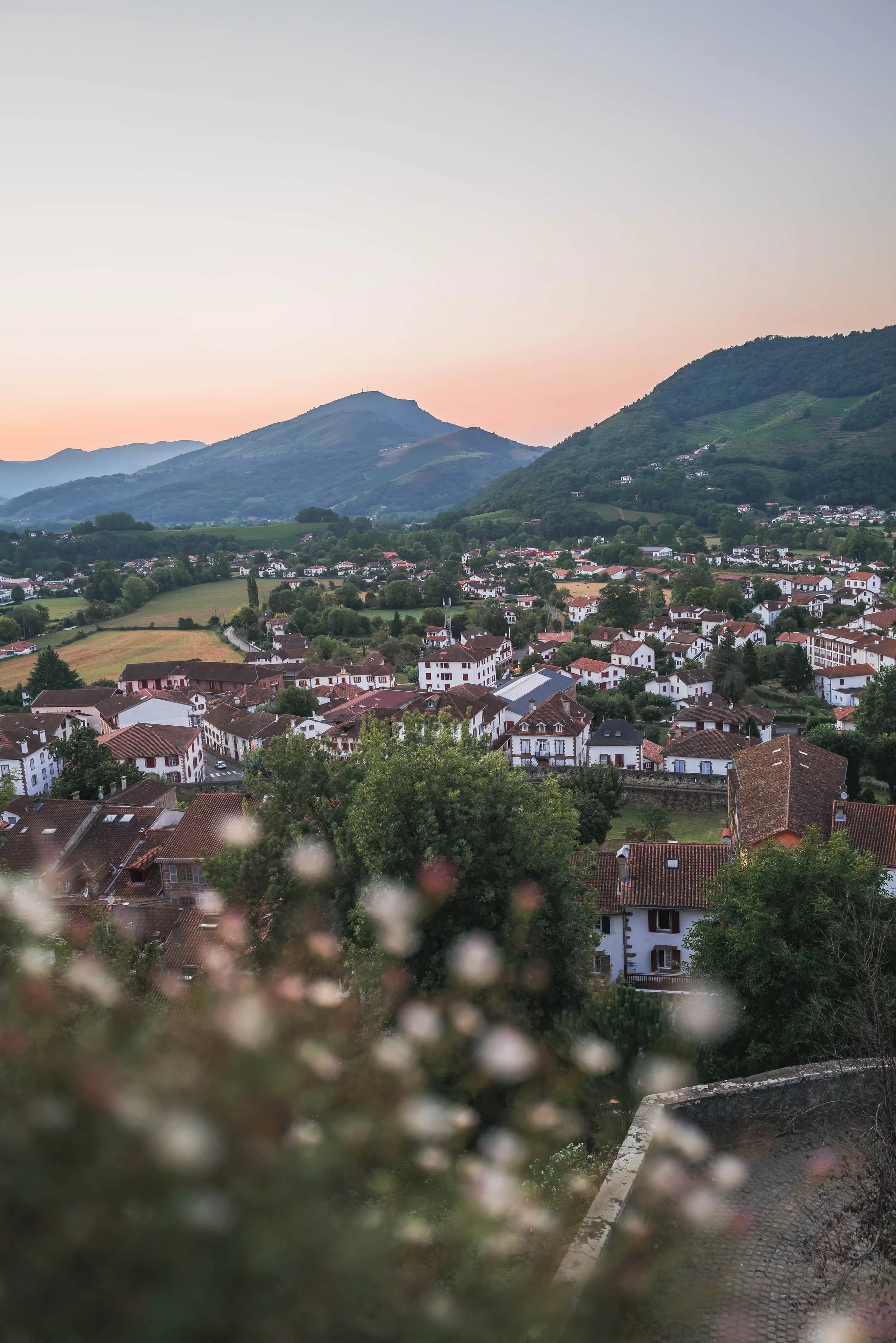
Walking the Via Podiensis twice taught me that French-Spanish transitions are their own adventure. You'll cross the Pyrenees speaking French and suddenly need Spanish. If you're walking from Le Puy:Focus on French basics until Conques or so, then start shifting to Spanish. By Saint-Jean-Pied-de-Port, you're in the Basque country where Spanish, French, AND Basque all intermingle. It's glorious chaos.
The good news: pilgrims in these regions are even more patient because everyone's dealing with the same linguistic soup.
Building Confidence: My Actual Advice
Start using Spanish immediately. Not when you feel ready. Not when your pronunciation is perfect. Now.Say "Buenos días" to every pilgrim you pass. Thank every hospitalero with "Muchas gracias." Order your coffee in Spanish even when you know the barista speaks English.
You'll mangle it. You'll accidentally tell someone your shoes are very grandmother (actual mistake I made). You'll point at the wrong menu item and receive surprise intestines. These become your best stories.
What I've found over six Camino Francés walks is that language fluency matters far less than linguistic courage. The willingness to try, fail, laugh at yourself, and try again creates more connection than perfection ever could.
Preparing Before You Go
Before your Camino, I'd suggest:1. Download offline language packs for Spanish (and Portuguese/French if relevant)
2. Practice the albergue check-in phrases until they're automatic
3. Bring a small pocket phrasebook (Lonely Planet Spanish Phrasebook) for downtime study
4. Do 15 minutes daily on Duolingo for a month before—not to become fluent, but to train your ear to Spanish sounds
And go in knowing: no amount of preparation replaces the on-the-ground learning that happens organically. Some of my best Spanish was learned sitting in plazas, drinking wine with locals who had endless patience for my butchered verb conjugations.
Final Thoughts
Language barriers on the Camino are real. And also not really barriers at all.They're invitations—to slow down, to pay attention, to engage with more than just words. Some of my deepest pilgrim connections have been with people whose languages I didn't speak. We communicated through shared exhaustion, shared meals, shared silences.
The Camino teaches you that human connection transcends vocabulary. But it doesn't hurt to know how to ask for ibuprofen when your knees are screaming.
Buen Camino. Or as I learned to say whilst struggling up O Cebreiro on a rainy October afternoon: solo un poco más (just a little more). Sometimes that's all the language you need.
---
If you're still figuring out the practical details of your pilgrimage, feel free to plan your Camino with more specific questions. I'm happy to help you prepare for whatever route you're considering, whether it's your first time or your fifth.
---
Try asking My Camino Guide:
- What other essential phrases should I learn for the Camino?
- How do I choose between the Camino Francés and Camino Portugués?
- What should I pack for walking the Camino in autumn?