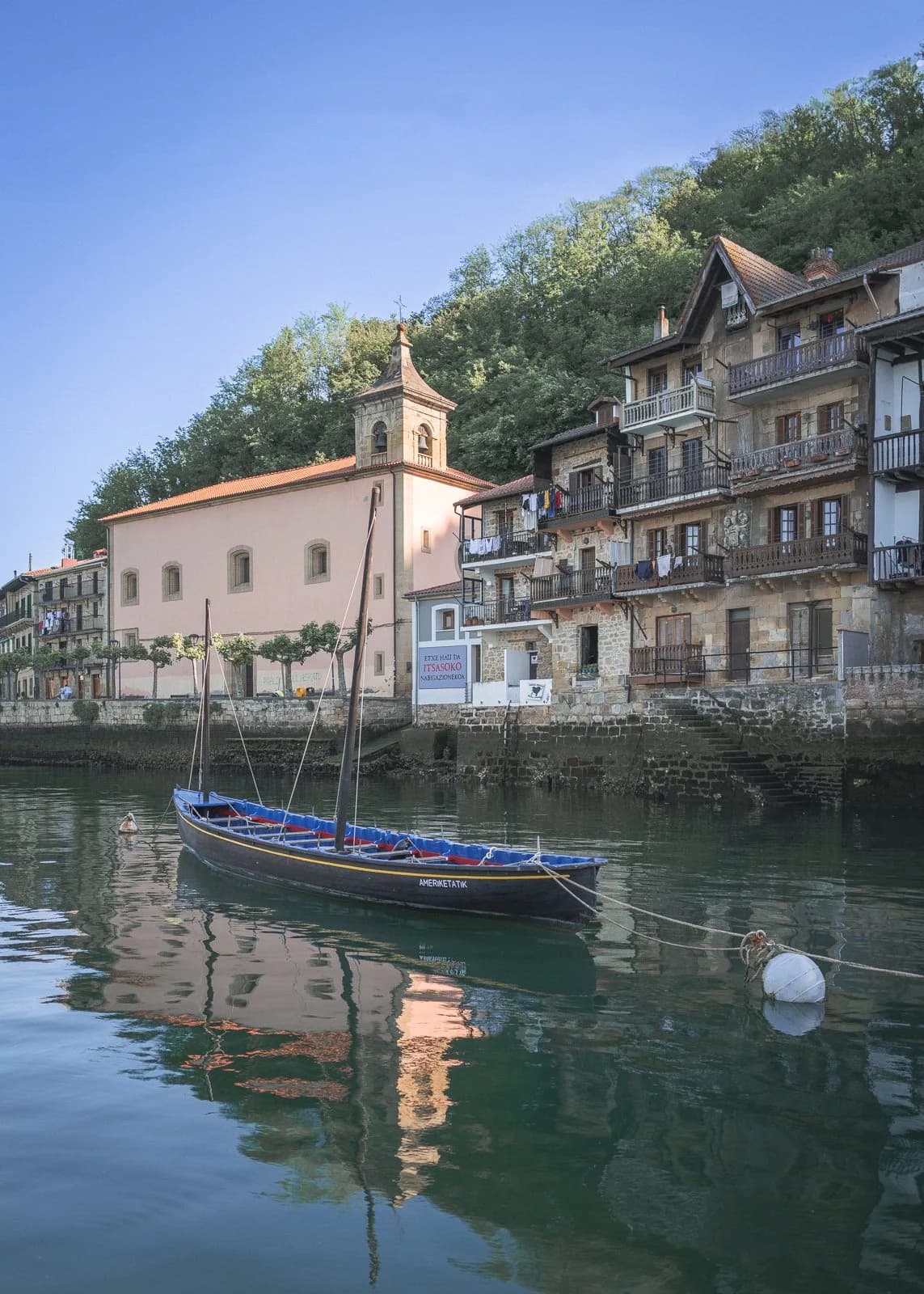
A day-in-the-life account of one of the Camino's most deceptively challenging stretches, following the hours from pre-dawn departure through the emotional and p
It's 5:47 AM and I'm lying in my bunk at the albergue in Rabanal del Camino, listening to the familiar symphony of rustling plastic bags and creaky floorboards. My alarm hasn't gone off yet, but it doesn't matter—I'm already awake, and I've been awake for the better part of an hour. Not because I'm excited, though there's some of that. Not because I'm anxious, though there's definitely some of that too. I'm awake because my feet are throbbing with a dull, persistent ache that has taken up permanent residence somewhere between my consciousness and my dreams.
This is the stage nobody warns you about.
Everyone talks about the Pyrenees crossing on day one. They rhapsodize about the Meseta—either loving its meditative emptiness or cursing its monotony. They prepare you for O Cebreiro, for the final approach to Santiago, for the emotional weight of standing in front of the cathedral. But this? The stretch from Rabanal through Foncebadón, over Cruz de Ferro, down through Molinaseca, and finally—finally—into Astorga? Nobody prepares you for this.
And I'm not entirely sure why.
What they don't tell you is that by the time you reach this point on the Camino Francés—usually somewhere around day 23 or 24 for those walking the full route from Saint-Jean-Pied-de-Port—your body has entered a peculiar state of being. You're fit, sure. Fitter than you've been in years, probably. Your legs can carry you for eight hours without much complaint. Your lungs have adapted to the gradual climbs. You've lost weight in some places and gained it in others (hello, calf muscles I never knew I had).
But your feet. God, your feet.
By this point in the Camino, I've watched my feet transform through approximately seventeen different stages of distress. First the blisters. Then the blisters on top of blisters. Then that weird phase where the blisters seem to heal but the skin underneath is tender and new and screaming at every pebble. Then the toenails—let's not even talk about the toenails. And now, somewhere past León, my feet have settled into a kind of permanent protest. Not acute pain, exactly. More like a constant, low-grade inflammation that makes every morning's first steps feel like walking on hot coals.
This is the body you're bringing to one of the most physically demanding days of the entire Camino.
Feet first. Always feet first.
I sit on the edge of the bunk and examine the damage from yesterday. A new hot spot on my left heel that will definitely become a blister if I don't tape it. The persistent ache in my right arch that's been with me since somewhere around Sahagún. My little toes, red and angry where they've been rubbing against the next toe over for the past 500 kilometers.
I pull out my Leukotape—the good stuff, the only tape that actually stays put through sweat and rain and the indignities of the Camino—and get to work. Preventive taping has become almost meditative at this point. I know every vulnerable spot on my feet like a cartographer knows their maps.
By 6:45, I'm dressed. By 7:00, I'm standing outside the albergue with a few other early risers, watching our breath fog in the mountain air. Rabanal sits at about 1,150 meters elevation, and the temperature up here reminds you that León's deceiving warmth is far below. Someone passes around a flask of something warming. I don't ask what it is. I drink.
I've walked this section six times now, and every single time, I forget how relentless these first few kilometers feel.
Foncebadón appears like a ghost village in the grey pre-dawn light. A few bars are open, their windows glowing warm and amber, and the smell of coffee pulls at me like a physical force. I stop. Of course I stop. Everyone stops. A café con leche and a croissant, standing at the bar because sitting down feels dangerous—sit down now and you might never get up.
The Spanish pilgrims are already talking rapidly, gesturing with their cups. The French contingent sits quietly in the corner, looking vaguely superior in the way that only French pilgrims manage to look at 7:30 in the morning. I stand alone at the end of the bar, feeling the caffeine enter my bloodstream, watching my reflection in the mirror behind the bottles.
I look tired. Not the romantic, windswept kind of tired. Just tired.
But here's a confession: the first time I came here, I felt nothing.
Nothing.
I'd carried a stone from home, like you're supposed to. I'd thought about what I wanted to leave behind, what burdens I wanted to symbolically release at this ancient pile of stones where pilgrims have been stopping for centuries. I'd read the poetry and the blog posts and the guidebook passages about the emotional significance of this place.
And I stood there, in a crowd of other pilgrims, watching people weep and embrace and have clearly profound experiences, and I felt... tired. My feet hurt. I was cold. I wanted to keep moving.
It wasn't until my third Camino that the Cruz de Ferro finally broke me open. I don't know why. Maybe it was the particular weight I was carrying that year—the recent death of my father, the end of a long relationship, the professional failures I was trying to outrun. Maybe it was just the accumulated exhaustion of three weeks of walking. Maybe the Camino decides when you're ready, not the other way around.
I placed my stone and I cried. Not pretty, photogenic tears. The ugly kind, the kind that come from somewhere deep and won't be controlled.
This morning, on my sixth crossing, I don't bring a stone. I just stand for a while, watching other pilgrims have their moments, feeling the cold wind coming off the mountains, remembering all the versions of myself who have stood in this exact spot. It's enough.
From Cruz de Ferro, the path drops. And drops. And drops some more. The descent to Molinaseca is approximately 900 meters of elevation loss over roughly 15 kilometers, and almost all of it is on rock.
Not smooth rock. Not nice, paved rock. The kind of rock that was put there specifically to destroy the feet of pilgrims. Loose stones that roll under your boots. Exposed bedrock that jars your knees. Narrow paths carved into mountainsides where one wrong step means a twisted ankle at best.
I've seen strong walkers, experienced hikers, people who breezed through the Pyrenees and laughed at the Meseta—I've watched these people come undone on this descent. There's something about the combination of factors: the accumulated fatigue of weeks on trail, the unforgiving terrain, the way downhill walking destroys muscles in different ways than climbing does.
By the time I reach Acebo, my quadriceps are quivering. By El Acebo (yes, there are two similarly-named villages, because the Camino loves to confuse you), I'm placing each step with the careful deliberation of someone walking on ice. By the time the trail drops into Molinaseca, I'm done.
Not physically done—I can keep walking. But mentally, emotionally, somewhere-deep-in-my-soul done.
This is the moment I want to tell you about. This is the stage nobody warns you about.
But Astorga is still 9 kilometers away.
When you're planning your Camino—and I'd encourage you to plan your Camino with a realistic understanding of what each stage demands—you might look at a map and think, "Nine kilometers? That's nothing. Two hours, maybe two and a half."
And normally, you'd be right.
But these nine kilometers from Molinaseca to Astorga might be the longest nine kilometers on the entire Camino Francés. They're flat, or at least flatter than what you've just descended. They're not technically difficult. The terrain is mostly road and easy path.
It's just that by this point, you're running on empty.
A Spanish grandmother passes me, walking with her daughter. They're deep in conversation, laughing, moving at a pace that would have been easy for me three weeks ago. They pass me like I'm standing still.
I'm not standing still. I'm moving. I'm just moving very, very slowly.
This is when the Camino becomes purely mental. There's nothing particularly interesting to look at. There's no dramatic scenery to distract you. There's just the path, the pain, and the distance.
I start playing the games all long-distance walkers learn. I'll walk to that tree, then I can rest. I'll walk to that kilometer marker, then I can have some water. I'll walk to that village sign, then I can check the map and see how much farther.
(The map always says farther than you hoped. Always.)
Somewhere around kilometer five of this final stretch, I enter a state I can only describe as transcendent exhaustion. The pain in my feet becomes background noise. My legs move without conscious input. I'm not really thinking about anything—my brain has gone quiet in a way that rarely happens outside of the Camino, or maybe deep meditation, or maybe extreme sleep deprivation.
Maybe that's what this is: extreme sleep deprivation.
And something shifts.
This is the moment nobody can quite prepare you for, though if you ask about the emotional journey of the Camino, I'll try. It's not the Cruz de Ferro moment, though that has its own power. It's not the arrival at Santiago, though that will come later with its own weight.
It's this: the simple, profound relief of arriving somewhere when everything hurts.
I walk through the gates of Astorga—through gates where pilgrims have walked for a thousand years—and I feel tears on my cheeks. Not the dramatic, cathartic tears of the Iron Cross. Just quiet tears of gratitude, of relief, of the strange emotion that comes from pushing your body past what you thought it could do and arriving anyway.
A local woman walking her dog sees me crying and nods. Just nods, understanding. She's seen a thousand pilgrims walk through these gates. She knows.
Feet up. Ice if you can find it (you usually can't). Ibuprofen, though by this point you've probably exceeded any reasonable recommended dosage for the week. Clean, dry socks. And rest.
I lie on my bunk and I think about the day. About the dark climb from Rabanal. About the Iron Cross in the dawn light. About the brutal descent that seemed to never end. About those final flat kilometers that were somehow harder than any mountain pass.
This is the stage nobody warns you about. Not because it's the hardest—there are harder days, depending on weather and conditions and your particular physical vulnerabilities. Not because it's the most dangerous—the Pyrenees in bad weather can be legitimately deadly.
But because it comes at exactly the moment when your body is failing and your spirit is tested, and it asks you to give everything you have left. And then it rewards you with those walls, that city, that moment of arrival.
Go in knowing this: you will suffer on this stage. Your feet will hurt in ways you didn't know feet could hurt. The descent will test muscles you forgot you had. The final walk into Astorga will feel impossibly long.
And you will arrive. You will walk through those gates, just like pilgrims have done for a thousand years before you. And you will cry, or laugh, or simply stand there in exhausted wonder.
That's the Camino. That's the whole thing, really. Pain and arrival and pain and arrival, again and again, until something in you breaks open and something else begins.
I would highly suggest giving yourself permission to walk this stage slowly. Start early, stop often, and don't feel bad about taking three hours longer than your guidebook suggests. This isn't a race. It's a pilgrimage.
And if you're reading this in the planning stages, thinking about whether you can handle a day like this—you can. I've watched seventy-year-olds with artificial hips walk into Astorga. I've watched teenagers with blisters on top of blisters. I've watched first-time walkers who've never hiked more than five kilometers in their lives.
They all arrived. You will too.
Buen Camino, pilgrim. I'll see you on the trail.
---
Try asking My Camino Guide:
- What's the best way to prevent blisters on long descents?
- How should I split the stages around Cruz de Ferro?
- What gear do I need for the mountains after León?
This is the stage nobody warns you about.
Everyone talks about the Pyrenees crossing on day one. They rhapsodize about the Meseta—either loving its meditative emptiness or cursing its monotony. They prepare you for O Cebreiro, for the final approach to Santiago, for the emotional weight of standing in front of the cathedral. But this? The stretch from Rabanal through Foncebadón, over Cruz de Ferro, down through Molinaseca, and finally—finally—into Astorga? Nobody prepares you for this.
And I'm not entirely sure why.
What They Tell You vs. What Actually Happens
The guidebooks will tell you this section has some elevation. They'll mention the Iron Cross. They'll note that the descent is "rocky in places." They'll probably include a nice little photo of the Cruz de Ferro at sunrise, pilgrims silhouetted against a golden sky, leaving stones from home at the base of that ancient wooden pole.What they don't tell you is that by the time you reach this point on the Camino Francés—usually somewhere around day 23 or 24 for those walking the full route from Saint-Jean-Pied-de-Port—your body has entered a peculiar state of being. You're fit, sure. Fitter than you've been in years, probably. Your legs can carry you for eight hours without much complaint. Your lungs have adapted to the gradual climbs. You've lost weight in some places and gained it in others (hello, calf muscles I never knew I had).
But your feet. God, your feet.
By this point in the Camino, I've watched my feet transform through approximately seventeen different stages of distress. First the blisters. Then the blisters on top of blisters. Then that weird phase where the blisters seem to heal but the skin underneath is tender and new and screaming at every pebble. Then the toenails—let's not even talk about the toenails. And now, somewhere past León, my feet have settled into a kind of permanent protest. Not acute pain, exactly. More like a constant, low-grade inflammation that makes every morning's first steps feel like walking on hot coals.
This is the body you're bringing to one of the most physically demanding days of the entire Camino.
The Pre-Dawn Hours
I peel myself out of my sleeping bag at 6:15, moving slowly so as not to wake the German couple in the bunks below. My headlamp clicks on—red light mode, because I've learned by my sixth Camino that white light in a dark albergue makes enemies fast—and I begin the morning ritual.Feet first. Always feet first.
I sit on the edge of the bunk and examine the damage from yesterday. A new hot spot on my left heel that will definitely become a blister if I don't tape it. The persistent ache in my right arch that's been with me since somewhere around Sahagún. My little toes, red and angry where they've been rubbing against the next toe over for the past 500 kilometers.
I pull out my Leukotape—the good stuff, the only tape that actually stays put through sweat and rain and the indignities of the Camino—and get to work. Preventive taping has become almost meditative at this point. I know every vulnerable spot on my feet like a cartographer knows their maps.
By 6:45, I'm dressed. By 7:00, I'm standing outside the albergue with a few other early risers, watching our breath fog in the mountain air. Rabanal sits at about 1,150 meters elevation, and the temperature up here reminds you that León's deceiving warmth is far below. Someone passes around a flask of something warming. I don't ask what it is. I drink.
The Climb No One Mentions
Here's the thing about the first few kilometers from Rabanal: they're uphill. Not dramatically so—nothing like the Pyrenees, nothing like the final push to O Cebreiro later—but consistently, persistently uphill. And you're doing this in the dark, on a trail that's more rock than path, with feet that haven't quite forgiven you for yesterday.I've walked this section six times now, and every single time, I forget how relentless these first few kilometers feel.
Foncebadón appears like a ghost village in the grey pre-dawn light. A few bars are open, their windows glowing warm and amber, and the smell of coffee pulls at me like a physical force. I stop. Of course I stop. Everyone stops. A café con leche and a croissant, standing at the bar because sitting down feels dangerous—sit down now and you might never get up.
The Spanish pilgrims are already talking rapidly, gesturing with their cups. The French contingent sits quietly in the corner, looking vaguely superior in the way that only French pilgrims manage to look at 7:30 in the morning. I stand alone at the end of the bar, feeling the caffeine enter my bloodstream, watching my reflection in the mirror behind the bottles.
I look tired. Not the romantic, windswept kind of tired. Just tired.
Cruz de Ferro: The Moment Everyone Waits For
The sun is just beginning to pink the sky when I reach the Iron Cross. I've timed this well—something you learn after a few Caminos, how to pace yourself so you arrive at certain places at certain times. The Cruz de Ferro at sunrise, Finisterre at sunset. These things matter.But here's a confession: the first time I came here, I felt nothing.
Nothing.
I'd carried a stone from home, like you're supposed to. I'd thought about what I wanted to leave behind, what burdens I wanted to symbolically release at this ancient pile of stones where pilgrims have been stopping for centuries. I'd read the poetry and the blog posts and the guidebook passages about the emotional significance of this place.
And I stood there, in a crowd of other pilgrims, watching people weep and embrace and have clearly profound experiences, and I felt... tired. My feet hurt. I was cold. I wanted to keep moving.
It wasn't until my third Camino that the Cruz de Ferro finally broke me open. I don't know why. Maybe it was the particular weight I was carrying that year—the recent death of my father, the end of a long relationship, the professional failures I was trying to outrun. Maybe it was just the accumulated exhaustion of three weeks of walking. Maybe the Camino decides when you're ready, not the other way around.
I placed my stone and I cried. Not pretty, photogenic tears. The ugly kind, the kind that come from somewhere deep and won't be controlled.
This morning, on my sixth crossing, I don't bring a stone. I just stand for a while, watching other pilgrims have their moments, feeling the cold wind coming off the mountains, remembering all the versions of myself who have stood in this exact spot. It's enough.
The Descent That Breaks You
And now begins the part nobody warns you about.From Cruz de Ferro, the path drops. And drops. And drops some more. The descent to Molinaseca is approximately 900 meters of elevation loss over roughly 15 kilometers, and almost all of it is on rock.
Not smooth rock. Not nice, paved rock. The kind of rock that was put there specifically to destroy the feet of pilgrims. Loose stones that roll under your boots. Exposed bedrock that jars your knees. Narrow paths carved into mountainsides where one wrong step means a twisted ankle at best.
I've seen strong walkers, experienced hikers, people who breezed through the Pyrenees and laughed at the Meseta—I've watched these people come undone on this descent. There's something about the combination of factors: the accumulated fatigue of weeks on trail, the unforgiving terrain, the way downhill walking destroys muscles in different ways than climbing does.
By the time I reach Acebo, my quadriceps are quivering. By El Acebo (yes, there are two similarly-named villages, because the Camino loves to confuse you), I'm placing each step with the careful deliberation of someone walking on ice. By the time the trail drops into Molinaseca, I'm done.
Not physically done—I can keep walking. But mentally, emotionally, somewhere-deep-in-my-soul done.
This is the moment I want to tell you about. This is the stage nobody warns you about.
Molinaseca: The False Summit
Molinaseca is beautiful. It sits in a valley, straddling a clear river, all medieval stone bridges and warm-toned buildings. In summer, pilgrims wade into that river to soak their feet, and I understand why because right now I want nothing more than to sink my battered, swollen, aching feet into cold water and never move again.But Astorga is still 9 kilometers away.
When you're planning your Camino—and I'd encourage you to plan your Camino with a realistic understanding of what each stage demands—you might look at a map and think, "Nine kilometers? That's nothing. Two hours, maybe two and a half."
And normally, you'd be right.
But these nine kilometers from Molinaseca to Astorga might be the longest nine kilometers on the entire Camino Francés. They're flat, or at least flatter than what you've just descended. They're not technically difficult. The terrain is mostly road and easy path.
It's just that by this point, you're running on empty.
The Road Goes Ever On
I walk the outskirts of Molinaseca in a kind of trance. The morning's beauty has given way to midday heat. The dramatic mountain views have been replaced by industrial outskirts and the occasional roundabout. My feet are making sounds I didn't know feet could make—a kind of squelching, protesting noise with each step.A Spanish grandmother passes me, walking with her daughter. They're deep in conversation, laughing, moving at a pace that would have been easy for me three weeks ago. They pass me like I'm standing still.
I'm not standing still. I'm moving. I'm just moving very, very slowly.
This is when the Camino becomes purely mental. There's nothing particularly interesting to look at. There's no dramatic scenery to distract you. There's just the path, the pain, and the distance.
I start playing the games all long-distance walkers learn. I'll walk to that tree, then I can rest. I'll walk to that kilometer marker, then I can have some water. I'll walk to that village sign, then I can check the map and see how much farther.
(The map always says farther than you hoped. Always.)
Somewhere around kilometer five of this final stretch, I enter a state I can only describe as transcendent exhaustion. The pain in my feet becomes background noise. My legs move without conscious input. I'm not really thinking about anything—my brain has gone quiet in a way that rarely happens outside of the Camino, or maybe deep meditation, or maybe extreme sleep deprivation.
Maybe that's what this is: extreme sleep deprivation.
The Walls of Astorga
I see them before I really process what I'm seeing: the old stone walls of Astorga, rising up ahead, warm in the afternoon light. A proper medieval city, with its cathedral towers and Roman walls and the wild Gaudí palace that looks transplanted from some fever dream.And something shifts.
This is the moment nobody can quite prepare you for, though if you ask about the emotional journey of the Camino, I'll try. It's not the Cruz de Ferro moment, though that has its own power. It's not the arrival at Santiago, though that will come later with its own weight.
It's this: the simple, profound relief of arriving somewhere when everything hurts.
I walk through the gates of Astorga—through gates where pilgrims have walked for a thousand years—and I feel tears on my cheeks. Not the dramatic, cathartic tears of the Iron Cross. Just quiet tears of gratitude, of relief, of the strange emotion that comes from pushing your body past what you thought it could do and arriving anyway.
A local woman walking her dog sees me crying and nods. Just nods, understanding. She's seen a thousand pilgrims walk through these gates. She knows.
In the Albergue, After
I check into the municipal albergue, which is perfectly adequate and blessedly cheap. I shower—always shower first, before you sit down, because once you sit down it's over—and then I perform the evening ritual.Feet up. Ice if you can find it (you usually can't). Ibuprofen, though by this point you've probably exceeded any reasonable recommended dosage for the week. Clean, dry socks. And rest.
I lie on my bunk and I think about the day. About the dark climb from Rabanal. About the Iron Cross in the dawn light. About the brutal descent that seemed to never end. About those final flat kilometers that were somehow harder than any mountain pass.
This is the stage nobody warns you about. Not because it's the hardest—there are harder days, depending on weather and conditions and your particular physical vulnerabilities. Not because it's the most dangerous—the Pyrenees in bad weather can be legitimately deadly.
But because it comes at exactly the moment when your body is failing and your spirit is tested, and it asks you to give everything you have left. And then it rewards you with those walls, that city, that moment of arrival.
Go in knowing this: you will suffer on this stage. Your feet will hurt in ways you didn't know feet could hurt. The descent will test muscles you forgot you had. The final walk into Astorga will feel impossibly long.
And you will arrive. You will walk through those gates, just like pilgrims have done for a thousand years before you. And you will cry, or laugh, or simply stand there in exhausted wonder.
That's the Camino. That's the whole thing, really. Pain and arrival and pain and arrival, again and again, until something in you breaks open and something else begins.
I would highly suggest giving yourself permission to walk this stage slowly. Start early, stop often, and don't feel bad about taking three hours longer than your guidebook suggests. This isn't a race. It's a pilgrimage.
And if you're reading this in the planning stages, thinking about whether you can handle a day like this—you can. I've watched seventy-year-olds with artificial hips walk into Astorga. I've watched teenagers with blisters on top of blisters. I've watched first-time walkers who've never hiked more than five kilometers in their lives.
They all arrived. You will too.
Buen Camino, pilgrim. I'll see you on the trail.
---
Try asking My Camino Guide:
- What's the best way to prevent blisters on long descents?
- How should I split the stages around Cruz de Ferro?
- What gear do I need for the mountains after León?