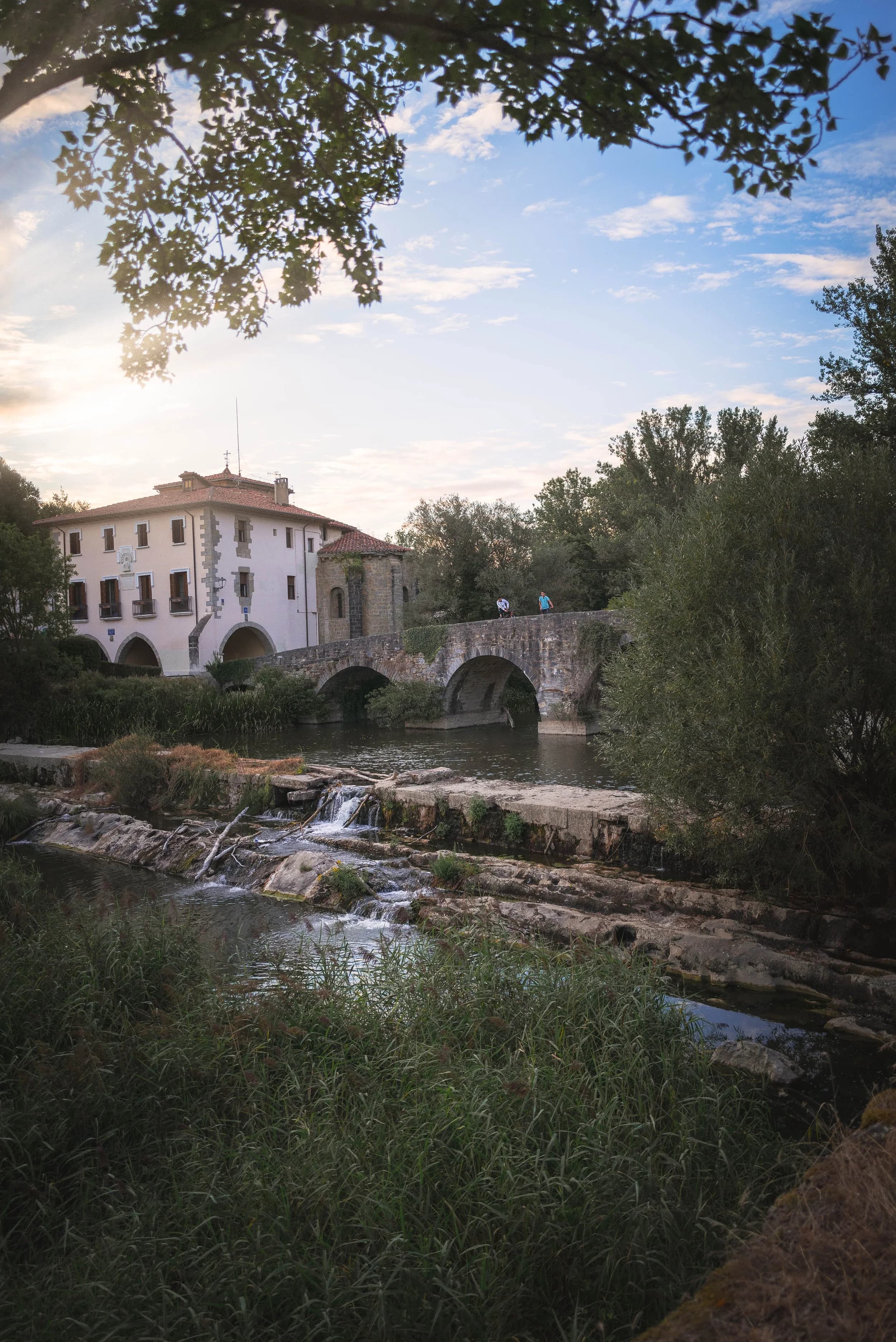
A day-in-the-life account of walking through the Meseta in June—the 5 AM starts to beat the heat, the hypnotic rhythm of wheat fields, the midday exhaustion, an
The Meseta gets a bad reputation. Before I walked it the first time, seasoned pilgrims warned me it would be "boring," "brutal," and "endless." Some even suggested bussing through it entirely. After crossing this high central plateau six times on the Camino Francés, I've come to believe the Meseta is one of the most misunderstood—and unexpectedly profound—stretches of the entire pilgrimage.
But I'm not going to pretend it's easy. Or that you'll love every minute. What I can tell you is what those 24 hours actually feel like, from the predawn chill to the last light bleeding across wheat fields that seem to stretch into tomorrow. This is what a June day on the Meseta looks like when you're living it step by step.
June on the Meseta means temperatures that can crack 40°C by midday. The smart pilgrims—the ones who've either done this before or listened to those who have—start walking while it's still dark. I learned this lesson the hard way during my second Camino when I strolled out of an albergue at 8 AM and spent the next seven hours feeling like I was being slow-roasted on a conveyor belt.
Now I'm up at 4:45, moving by muscle memory. Headlamp on. Stuff sleeping bag into pack (imperfectly—always imperfectly). Slide feet into boots that still smell like yesterday's effort. The albergue is a concert of suppressed noise: everyone trying to be quiet, no one succeeding.
By 5:15, I'm standing outside in darkness so complete it feels almost aggressive. The temperature hovers around 12°C—a gift I've learned not to waste. My Petzl Actik Core headlamp throws a beam onto the path ahead, catching the yellow arrows that will be my only company for the next hour or so.
I walk alone. Most pilgrims do at this hour. We space ourselves out naturally, each headlamp a distant firefly bobbing along the same path. Nobody talks. Partly because it's too early. Partly because the silence feels sacred in a way that would be diminished by words.
Around 6 AM, the sky begins its daily performance. The horizon doesn't just lighten; it builds in layers. First a deep indigo, then purple, then bands of orange and pink that look almost artificial in their intensity. The wheat—which I'd only heard before—suddenly reveals itself in waves extending to every horizon. Gold upon gold upon gold.
This is when I understand why some pilgrims cry on the Meseta. Not from exhaustion (though that comes later), but from the sheer overwhelming scale of it. You feel small here. Cosmically, existentially small. And that smallness, paradoxically, feels like relief.
The path through the Meseta often follows ancient Roman roads or cañadas—the livestock routes that shepherds have used for centuries. Long stretches of compacted earth, remarkably straight. Some pilgrims find this monotonous. I've learned to see it differently.
When there's nothing dramatic to look at, you start noticing smaller things. The purple thistle flowers that appear every hundred metres or so. A skylark ascending in spirals, singing frantically as it climbs. The exact colour of dried mud versus fresh earth. The way your poles leave temporary marks that will be erased by wind within the hour.
Around 8:30, I reach a village. Maybe Hontanas, maybe Boadilla del Camino, maybe one of those tiny hamlets that barely registers on the map. The routine is the same regardless. Find the bar. Order a café con leche and a tortilla pincho. Sit heavily on a plastic chair and feel the accumulated kilometres settling into my bones.
The morning break isn't optional in June—it's survival strategy. My suggestion is to spend at least 30 minutes here, ideally 45. Refill water bottles. Eat something substantial. Let your feet breathe if you can bear the process of removing and re-lacing boots.
By 11 AM, the temperature has climbed past 30°C and is still rising. The shade—what little exists—shrinks and disappears. The path becomes a study in endurance rather than enjoyment.
I'll be honest: this stretch can be genuinely miserable. The wheat fields that looked magical at dawn now feel like a cage. The horizon never gets closer. Every village on the map seems to retreat as you approach. Your hat is soaked through. Your shirt is a second skin. The sun doesn't just beat down; it radiates up from the earth beneath your feet.
This is when pilgrims start asking themselves hard questions. Why am I doing this? Couldn't I have just gone to the beach? Who decided walking across a desert in summer was spiritual?
I've had all these thoughts. Multiple times. The Meseta has a way of stripping away any pretence about why you're here, leaving only the raw fact of your body moving through space. There's no comfortable interpretation available. It's just you, the heat, and the relentless forward motion.
My strategy—developed over several crossings—involves a few practical elements. I soak my Buff headwear in water whenever possible and wear it under my hat. I carry at least three litres of water and drink constantly, even when I don't feel thirsty. And I give myself permission to be unhappy about the whole enterprise.
That last part matters more than it might seem. Fighting against the difficulty only adds suffering to suffering. Accept that the next few hours will be hard, and somehow—absurdly—they become slightly less hard.
Then comes the siesta. Not optional. Not a luxury. A necessity.
Spanish culture understood something that northern Europeans have forgotten: midday in summer is for rest. The albergue falls silent as pilgrims collapse onto bunks, overhead fans stirring air that feels too thick to breathe properly. I've learned to travel with ear plugs—the communal sleeping situation means someone is always snoring—but even without them, exhaustion usually drags me under within minutes.
Two hours later, I wake with that particular disorientation of afternoon sleep. The light through the windows has shifted from harsh white to something softer. My legs, which had been screaming at me earlier, have downgraded their complaints to a low mutter.
If you're planning your Meseta crossing and want more specific guidance on timing your stages, you can always ask about the best daily distances for June.
Around 6 PM, the temperature drops to something approaching comfortable. The light softens from brutal to beautiful. And the Meseta transforms.
I've taken to walking out of whatever village I'm staying in, just to watch the evening unfold across the fields. The wheat, which looked merely yellow at noon, turns copper and rose gold as the sun descends. The sky puts on a second show, this time drawing out the sunset into a performance that can last more than an hour.
During my fourth Francés, I met a painter from Copenhagen who was walking the Meseta specifically for this light. She showed me how to see the subtle variations in colour as the sun moved—how each minute changed the landscape into something new. I'm not an artist, but after that conversation, I started paying attention differently.
The evenings are also when the social magic of the Camino intensifies. Everyone has survived the same day. The communal dinner—usually at whatever bar or restaurant the village supports—becomes a space for sharing stories that would sound melodramatic anywhere else but feel perfectly normal here. "I thought I was going to die at kilometre 18" isn't hyperbole in this context. It's just accurate reporting.
The population density on this plateau is among the lowest in Europe. Light pollution is minimal to nonexistent in many areas. On a clear June night, the Milky Way doesn't just appear—it dominates. A great smear of light cutting across the darkness, so bright it casts faint shadows.
I've sat outside albergues with fellow pilgrims, passing cheap wine and watching satellites track across the stars. Nobody talks about destination or completion. The day's difficulty has burnt away anything that isn't immediate and real. There's just the sky, the cooling earth, and the sense of being exactly where you're supposed to be.
By 10 PM, though, the body's needs override any stargazing ambitions. I'm in my sleeping bag, alarm set for 4:45 AM, ready to do it all again.
The Meseta doesn't offer the dramatic mountain crossings of the Pyrenees or the emotional punch of arriving in Santiago. What it offers is subtler: the experience of continuing when continuing is hard. The discovery that beauty exists even in—especially in—landscapes that seem empty. The slow erosion of everything that isn't essential.
Go in knowing it will challenge you. Go in knowing there will be hours when you question the whole enterprise. But also go in knowing that countless pilgrims have walked this same path, faced the same doubts, and found something valuable on the other side.
If you're worried about the Meseta—and honestly, a little worry is sensible—my suggestion is to plan your Camino with realistic expectations and appropriate strategies. The section isn't impossible. It's just honest about what walking through central Spain in summer actually requires.
Footwear matters even more here. The ground is hard-packed and often stony. I've had success with well-cushioned trail runners, but whatever you wear should be thoroughly broken in. This isn't the place for new shoes.
Sun protection is non-negotiable. A wide-brimmed hat, proper sunscreen (reapplied throughout the day), and light-coloured, loose-fitting clothing can make the difference between manageable and miserable.
Water planning requires attention. Whilst water sources exist, they're spaced further apart than in other sections of the Camino. I carry capacity for three litres and rarely regret the extra weight.
And finally: respect the heat. I've seen pilgrims seriously ill from dehydration and heat exhaustion on the Meseta. If you start feeling confused, stop sweating despite the heat, or develop a pounding headache, stop immediately, seek shade, and get help. The Camino will wait.
The Meseta has been called many things: boring, brutal, beautiful, transformative. In my experience, it's all of these, often within the same day. Maybe even within the same hour. What it never is—what the walk across these endless fields can never be—is forgettable.
---
Try asking My Camino Guide:
- What are the best villages to stop in on the Meseta?
- How do I prepare for walking in extreme heat on the Camino?
- What should I pack for the Meseta section specifically?
But I'm not going to pretend it's easy. Or that you'll love every minute. What I can tell you is what those 24 hours actually feel like, from the predawn chill to the last light bleeding across wheat fields that seem to stretch into tomorrow. This is what a June day on the Meseta looks like when you're living it step by step.
Before the Sun: 4:45 AM in a Castilian Albergue
My alarm hasn't gone off yet, but someone else's has. The rustle of sleeping bags, the zip of backpack compartments, the muffled curse of someone who can't find their headlamp in the dark—these are the sounds that pull me from whatever fitful sleep the Meseta allows.June on the Meseta means temperatures that can crack 40°C by midday. The smart pilgrims—the ones who've either done this before or listened to those who have—start walking while it's still dark. I learned this lesson the hard way during my second Camino when I strolled out of an albergue at 8 AM and spent the next seven hours feeling like I was being slow-roasted on a conveyor belt.
Now I'm up at 4:45, moving by muscle memory. Headlamp on. Stuff sleeping bag into pack (imperfectly—always imperfectly). Slide feet into boots that still smell like yesterday's effort. The albergue is a concert of suppressed noise: everyone trying to be quiet, no one succeeding.
By 5:15, I'm standing outside in darkness so complete it feels almost aggressive. The temperature hovers around 12°C—a gift I've learned not to waste. My Petzl Actik Core headlamp throws a beam onto the path ahead, catching the yellow arrows that will be my only company for the next hour or so.
The Blue Hour: Walking Into Silence
There's a particular quality to predawn walking that I've never experienced anywhere else quite like on the Meseta. The wheat fields are invisible but present—you can hear them. A soft susurration when the wind picks up, like the land is breathing.I walk alone. Most pilgrims do at this hour. We space ourselves out naturally, each headlamp a distant firefly bobbing along the same path. Nobody talks. Partly because it's too early. Partly because the silence feels sacred in a way that would be diminished by words.
Around 6 AM, the sky begins its daily performance. The horizon doesn't just lighten; it builds in layers. First a deep indigo, then purple, then bands of orange and pink that look almost artificial in their intensity. The wheat—which I'd only heard before—suddenly reveals itself in waves extending to every horizon. Gold upon gold upon gold.
This is when I understand why some pilgrims cry on the Meseta. Not from exhaustion (though that comes later), but from the sheer overwhelming scale of it. You feel small here. Cosmically, existentially small. And that smallness, paradoxically, feels like relief.
Morning Rhythm: Kilometres 10-20
By 7:30, I've covered maybe 12 kilometres. The sun is fully up now, angling across the fields in that golden morning light that photographers obsess over. My shadow stretches impossibly long beside me, a companionable giant.The path through the Meseta often follows ancient Roman roads or cañadas—the livestock routes that shepherds have used for centuries. Long stretches of compacted earth, remarkably straight. Some pilgrims find this monotonous. I've learned to see it differently.
When there's nothing dramatic to look at, you start noticing smaller things. The purple thistle flowers that appear every hundred metres or so. A skylark ascending in spirals, singing frantically as it climbs. The exact colour of dried mud versus fresh earth. The way your poles leave temporary marks that will be erased by wind within the hour.
Around 8:30, I reach a village. Maybe Hontanas, maybe Boadilla del Camino, maybe one of those tiny hamlets that barely registers on the map. The routine is the same regardless. Find the bar. Order a café con leche and a tortilla pincho. Sit heavily on a plastic chair and feel the accumulated kilometres settling into my bones.
The morning break isn't optional in June—it's survival strategy. My suggestion is to spend at least 30 minutes here, ideally 45. Refill water bottles. Eat something substantial. Let your feet breathe if you can bear the process of removing and re-lacing boots.
The Furnace: Late Morning Into Afternoon
And then comes the hard part.By 11 AM, the temperature has climbed past 30°C and is still rising. The shade—what little exists—shrinks and disappears. The path becomes a study in endurance rather than enjoyment.
I'll be honest: this stretch can be genuinely miserable. The wheat fields that looked magical at dawn now feel like a cage. The horizon never gets closer. Every village on the map seems to retreat as you approach. Your hat is soaked through. Your shirt is a second skin. The sun doesn't just beat down; it radiates up from the earth beneath your feet.
This is when pilgrims start asking themselves hard questions. Why am I doing this? Couldn't I have just gone to the beach? Who decided walking across a desert in summer was spiritual?
I've had all these thoughts. Multiple times. The Meseta has a way of stripping away any pretence about why you're here, leaving only the raw fact of your body moving through space. There's no comfortable interpretation available. It's just you, the heat, and the relentless forward motion.
My strategy—developed over several crossings—involves a few practical elements. I soak my Buff headwear in water whenever possible and wear it under my hat. I carry at least three litres of water and drink constantly, even when I don't feel thirsty. And I give myself permission to be unhappy about the whole enterprise.
That last part matters more than it might seem. Fighting against the difficulty only adds suffering to suffering. Accept that the next few hours will be hard, and somehow—absurdly—they become slightly less hard.
The Midday Collapse: Finding Shelter
Around 1 PM, I reach whatever town I've designated as my stopping point. The routine is almost frantic now: check into albergue, claim a bed, shower immediately. The shower is lukewarm at best (the water tanks have been sitting in the sun all morning), but it feels like baptism anyway.Then comes the siesta. Not optional. Not a luxury. A necessity.
Spanish culture understood something that northern Europeans have forgotten: midday in summer is for rest. The albergue falls silent as pilgrims collapse onto bunks, overhead fans stirring air that feels too thick to breathe properly. I've learned to travel with ear plugs—the communal sleeping situation means someone is always snoring—but even without them, exhaustion usually drags me under within minutes.
Two hours later, I wake with that particular disorientation of afternoon sleep. The light through the windows has shifted from harsh white to something softer. My legs, which had been screaming at me earlier, have downgraded their complaints to a low mutter.
If you're planning your Meseta crossing and want more specific guidance on timing your stages, you can always ask about the best daily distances for June.
The Unexpected Beauty: Late Afternoon and Evening
Here's what nobody told me before my first Meseta crossing: the late afternoon is when this landscape comes alive.Around 6 PM, the temperature drops to something approaching comfortable. The light softens from brutal to beautiful. And the Meseta transforms.
I've taken to walking out of whatever village I'm staying in, just to watch the evening unfold across the fields. The wheat, which looked merely yellow at noon, turns copper and rose gold as the sun descends. The sky puts on a second show, this time drawing out the sunset into a performance that can last more than an hour.
During my fourth Francés, I met a painter from Copenhagen who was walking the Meseta specifically for this light. She showed me how to see the subtle variations in colour as the sun moved—how each minute changed the landscape into something new. I'm not an artist, but after that conversation, I started paying attention differently.
The evenings are also when the social magic of the Camino intensifies. Everyone has survived the same day. The communal dinner—usually at whatever bar or restaurant the village supports—becomes a space for sharing stories that would sound melodramatic anywhere else but feel perfectly normal here. "I thought I was going to die at kilometre 18" isn't hyperbole in this context. It's just accurate reporting.
After Dark: The Stars and the Silence
If you can manage to stay awake past 9:30 PM (harder than it sounds after walking 30+ kilometres in summer heat), the Meseta offers one final gift: the night sky.The population density on this plateau is among the lowest in Europe. Light pollution is minimal to nonexistent in many areas. On a clear June night, the Milky Way doesn't just appear—it dominates. A great smear of light cutting across the darkness, so bright it casts faint shadows.
I've sat outside albergues with fellow pilgrims, passing cheap wine and watching satellites track across the stars. Nobody talks about destination or completion. The day's difficulty has burnt away anything that isn't immediate and real. There's just the sky, the cooling earth, and the sense of being exactly where you're supposed to be.
By 10 PM, though, the body's needs override any stargazing ambitions. I'm in my sleeping bag, alarm set for 4:45 AM, ready to do it all again.
What the Meseta Actually Teaches
I've walked through the Meseta six times now, and each crossing has been different. Some were harder than others—weather, physical condition, mental state all play their roles. But each time, I've emerged on the other side with something I didn't have before.The Meseta doesn't offer the dramatic mountain crossings of the Pyrenees or the emotional punch of arriving in Santiago. What it offers is subtler: the experience of continuing when continuing is hard. The discovery that beauty exists even in—especially in—landscapes that seem empty. The slow erosion of everything that isn't essential.
Go in knowing it will challenge you. Go in knowing there will be hours when you question the whole enterprise. But also go in knowing that countless pilgrims have walked this same path, faced the same doubts, and found something valuable on the other side.
If you're worried about the Meseta—and honestly, a little worry is sensible—my suggestion is to plan your Camino with realistic expectations and appropriate strategies. The section isn't impossible. It's just honest about what walking through central Spain in summer actually requires.
Practical Notes for Your Meseta Crossing
A few hard-won insights from my crossings:Footwear matters even more here. The ground is hard-packed and often stony. I've had success with well-cushioned trail runners, but whatever you wear should be thoroughly broken in. This isn't the place for new shoes.
Sun protection is non-negotiable. A wide-brimmed hat, proper sunscreen (reapplied throughout the day), and light-coloured, loose-fitting clothing can make the difference between manageable and miserable.
Water planning requires attention. Whilst water sources exist, they're spaced further apart than in other sections of the Camino. I carry capacity for three litres and rarely regret the extra weight.
And finally: respect the heat. I've seen pilgrims seriously ill from dehydration and heat exhaustion on the Meseta. If you start feeling confused, stop sweating despite the heat, or develop a pounding headache, stop immediately, seek shade, and get help. The Camino will wait.
The Meseta has been called many things: boring, brutal, beautiful, transformative. In my experience, it's all of these, often within the same day. Maybe even within the same hour. What it never is—what the walk across these endless fields can never be—is forgettable.
---
Try asking My Camino Guide:
- What are the best villages to stop in on the Meseta?
- How do I prepare for walking in extreme heat on the Camino?
- What should I pack for the Meseta section specifically?